Backyard Court Planning
Backyard Sport Court Design in Phoenix and Scottsdale
Plan the yard around a concrete court. Licensed pool and landscape partners handle the pool and landscape work; Dink Pro Courts builds the court.
Backyard Court Planning
Plan the yard around a concrete court. Licensed pool and landscape partners handle the pool and landscape work; Dink Pro Courts builds the court.
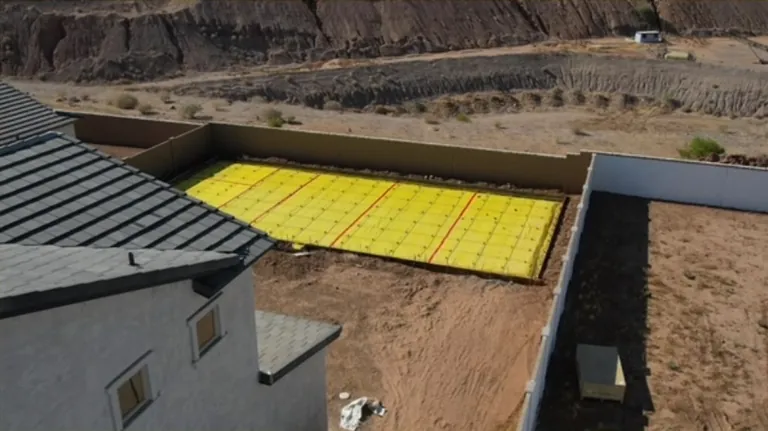
Photo: a Dink Pro Courts backyard court, build in progress
Quick answer: Licensed pool and landscape partners handle the pool and landscape work; Dink Pro Courts builds the court. Good backyard sport court design in Phoenix and Scottsdale starts with the court itself. We fix the size, spot and direction of the concrete pad, and your licensed landscape contractor then plans shade, planting and paths around a set rectangle. That beats fitting a court into whatever space is left over at the end.
Courts start at $29,000 for a 54 ft x 28 ft court, with a basic net and 4 paddles included. Financing is $598/mo for 60 months with excellent credit. See financing options.
Estimated rates and terms are not binding and are subject to change. Your actual APR depends on credit score, amount financed and credit history; only borrowers with excellent credit qualify for the lowest rates. All financing is subject to credit review and approval by lending partners.
Experienced Team / 20+ Years Experience. Every court we build sits on a concrete slab; we do not build any other court type.
Who does what: Dink Pro Courts has no pool or landscape license. Planting, irrigation, pools and landscape hardscape stay with licensed contractors you hire. Our scope is the concrete court and what belongs to it: surfacing, striping, nets, fencing, court lighting and any retaining walls the pad needs.
Of everything in a typical yard, the court is the biggest flat, rigid piece. A pool or a planting bed can curve around a tree or a utility line. A court cannot. It needs a true rectangle, a controlled slope so water runs off, and open space past the lines so players can move safely.
When a yard gets landscaped ahead of the court, the only court-sized area often ends up holding new trees, drip lines or a patio, and tearing that out costs money twice. Drawing the court envelope early avoids it. Once the pad size, location and direction are settled, your landscape contractor can plan beds, walkways and hardscape that meet the court edge cleanly.
Start with the games your family wants to play. Typical backyard playing areas:
| Court type | Playing lines | Planning notes |
|---|---|---|
| Pickleball | 20x44 ft | A pad of about 30x60 ft gives comfortable run-out around a full court |
| Tennis | 36x78 ft (doubles) | Needs a large pad with room behind each baseline; suits bigger lots |
| Basketball (half court) | Depends on design | Pad size follows the key, the arc and how much shooting room you want |
| Multi-sport / game court | Custom | Overlaid lines let one concrete surface serve pickleball, basketball and more |
On a tight lot we will tell you plainly what fits and what you trade away, such as shorter run-out. For small yards, the Mini Court Game Center puts several games on one compact slab. For pickleball plus a hoop, see basketball and pickleball combo courts. Want to try colors and layouts? Open the Court Designer.
Direction affects comfort and play. In a desert summer most backyard games happen early in the morning or after sunset, so we lay the court out to keep players from staring into a low sun at those hours. Direction also decides where stray balls and noise travel. Turning the long side of the court away from a neighbor’s patio, and planning fencing from day one, keeps balls in your yard and keeps the neighbors friendly.
A monsoon cell can dump a lot of rain in minutes. The court surface has to shed that water evenly, and the water has to land somewhere that will not flood the patio, the pool or the house next door. We set the court slope and tie it to the surrounding grades early, so your landscape contractor can design swales, gravel areas or planted basins that take the runoff.
Heat and UV come next. We use acrylic court surfacing made for Arizona sun. Along the court edge, plant choice matters too: leaf litter dirties the surface, and roots and irrigation overspray work against a slab over the years. Your landscape contractor picks plants that handle reflected heat and keeps spray heads aimed away from the court.
Think of the yard as zones linked by paths:
Edges matter where decomposed granite, pavers or turf meet the court. A clean transition keeps grit off the playing surface and makes the court read as part of the yard. Your landscape contractor chooses those materials; we leave the court edge ready for them. More ideas are in how to screen or landscape around a pickleball court.
Many Phoenix and Scottsdale homes sit inside an HOA that reviews backyard changes. Bring your HOA guidelines to the initial call. For the court, Dink prepares the drawings and specs, and the homeowner files them with the HOA. Your landscape contractor supplies the plans for their own scope. Read more in who handles permits and HOA submittals for the court.
Landscape work is quoted separately by the licensed landscape contractor. Court budgets are covered in pickleball court cost in Arizona, and the full build order is in our court, pool, hardscape and planting sequence guide.
Our crews build backyard courts throughout Maricopa County, from Phoenix and Scottsdale to Paradise Valley and both ends of the Valley. City pages: pickleball court installation in Phoenix, pickleball court construction in Scottsdale, backyard court installation in Paradise Valley and pickleball court contractor in Chandler.
Licensed pool and landscape partners handle the pool and landscape work; Dink Pro Courts builds the court. Dink holds no pool or landscape license, so we plan the court around the work your licensed contractors design and install.
Yes. We coordinate the court with outside designers and contractors, and we share the court layout so their plan meets the court edge.
The playing lines measure 20 ft by 44 ft. Plan on a pad of roughly 30 ft by 60 ft for a full court with comfortable run-out, plus whatever seating and shade you want around it.
Settle the court location and drainage early, even when the work overlaps. That keeps new plants and irrigation out of the space the court needs.
Keep them set back. Leaf litter, roots and irrigation overspray can affect the surface, so your landscape contractor chooses plants and spacing that suit a court edge.
Dink prepares the drawings and specs for the court. The homeowner files them with the HOA.
We're usually pouring concrete within a week, then it cures 21 to 28 days depending on weather before we paint.
Send photos, rough lot dimensions and any HOA guidelines, and we will propose where the court goes. Licensed pool and landscape partners handle the pool and landscape work; Dink Pro Courts builds the court. Call or text (480) 493-0031 to check your yard and book your build.