Quick Connect

Chandler Pickleball Court Contractor
A practical checklist covering site prep, drainage, base construction, surfacing, equipment, fencing and lighting, so you can vet a Chandler court contractor with confidence.
Hiring a pickleball court contractor in Chandler, AZ? Dink Pro Courts builds concrete backyard pickleball courts across Chandler, from Ocotillo and Fulton Ranch to older flood-irrigated lots. A qualified pickleball court contractor in Chandler manages far more than paint and line placement. Before hiring, confirm how they handle site assessment, drainage and grading, base construction, acrylic surfacing, net and equipment installation, fencing and sports lighting, and get all of it in a written, itemized proposal with clear assumptions and exclusions.
Building in Scottsdale instead? Visit our Scottsdale pickleball court construction page.
A skilled court contractor oversees a lot more than just the field of play, from the first measurements to the final walkthrough. A typical project can include:

The precise scope depends on the property and the kind of court being designed. A clear project proposal should define what is included instead of giving a single figure without explaining the job.

Assuming an open space is ready for court development is one of the biggest mistakes property owners make. Slopes, drainage patterns, walls, landscaping, access routes, irrigation and soil conditions all affect the preparation a project needs, and water management is especially critical in Arizona given monsoon rainfall.
A contractor should assess the proposed location and identify these issues before recommending a final layout, not after construction begins.
Understanding the property is the first step. Available space, access for tools and supplies, nearby buildings, current landscaping, utilities, slope and the planned court footprint should all be considered. HOA regulations, property limitations and any additional approvals should be discussed at this point too.
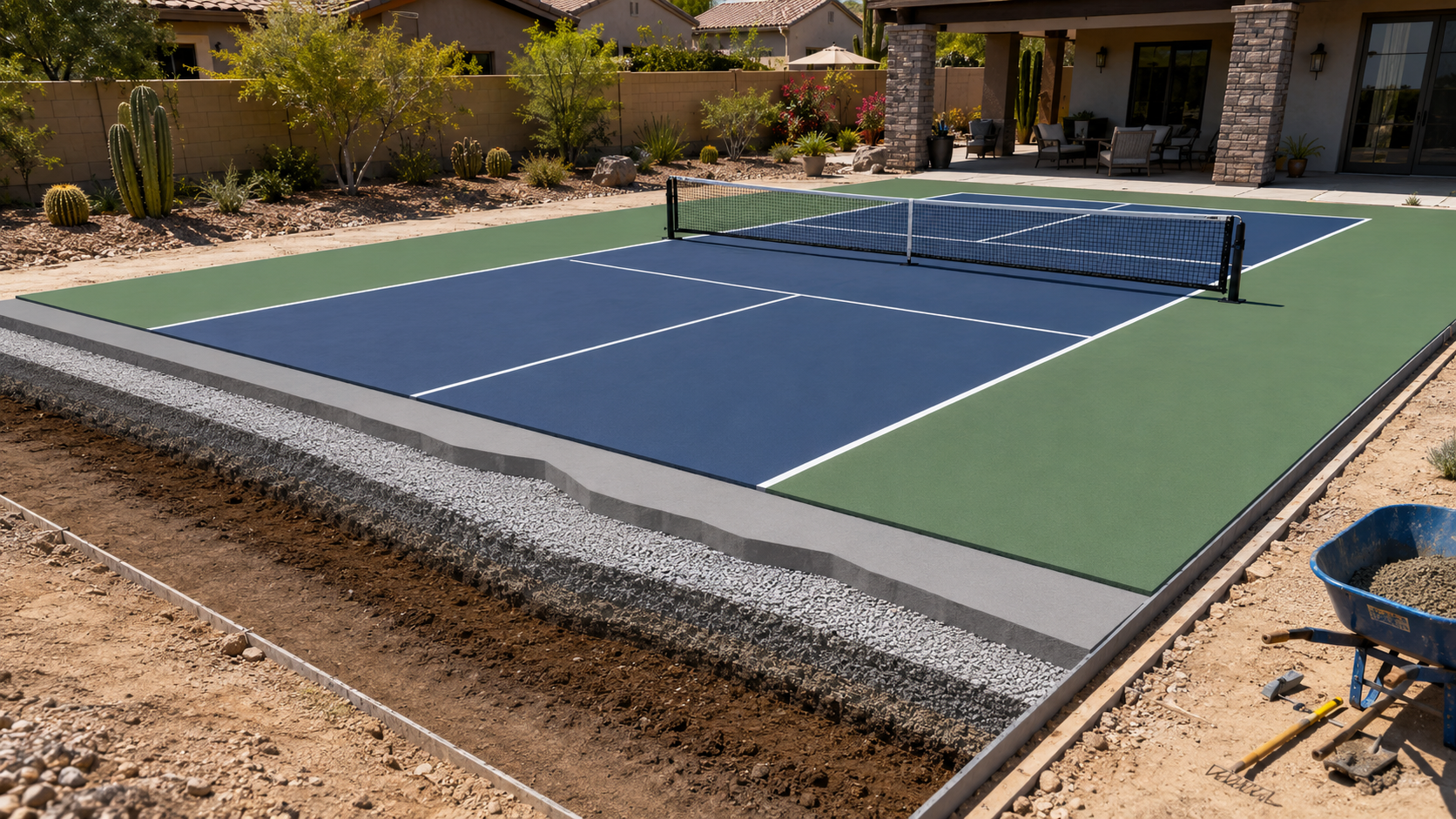
A court requires suitable water management and a well-prepared surface. Poor drainage can cause standing water, surface deterioration, cracking and other maintenance problems. Correct grading helps divert water away from the playing area and fits the court into the surrounding property.
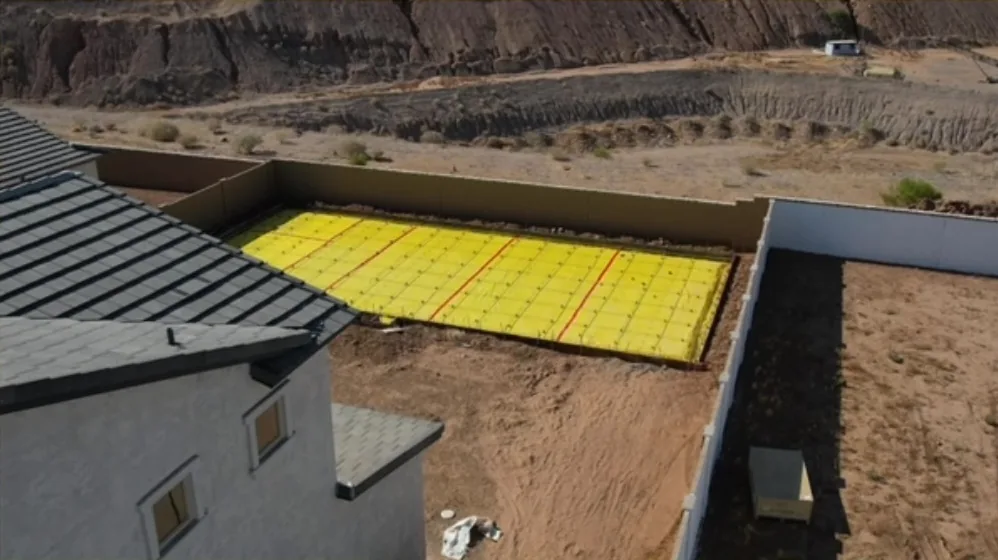
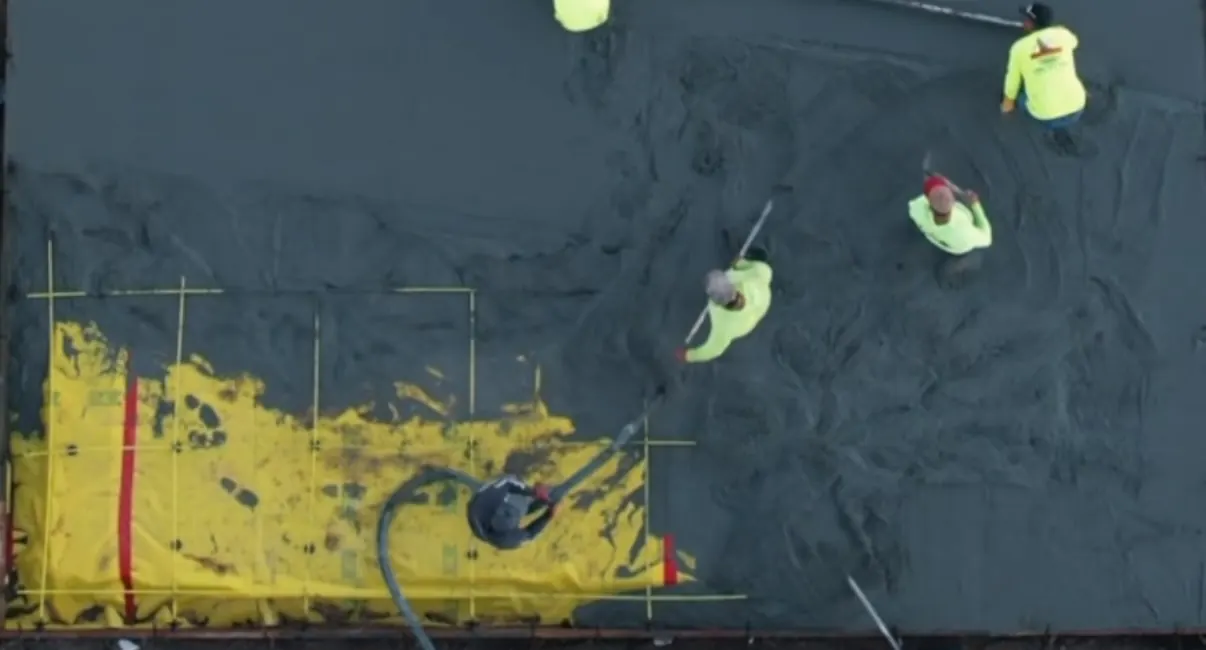
The base is one of the most crucial parts of the project, since the final surface depends on a solid foundation. Dink Pro Courts builds on concrete only, with the slab’s thickness and reinforcement designed for your site conditions and the court’s planned use.
Once the foundation is properly prepared, the playing surface can be installed. Acrylic surfacing systems are commonly used because they provide a dedicated playing surface that can be customized with colors and sport-specific markings, matched to expected use and maintenance.
For a court to function, lines must be placed precisely. The project may include basketball hoops, pickleball lines, basketball markings, a net system or other sports equipment depending on the design. When several sports share one surface, the layout must be carefully planned so the markings complement one another without unnecessary visual clutter.


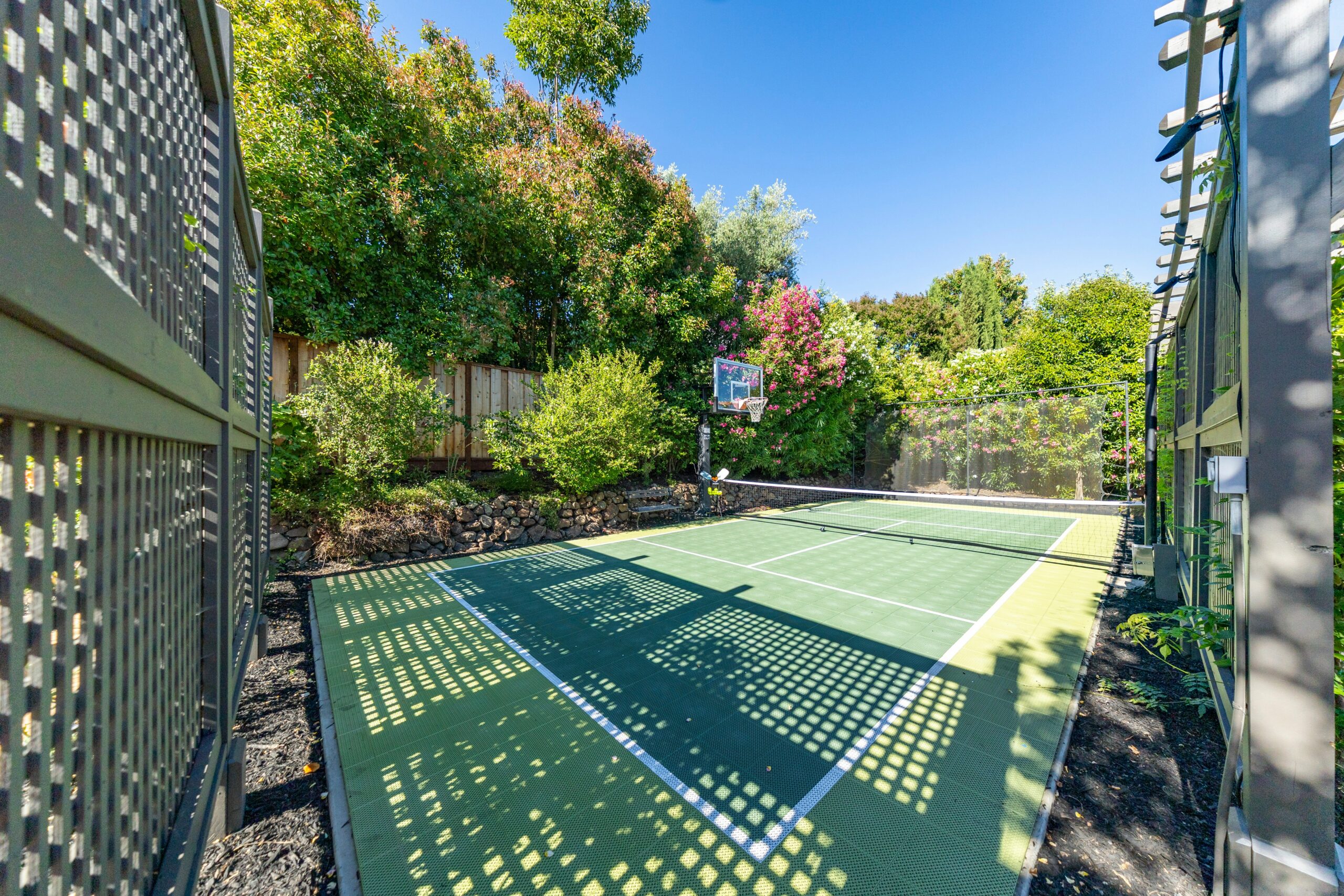
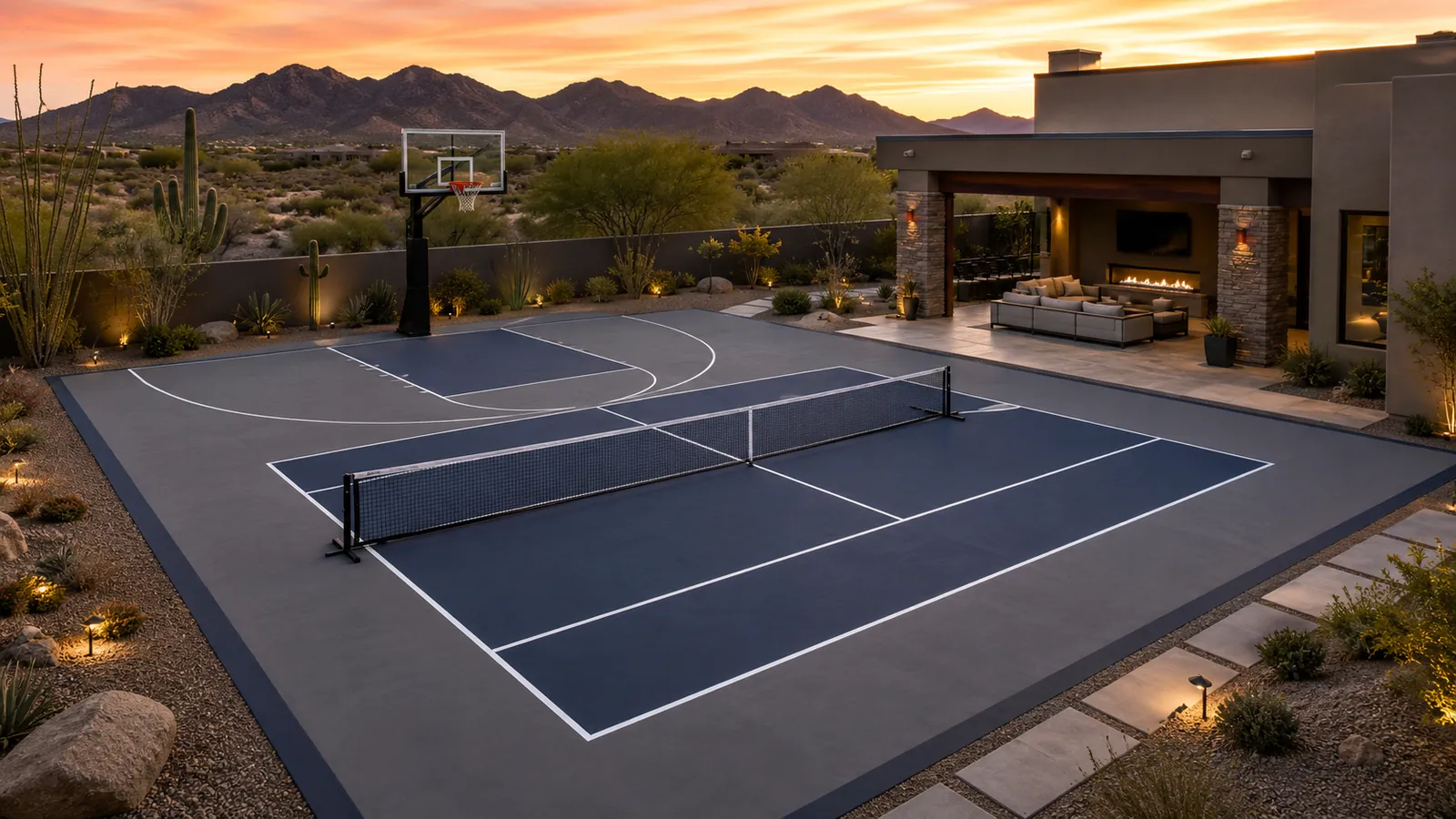
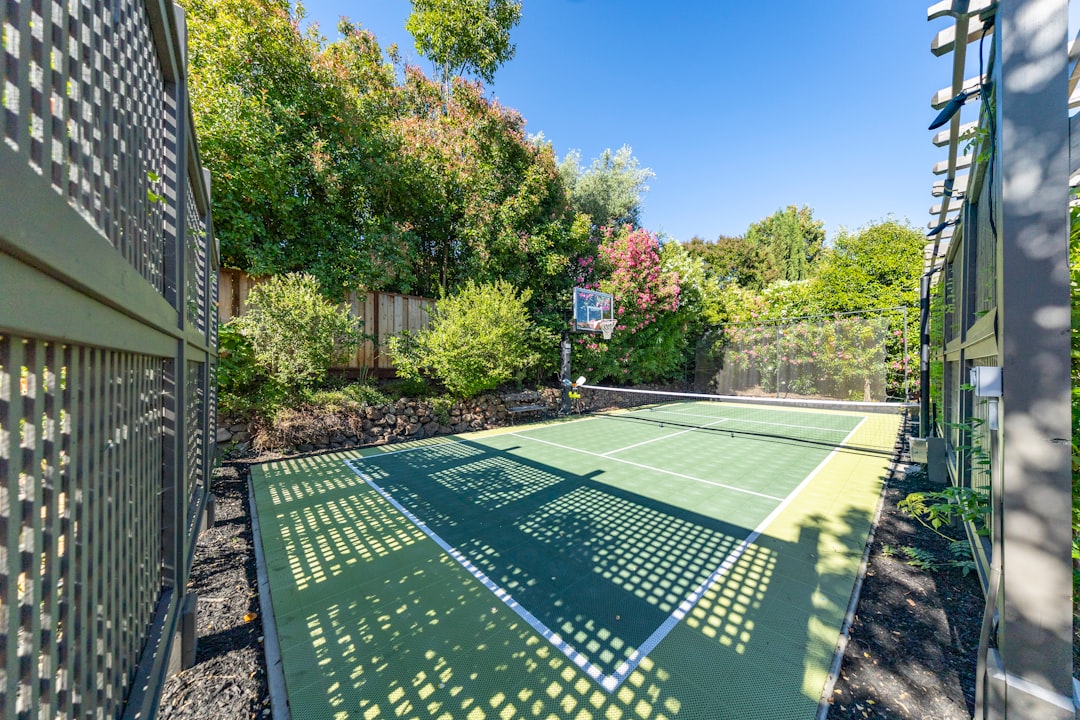
Not every property needs the same type of court. A dedicated pickleball court is designed around pickleball play and provides a straightforward layout for regular use. A multi-sport court, on the other hand, can combine different activities on one surface – for example, homeowners who want both basketball and pickleball may choose a combination layout. In a nearby market, projects focused on basketball court construction Scottsdale may also involve similar considerations around foundations, surfacing, hoops, lighting and multi-sport planning. The best choice depends on available space, intended use, budget and the activities the property owner wants to support.

A dedicated court prioritizes pickleball dimensions, movement and equipment, with a straightforward layout designed around regular play.

A multi-sport court combines pickleball with basketball or other activities on one surface, with a layout, striping and equipment planned to support each sport.
Some improvements are significantly simpler to implement when they are considered during the initial design.
Explore court colors and layouts before requesting pricing.

Look past the sales pitch before hiring a contractor. Ask questions to gain a clear understanding of how the project will be managed.
A thorough proposal gives you a far better foundation for comparing contractors than a mere projected price.

A professional quote should let you understand exactly what you are paying for. It could consist of:

Final expenditure can differ significantly between sites due to differences in access, site conditions, construction requirements and chosen features. See our court construction process.

From the first consultation to the final walkthrough, a well-organized project moves through eight clear stages.
Talk about the site, objectives, sports and desired features.
Assess the site’s drainage, grading, access and other features.
Create the equipment, colours, court arrangement and extra features.
Finish base preparation, grading, drainage, clearing and excavation.
Set up the playing field and lay the foundation.
Complete sport-specific markings and apply the chosen surface system.
Install gates, fences, hoops, nets and lights.
Inspect the finished court and its surroundings prior to handover.
Court construction involves a number of distinct fields of activity, and the playing surface is just one component. A skilled contractor understands the interplay between the foundation, drainage, surfacing, equipment, fencing and neighboring land, which becomes even more important when building a custom or multi-sport court. Dink Pro Courts offers custom game-court construction and related court services throughout Maricopa County, with projects planned around each property's characteristics and the client's desired use.
Measure the available space and consider the court’s intended function before beginning construction. Early answers to these questions help develop a workable design and prevent costly modifications later:
The surrounding area should also be considered. Pools, fences, patios, landscaping, access roads and existing buildings can all affect how supplies and machinery reach the construction site. Next door, we handle pickleball court installation in Gilbert, AZ.

Chandler grew out of farmland, and that history still shows up in backyard court projects. A Chandler pickleball court contractor should look at three local issues before quoting:
City rules also apply. Setbacks, fence height, walls and outdoor lighting are reviewed under City of Chandler requirements, and we confirm what your project needs before construction starts.
For Chandler yards that can’t fit a full court around the pool deck and patio, a mini pickleball court keeps game night at home. On former Chandler farmland we test the clay-heavy soil and set the pad above any flood irrigation, then pour one post-tension concrete slab for the painted court, a backyard-size shuffleboard lane, the portable hoop and a badminton set. Building in Ocotillo, Fulton Ranch or another master-planned area? We prep the site plan and specs for your HOA design review. Build your game center: call (480) 493-0031.
Courts start at $29,000 for a 54 ft x 28 ft court, with a basic net and 4 paddles included. Financing is $598/mo for 60 months with excellent credit. See financing options.
Estimated rates and terms are not binding and are subject to change. Your actual APR depends on credit score, amount financed and credit history; only borrowers with excellent credit qualify for the lowest rates. All financing is subject to credit review and approval by lending partners.
Comparing nearby cities? See Gilbert pickleball court installation or our Arizona pickleball court cost guide.
Just north of Chandler, see backyard court installation in Tempe. Also nearby: Queen Creek court installation.
The marked playing court is 20 by 44 feet, but a new court generally needs additional clearance around the playing area. The overall footprint should be planned based on how the court will be used and the available property.
Yes. A properly designed multi-sport court can accommodate pickleball and basketball on the same surface. The layout needs to account for both sports, including markings, equipment and available movement space.
Absolutely. Drainage should be evaluated during the planning stage. Existing slopes, irrigation, walls, landscaping and rainfall patterns can all influence the final site design.
It may be possible, but planning lighting during the original construction can make the project easier. Foundations, conduit, electrical requirements and equipment placement may need to be considered before the surrounding work is completed.
Providing the property location, approximate available space, photos of the proposed area, access information, desired sports and preferred features can help the contractor understand the project before the site evaluation.
Yes. We set the court pad elevation and edges so scheduled irrigation water stays off the court and away from the base, and we plan around the existing berms and valves.
In most master-planned Chandler communities, yes. We prepare the site plan, surface colors, fence height and lighting details your HOA typically asks for, and you file the HOA application.
Courts start at $29,000 for a 54 ft x 28 ft court, with a basic net and 4 paddles included. Final pricing depends on site prep, drainage, access and options such as fencing or lighting.
Concrete. Dink Pro Courts builds concrete courts only, finished with an acrylic hardcourt surface for a classic look and a true ball bounce. We don't install modular tiles. On flood-irrigated Chandler lots, we set the pad so irrigation water stays off the court.
Yes. We build backyard courts across Chandler, including master-planned areas such as Ocotillo and Fulton Ranch. We prepare the site plan, surface colors, fence height and lighting details for HOA design review, and you file the application.
Three local items: whether the lot takes flood irrigation, how the clay-heavy former farmland soil compacts, and what your HOA and the City of Chandler require for setbacks, fence height and lighting. We check all three at the site visit and put the answers in a written, itemized proposal.
A successful court project begins with the property, not merely the playing field. Assess the site, plan drainage, select the appropriate foundation and make early decisions about equipment and optional features. Start with a site-specific consultation and tailor the project around your actual property and priorities, whether you’re planning a new court in Chandler or a custom multi-sport project anywhere else in Maricopa County.