Complete Construction Guide
Pickleball Court Construction: How It Works and What to Expect
Site evaluation, base preparation, drainage, surfacing, striping and equipment, explained stage by stage along with what drives construction cost.
Complete Construction Guide
Site evaluation, base preparation, drainage, surfacing, striping and equipment, explained stage by stage along with what drives construction cost.
Pickleball court construction in Arizona runs in a set order: site evaluation, grading and drainage, a concrete base and its cure, an acrylic sport surface, regulation striping and the net system, plus options such as fencing and lighting. Dink Pro Courts builds concrete courts only, usually post-tensioned. Construction cost depends on site conditions, court size, base and surface work and the upgrades you choose.
A pickleball court construction project often consists of multiple phases, and the specific procedure changes depending on whether it’s a brand-new court or an update to an existing paved area.
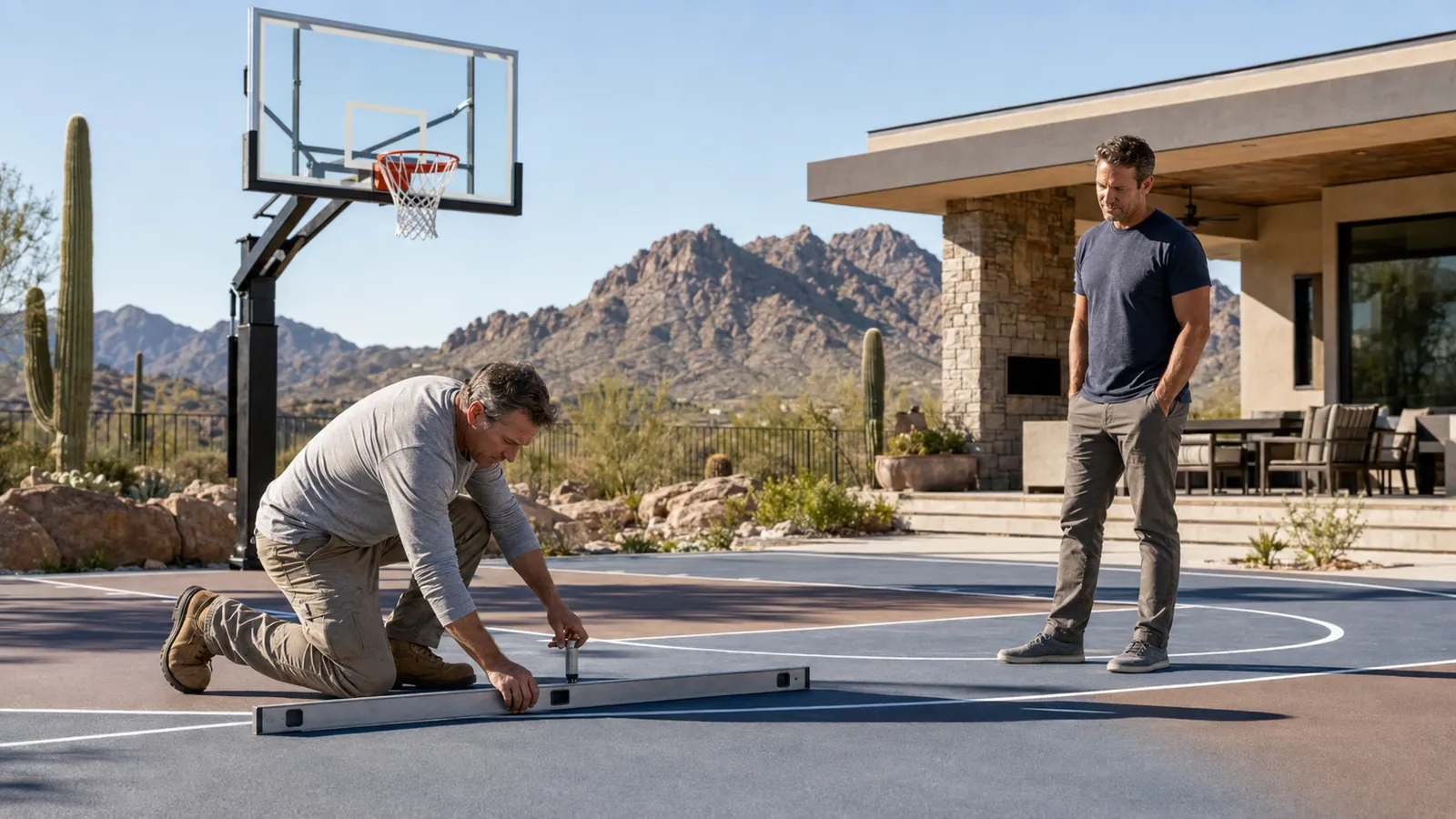
Before suggesting the best construction strategy, a qualified contractor should assess the property in person.
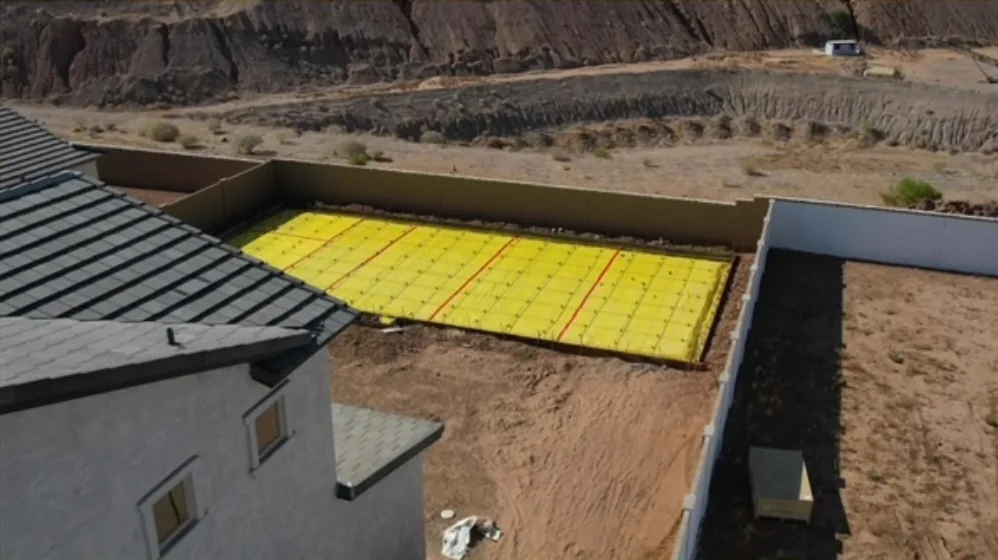
Good foundations are the first step toward good courts. Water may accumulate on the finished surface if the site is not graded correctly, which can diminish playability and worsen long-term surface issues.
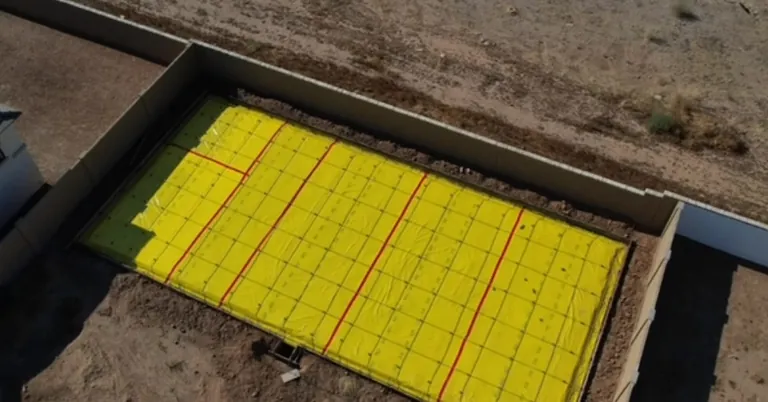
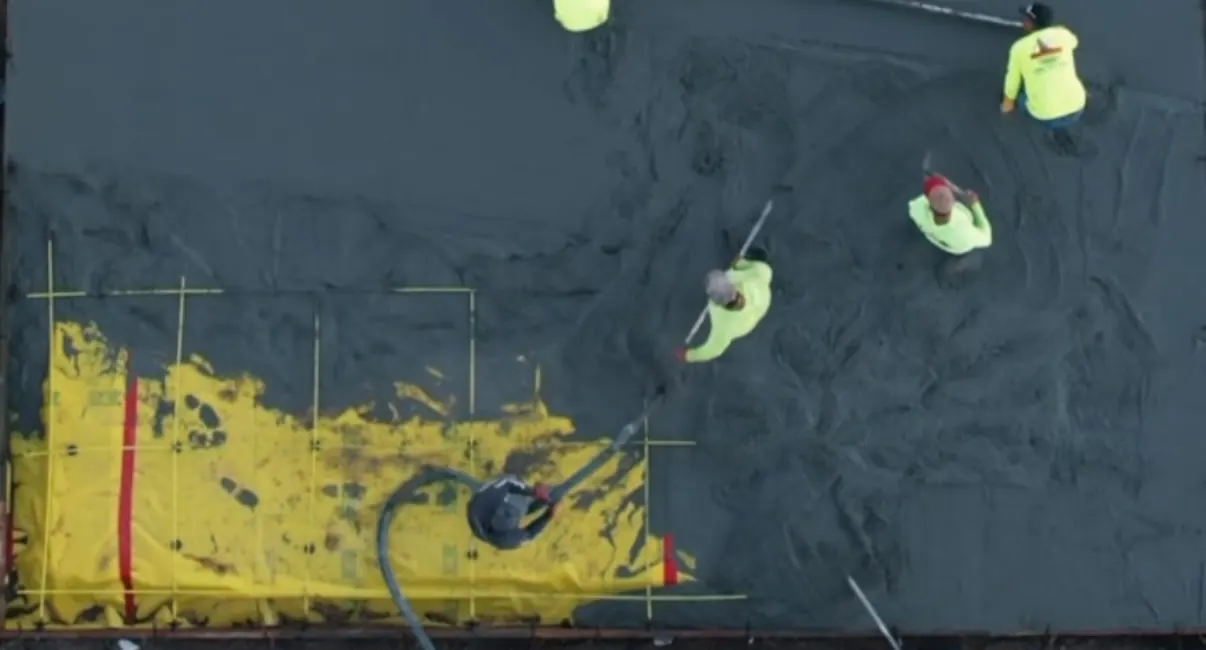
Most permanent outdoor pickleball courts are built over concrete or asphalt. Dink Pro Courts builds on concrete only, and a concrete court needs attention to thickness, reinforcement, expansion joints and curing. We design the slab around your property, soil and local conditions.
Cleaning, filling minor imperfections, repairing cracks, grinding high spots and leveling low areas create a smooth, consistent surface before coating.
Specialized sports coatings provide regular traction, color, ball reaction and a polished appearance suited to strong UV exposure and high temperatures.
Baselines, sidelines, centerlines, non-volley zone lines and service areas must be measured and applied accurately for good gameplay.
Permanent systems are frequently favored for dedicated courts, while portable or removable options suit multi-sport surfaces.
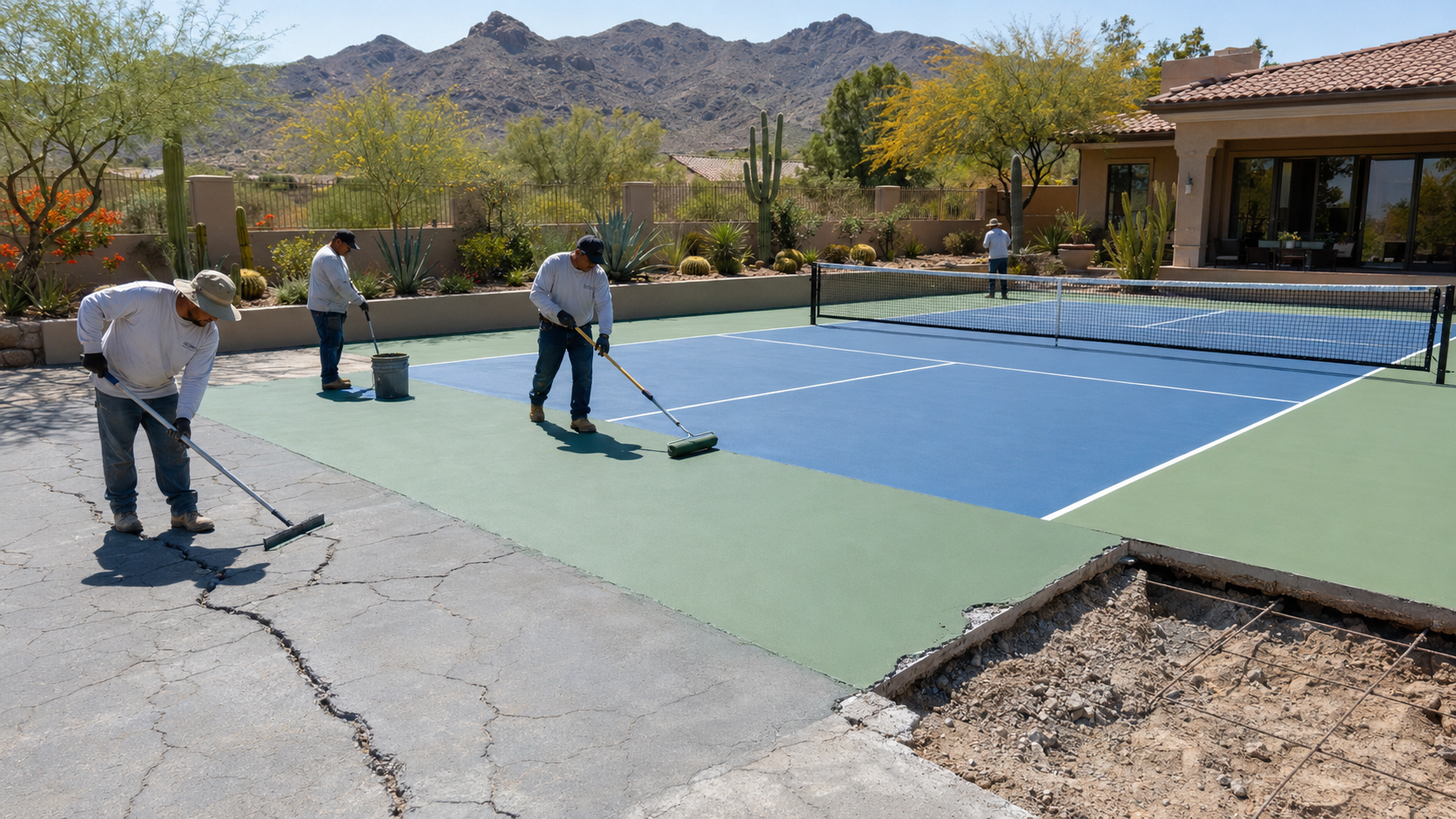
The right option depends on the condition of the existing surface. New construction suits sites with no suitable base or major structural problems, while resurfacing works well when the base is sound but coatings and lines have worn.
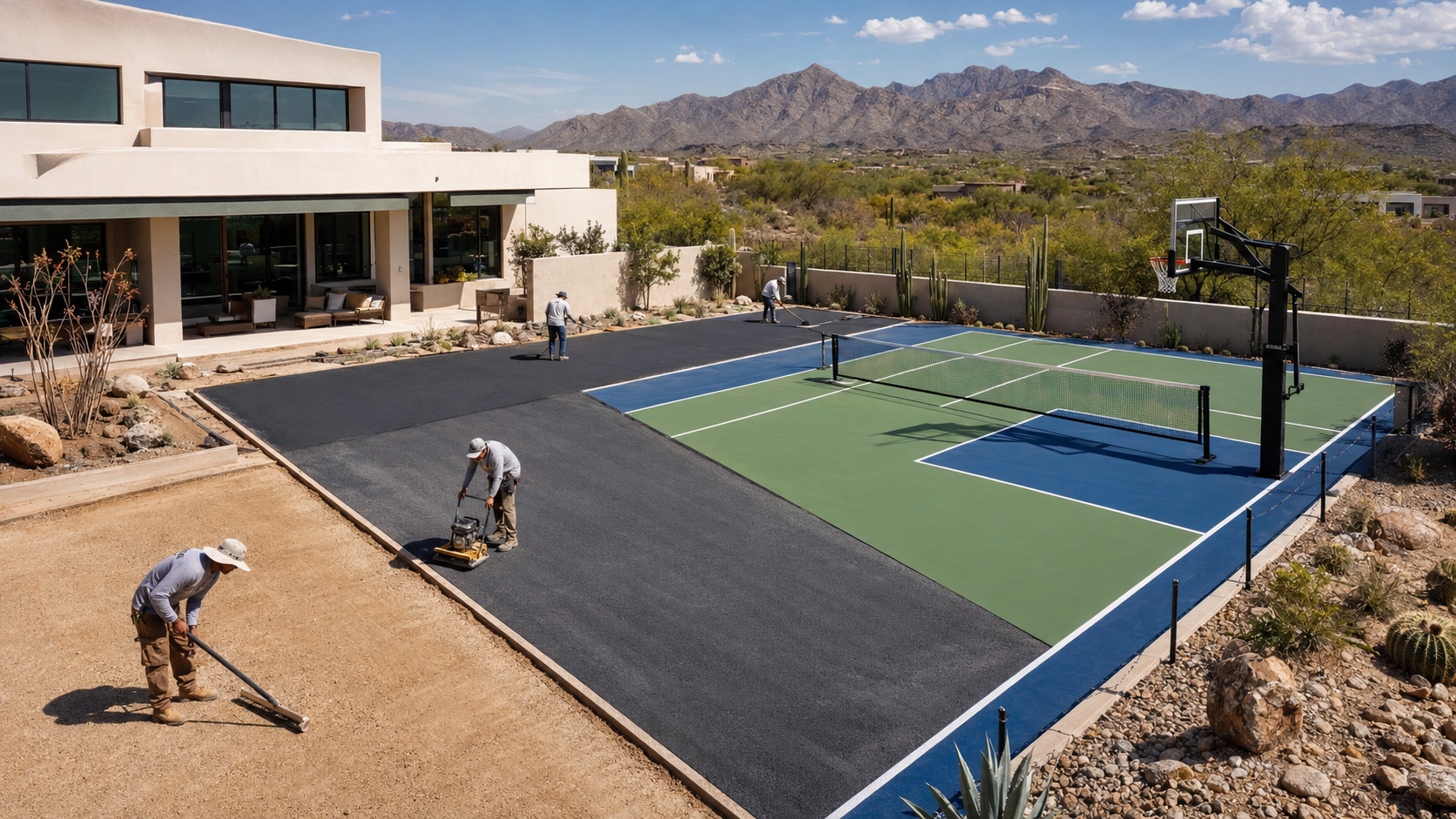
Full site preparation, grading, base construction and surfacing for a court built from scratch.
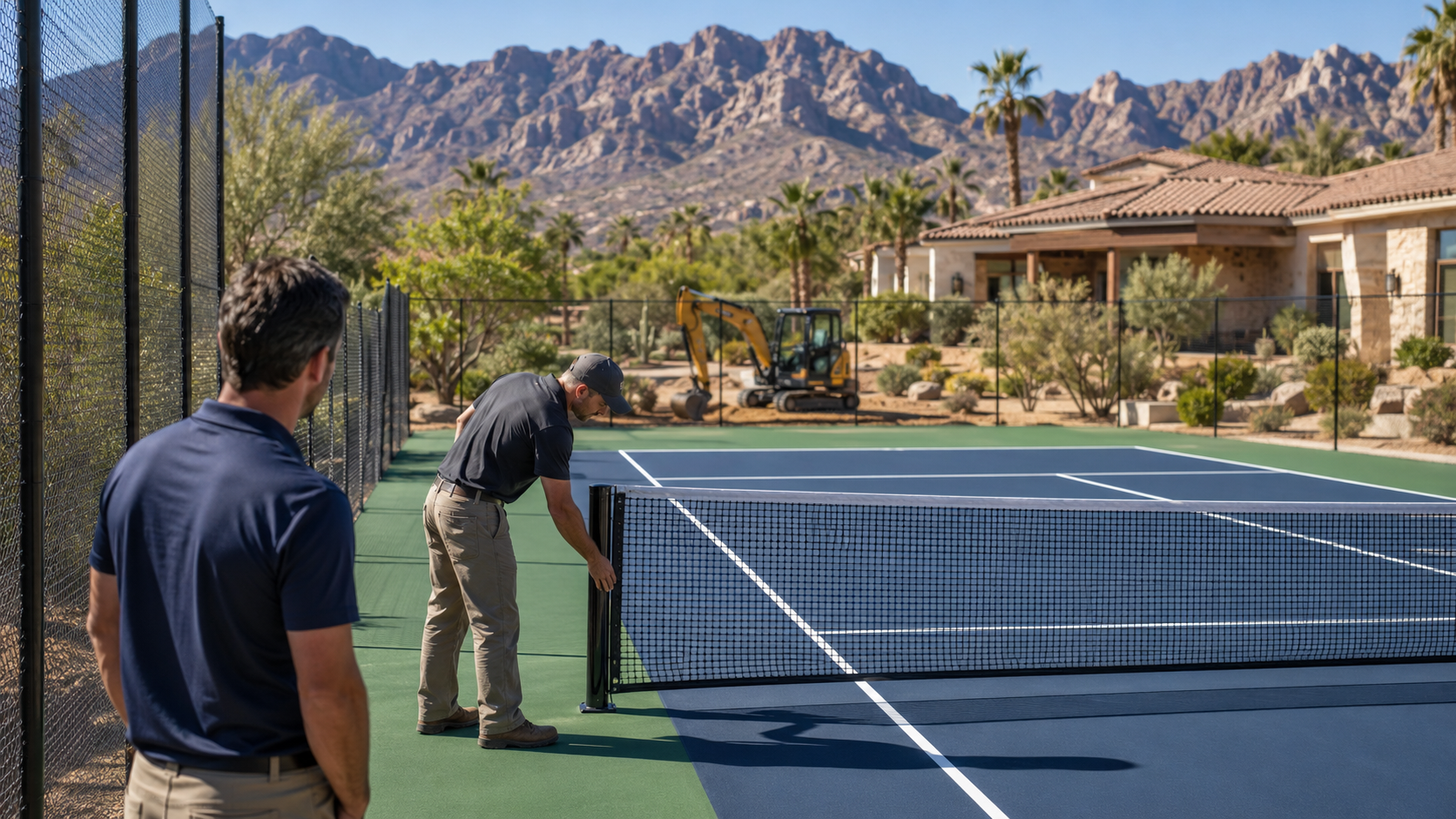
Crack repair, cleaning, leveling, new coatings and line striping applied to a structurally sound existing court.
Request a property review from Dink Pro Courts. We'll assess your site and outline the right construction or resurfacing plan and cost factors.
The pickleball court construction cost can vary significantly because every project is different. Major cost factors include:
For accurate pricing, a site-specific estimate is far more useful than a single generic figure.
Cutting corners during construction can create expensive problems later. The most common mistakes include:
Poor drainage can reduce playability and accelerate deterioration.
General-purpose paint is not a replacement for a properly designed sports coating system.
An unstable base can lead to cracking and uneven surfaces.
Small cracks and coating wear can become larger issues if ignored. For an existing court, see Arizona pickleball court repair.
We proudly build and upgrade courts throughout the Valley, serving homeowners, HOAs, schools, clubs, churches, parks, and commercial properties across Maricopa County.
The pickleball court construction cost depends on site preparation, concrete work, drainage, surface coatings, fencing, lighting and custom features. A site evaluation is generally required for accurate pricing.
The official playing area is 20 feet wide by 44 feet long. Additional space around the playing lines is recommended for comfortable and safe movement.
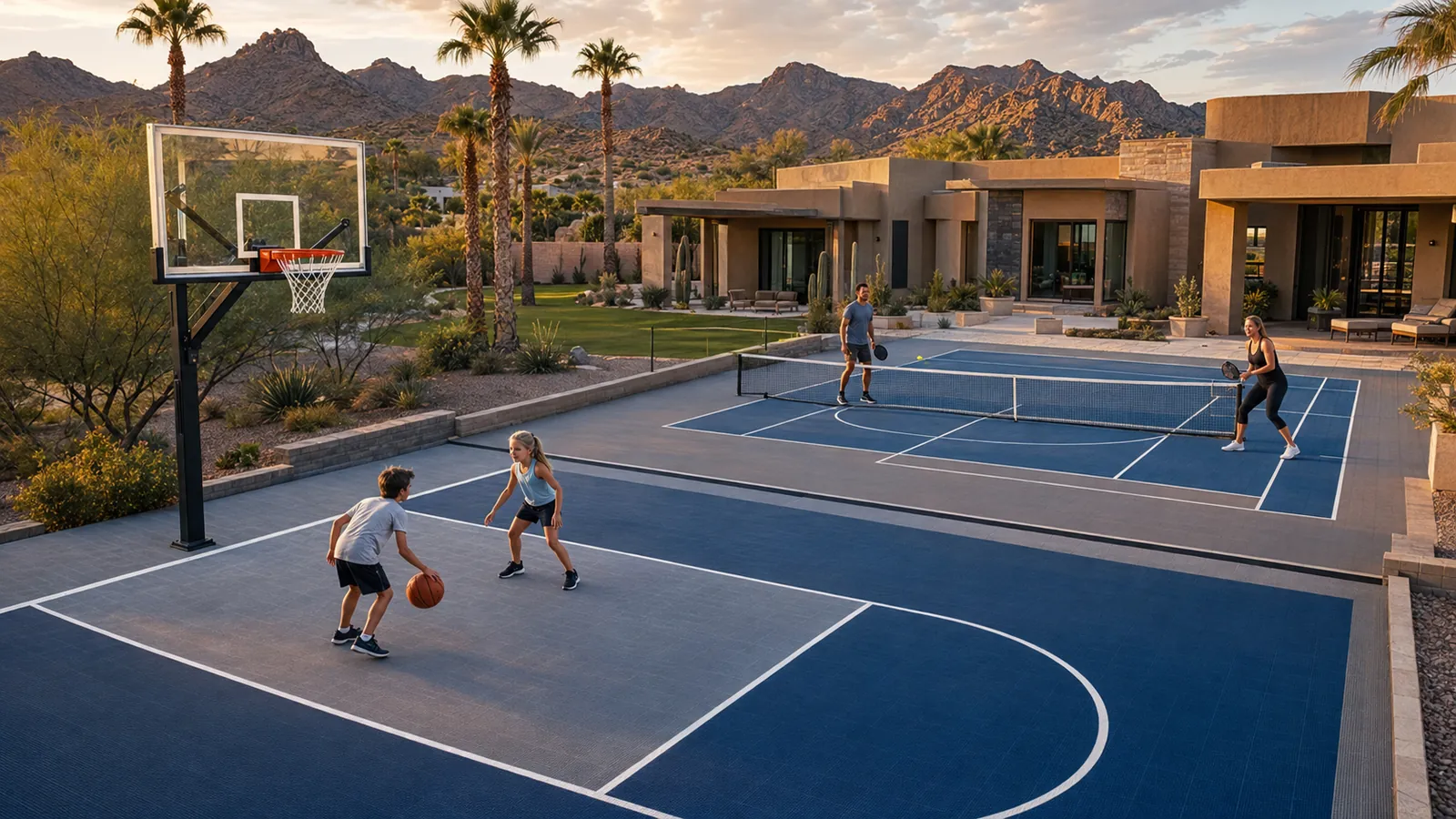
Yes. Residential pickleball court construction can be customized to available backyard space, although sufficient room is needed for the court and surrounding movement areas.
Concrete and asphalt are both common bases for outdoor courts. Dink Pro Courts builds on concrete only, finished with a dedicated acrylic sports coating system, and designs the slab for your site conditions.
Pickleball court resurfacing may be appropriate when the existing base remains usable but the surface has faded, developed minor cracks, lost traction or has worn line markings.
Yes. Dink Pro Courts can support projects involving new court construction, surface upgrades, repairs and pickleball court resurfacing, depending on the condition and requirements of the property.
Yes. We work with homeowners, HOAs, schools, clubs, churches, parks, developers and commercial properties. Backyard courts are built around your space and how your family plays. Commercial and club courts are planned for heavier, more frequent play, with extra attention to surface durability, lighting coverage and spacing between courts. HOA courts add steps such as preparing the specifications and drawings the board reviews.
Most of the calendar time is the concrete. After approvals we can usually be pouring within a week, then the slab cures 21 to 28 days depending on weather before the acrylic coats and striping go on. Permits, HOA review and monsoon weather can extend that, so we give you a schedule with your quote.
Site visit and measurements, design and orientation (usually north to south to cut sun glare), clearing and grading with drainage, the concrete base and its cure, acrylic color coats and regulation striping, then the net, any fencing or lighting and a final walkthrough.
Ready to create a new pickleball court or improve an existing one? Contact Dink Pro Courts to discuss your site, goals, design preferences and project requirements, and get a customized solution designed around your space and the way you want to play.
Call or text (480) 493-0031, email build@dinkprocourts.com or submit the project form.
Looking for a city-specific build? See pickleball court construction in Scottsdale.