Court Restoration Guide

Pickleball Court Repair in Arizona: Cracks, Drainage & Resurfacing

A practical guide to diagnosing cracks, fading, worn lines and drainage issues, and choosing between targeted repair, resurfacing or reconstruction for your Arizona court.

Family-Owned Athlete-Operated
Experienced Team 20+ Years Experience
Easy Financing Low Monthly Payments
Request a Court Repair EvaluationExplore Financing Options
Direct Answer

Professional pickleball court repair addresses cracks, faded coatings, worn lines, low spots and drainage problems, usually through targeted crack treatment, patching and coating repairs. When damage is widespread across the surface, pickleball court resurfacing (cleaning, repairing, releveling and applying a fresh acrylic coating and line system) is often the more efficient way to restore performance and appearance.

Repair Scope

What Does Pickleball Court Repair Actually Include?

Pickleball court repair includes the work needed to restore damaged or deteriorating areas of a court. The correct repair method depends on why the damage occurred, and a typical scope of work can include:

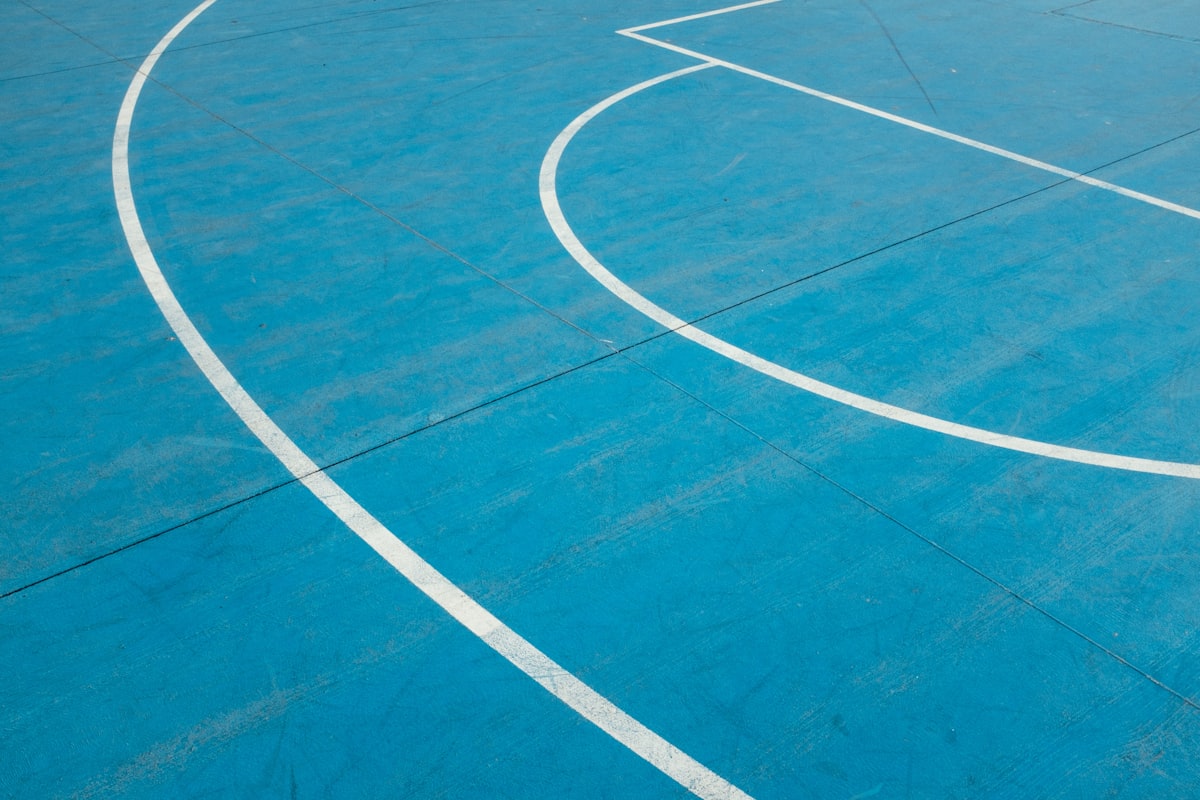
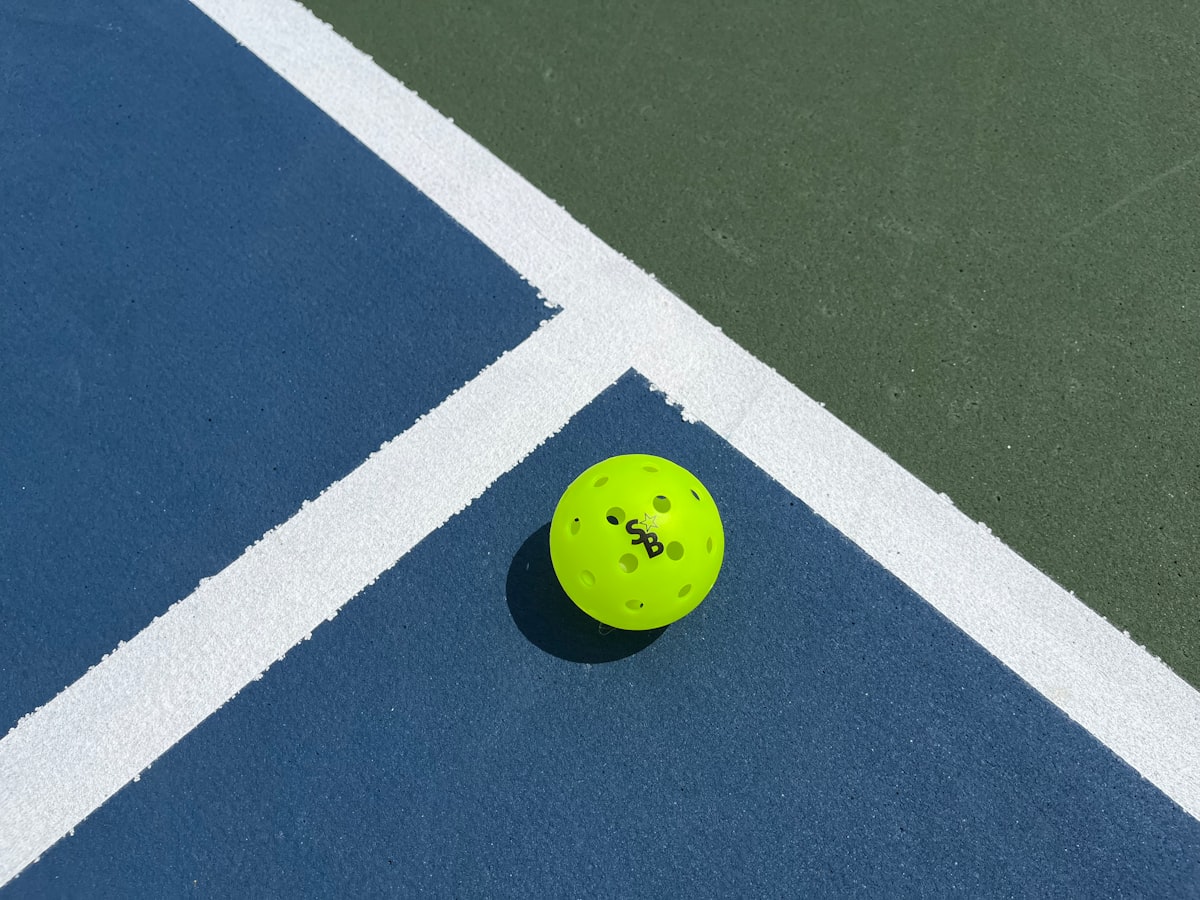
Close-up of a pickleball court surface showing color coating and playing lines
Crack TreatmentSurface PatchingLow-Spot CorrectionDrainage ImprovementsCoating RepairsLine RestorationSurface LevelingEdge RepairsNet Post CorrectionsFencing Repairs

Simply covering cracks with new paint may improve appearance temporarily, but it will not address deeper structural or drainage problems. A professional inspection helps determine whether localized repairs, resurfacing, or more extensive reconstruction is the best approach.

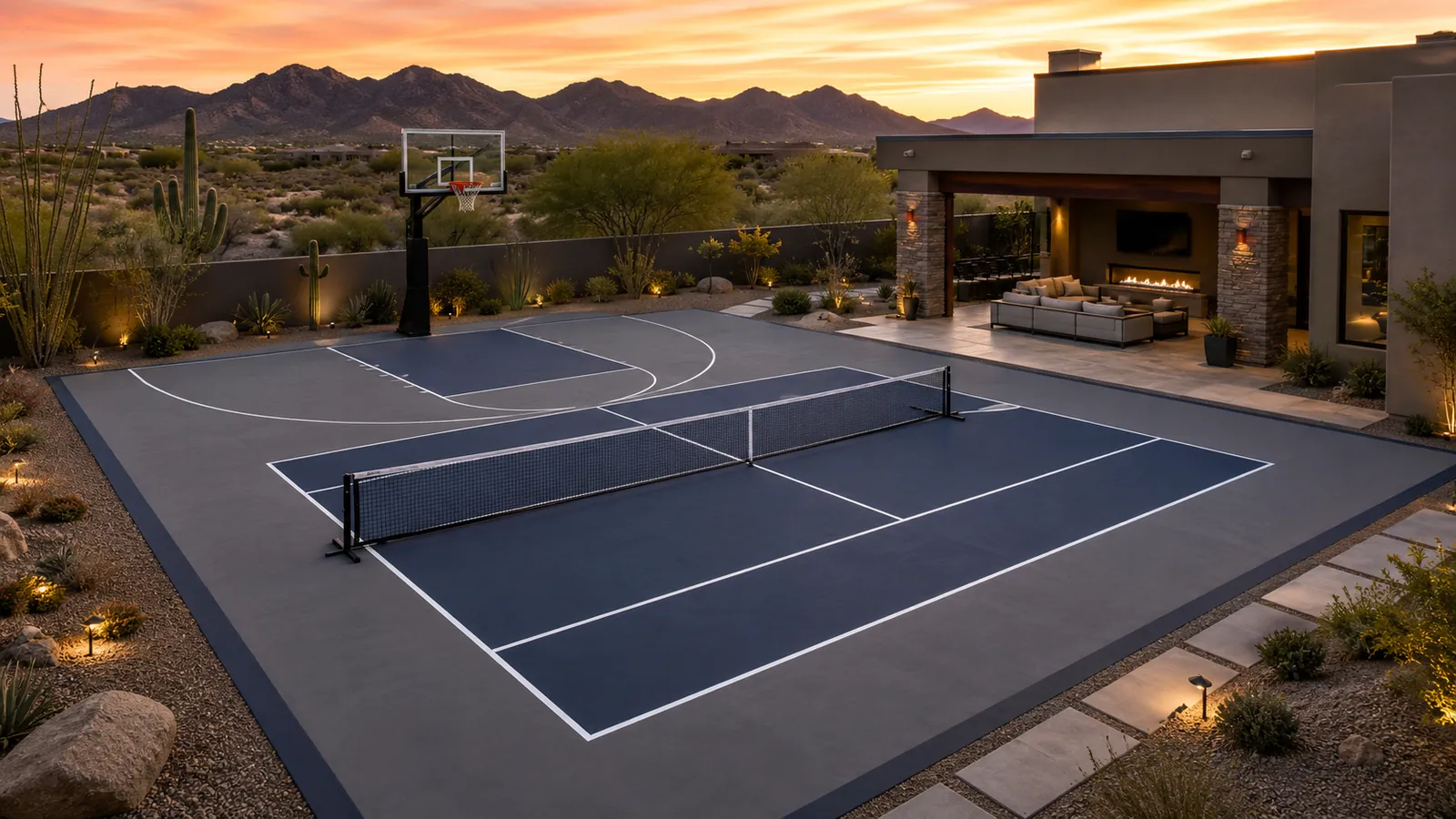
Freshly painted pickleball court lines after a resurfacing repair
Know the Warning Signs

What Are the Common Signs Your Court Needs Repair?

Property owners should inspect their courts periodically for visible changes. Some of the most common warning signs include:

  • Surface cracks: the most visible court problem, often caused by ground movement, temperature changes, aging materials, base deterioration or drainage problems.
  • Faded court colors: sun exposure can gradually fade surface coatings, reducing appearance and making playing zones less distinct.
  • Worn playing lines: heavy use and weather exposure can cause court markings to fade, and clear lines are essential for accurate play.
  • Low spots and standing water: if rainwater consistently pools in certain areas, the surface may have developed low spots or drainage problems.
  • Reduced traction: a worn surface may become smoother or inconsistent, reducing player confidence and affecting movement.
  • Surface peeling or flaking: can indicate improper surface preparation, aging materials, or moisture-related problems.

Small cracks should be monitored because they can expand over time, and peeling areas should be evaluated before new coatings are applied.

The Resurfacing Process

What Happens During Pickleball Court Resurfacing?

A professional pickleball court resurfacing project typically follows several stages, though the exact process varies according to court condition.

1

Court Inspection

The contractor evaluates cracks, drainage, coating condition, low areas, and structural concerns.

2

Surface Cleaning

Dirt and loose materials are removed from the existing court surface.

3

Repairs

Cracks, damaged areas, and minor depressions are addressed before any new material is applied.

4

Surface Preparation

The court is prepared to accept new coatings and promote proper adhesion.

5

Acrylic Resurfacer

A resurfacing layer may be applied to help create a more consistent base.

6

Color Coatings

Sport-specific coatings are applied in the selected court colors.

7

Line Striping

New pickleball lines are measured and installed for accurate play.

Next Step

Ready to Restore Your Pickleball Court?

Request a court evaluation from Dink Pro Courts. We'll inspect cracks, drainage, coatings and lines, then recommend a repair, resurfacing or reconstruction plan that fits the actual condition of your court.

Repair or Resurface

Do You Need Repair or Full Resurfacing?

Repair and resurfacing are related, but they are not the same process. Pickleball court repair focuses on specific problems such as filling cracks, fixing damaged edges, correcting isolated low spots, repairing coatings and addressing drainage problems.

Pickleball court resurfacing involves renewing a larger portion or the entire playing surface through surface cleaning, crack repair, patching, leveling, an acrylic resurfacer, new color coatings and fresh playing lines. Resurfacing is often appropriate when the base remains stable but the surface has experienced widespread wear. However, structural issues should always be corrected before resurfacing begins.

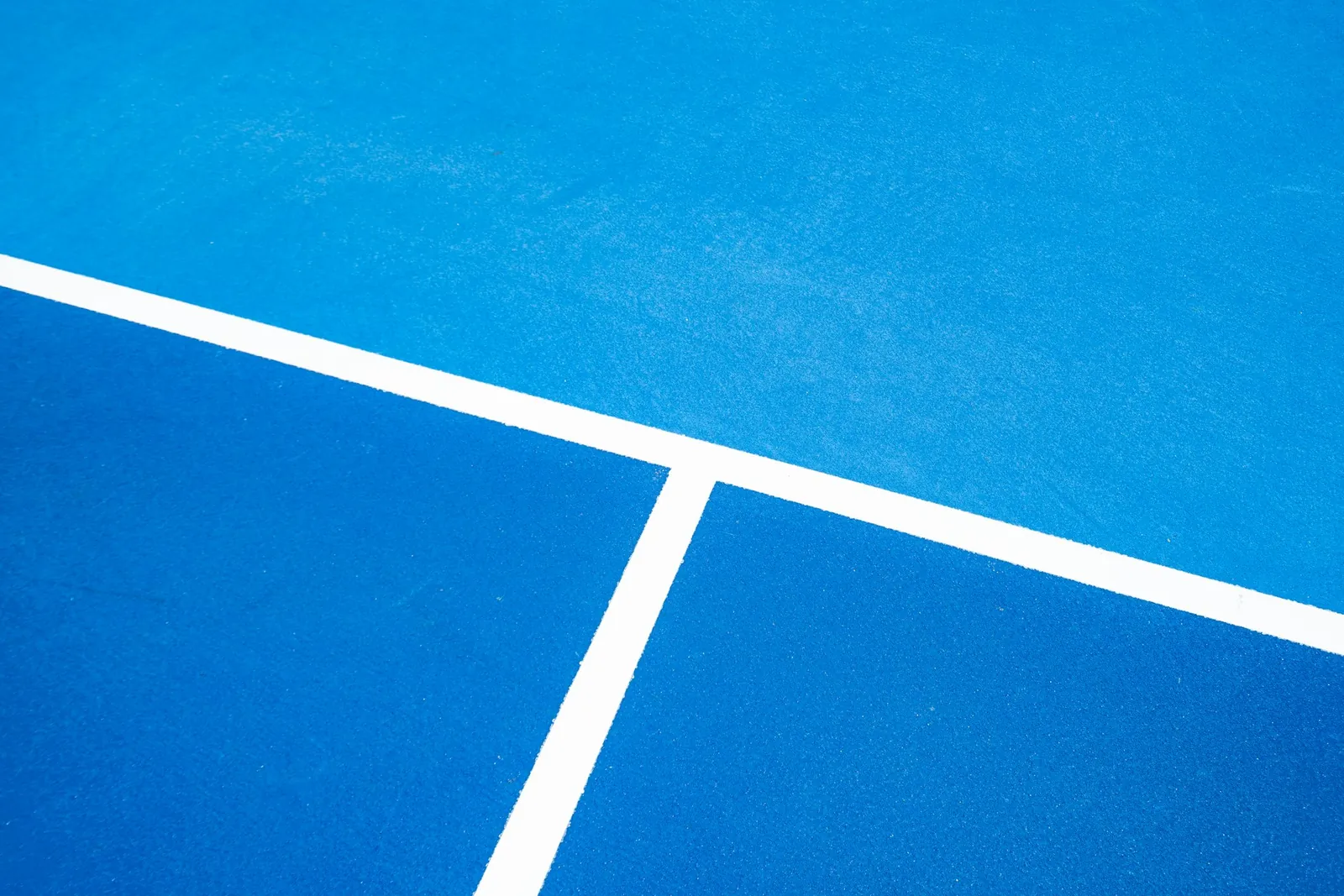
Close-up of a pickleball court surface showing color coating and playing lines
Protect Your Investment

How Can You Reduce Future Court Damage?

Good maintenance can help protect a repaired or resurfaced court and extend the time between resurfacing projects.

  • Keep the surface clean: remove dirt, leaves, debris, and other materials regularly.
  • Address drainage problems: do not allow standing water to remain on the court repeatedly.
  • Inspect cracks: small cracks should be monitored before they become larger.
  • Avoid damaging equipment: heavy machinery or sharp objects should not be placed directly on the court.
  • Maintain landscaping: roots and overgrown vegetation near the court can create problems.
  • Schedule professional inspections: periodic evaluations can identify developing issues earlier.

The earlier problems are identified, the more repair options may be available.

Freshly painted pickleball court lines after a resurfacing repair
Close-up of a pickleball court surface showing color coating and playing lines
Built for the Desert

How Does Arizona Climate Affect Court Damage?

Arizona conditions can be especially demanding on outdoor recreational surfaces. Pickleball courts may experience strong UV exposure, extreme heat, dust, monsoon rainfall and significant temperature changes.

These conditions can contribute to coating wear, fading, expansion, contraction, and surface deterioration. For this reason, Arizona court maintenance should focus on both surface condition and underlying structural issues, and Dink Pro Courts selects repair and resurfacing approaches appropriate for local outdoor conditions.

Service Area

Trusted Pickleball Court Repair Across Maricopa County

Court damage rarely looks the same from one property to the next, and repair or resurfacing plans should reflect the base, drainage, coatings and playing lines specific to each court. Dink Pro Courts evaluates and repairs residential and commercial pickleball courts throughout Maricopa County, matching the repair strategy to the actual condition of the surface.

Comprehensive Coverage

Cities We Serve

Phoenix
Scottsdale
Paradise Valley
Mesa
Gilbert
Chandler
Queen Creek
Tempe
Fountain Hills
Cave Creek
Carefree
Glendale
Peoria
Surprise
Goodyear
Buckeye
Freshly painted pickleball court lines after a resurfacing repair
Know When to Rebuild

When Should a Court Be Rebuilt Instead of Repaired?

Repair or resurfacing may not always be enough. Complete reconstruction may need to be considered when there is:

  • Severe base failure
  • Significant structural cracking
  • Extensive settlement
  • Major drainage problems
  • Large uneven sections
  • Widespread foundation movement

Repeatedly resurfacing a severely damaged base may only provide temporary improvement; a professional assessment can help determine whether repair, resurfacing, or complete court reconstruction provides the better long-term option. If the surface is worn but the base is sound, see pickleball court resurfacing in Arizona.

Crack Repair for Arizona Pickleball Courts

Hairline cracks can be cleaned and filled with acrylic crack filler. Wider or moving cracks may need a crack-bridging membrane before resurfacing. Cracks from a failing base usually return unless the base is fixed.

Low Spots and Drainage Damage

Monsoon water that ponds on a court softens coatings and causes peeling. We level birdbaths with patch binder and correct runoff where possible.

Courts start at $29,000 for a 54 ft x 28 ft court, with a basic net and 4 paddles included. $598/mo for 60 months with excellent credit. Request a free quote.

Estimated rates and terms are not binding and are subject to change. Your actual APR depends on credit score, amount financed and credit history; only borrowers with excellent credit qualify for the lowest rates. All financing is subject to credit review and approval by lending partners.
Find Answers

Frequently Asked Questions

Common repairs include crack treatment, surface patching, low-spot correction, coating restoration, line repainting, drainage improvements, and repairs to fencing or net systems.

Pickleball court repair addresses specific damaged areas, while pickleball court resurfacing renews a larger portion or the entire playing surface with repairs, new coatings, and fresh court lines.

Yes, many cracks can be treated. However, structural cracks caused by underlying movement may return, so the source of the cracking should be evaluated.

Resurfacing may be appropriate when the court has widespread fading, worn coatings, reduced traction, minor cracking, or deteriorating line markings.

Minor low areas may sometimes be addressed during resurfacing, but significant drainage or structural problems may require additional repairs.

Costs vary based on the type and extent of damage. Crack repair, surface patching, drainage work, and complete resurfacing all involve different levels of work.

Minor and moderate damage may often be repairable. Courts with major base failure, extensive settlement, or severe structural cracking may require more substantial reconstruction. A professional inspection can determine the best approach.

Low spots or poor slope. They can be leveled with patch material before resurfacing.

Often, yes, if the base is stable. Smaller cracks are cleaned and filled, wider or moving cracks may need a crack-bridging membrane, and birdbaths where water pools are leveled with patch binder before the new acrylic surface and lines go on. Cracks caused by a failing base usually come back, so in that case we recommend fixing the base or rebuilding.

Get Started

Restore Your Court With Dink Pro Courts

Is your court showing cracks, fading, worn lines, low spots, or surface deterioration? Contact Dink Pro Courts for a professional court evaluation. The team can assess your current surface and recommend appropriate pickleball court repair or pickleball court resurfacing options based on the condition of the base, drainage, coatings, and playing area.

Explore More

Other Service Areas We Cover

Pickleball Court Surface CoatingPickleball Court Construction GuideChandler, AZMesa, AZGilbert, AZTennis Court Resurfacing
Get a Site-Specific Quote

Get a Site-Specific Court Repair Quote

Call or text (480) 493-0031, email build@dinkprocourts.com or submit the project form.