Quick Connect
Trade Partner Resources
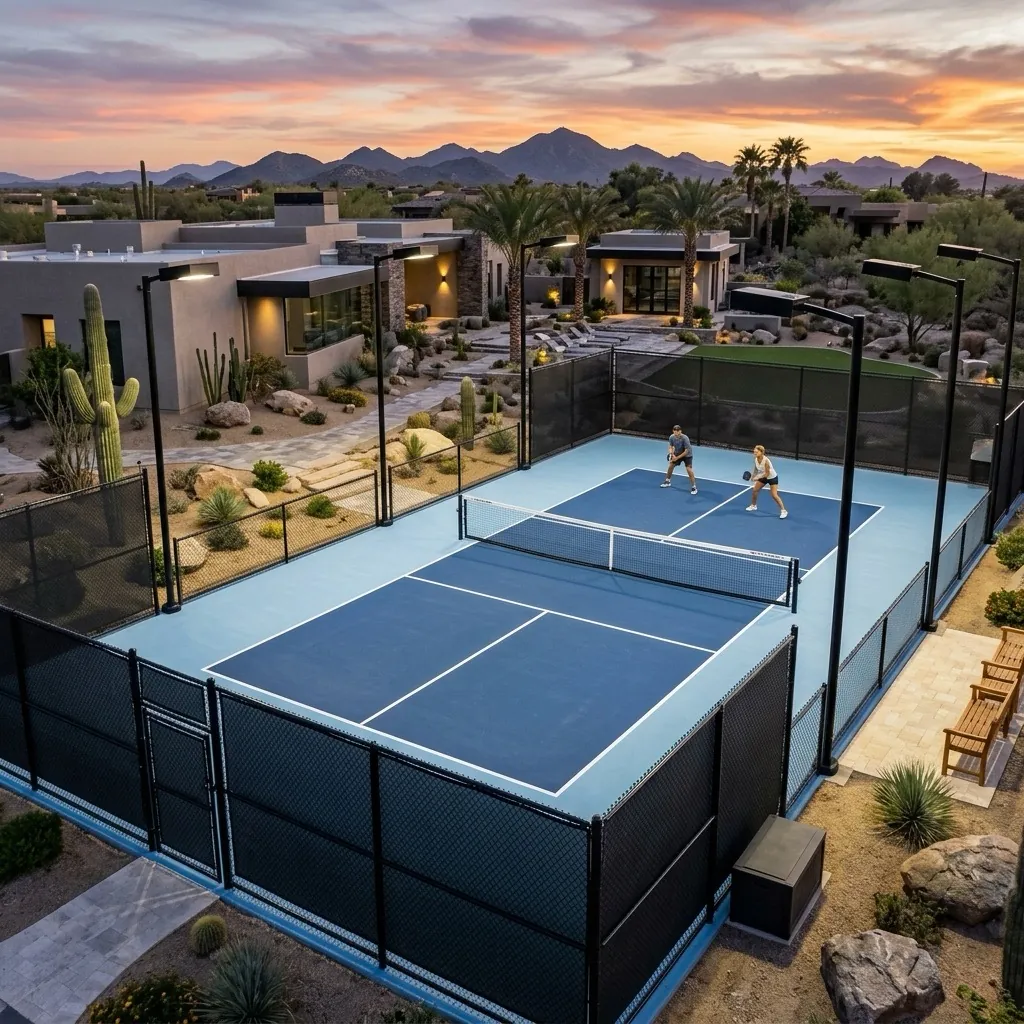
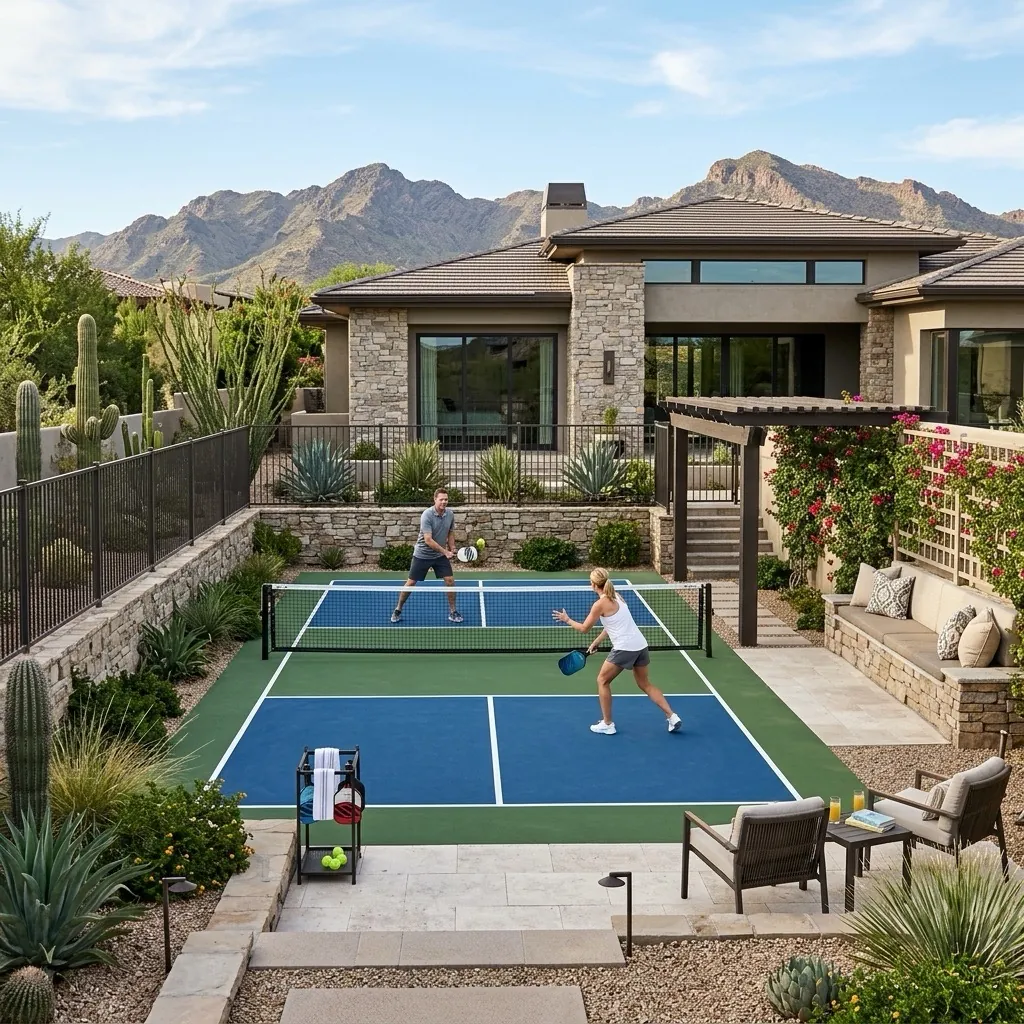
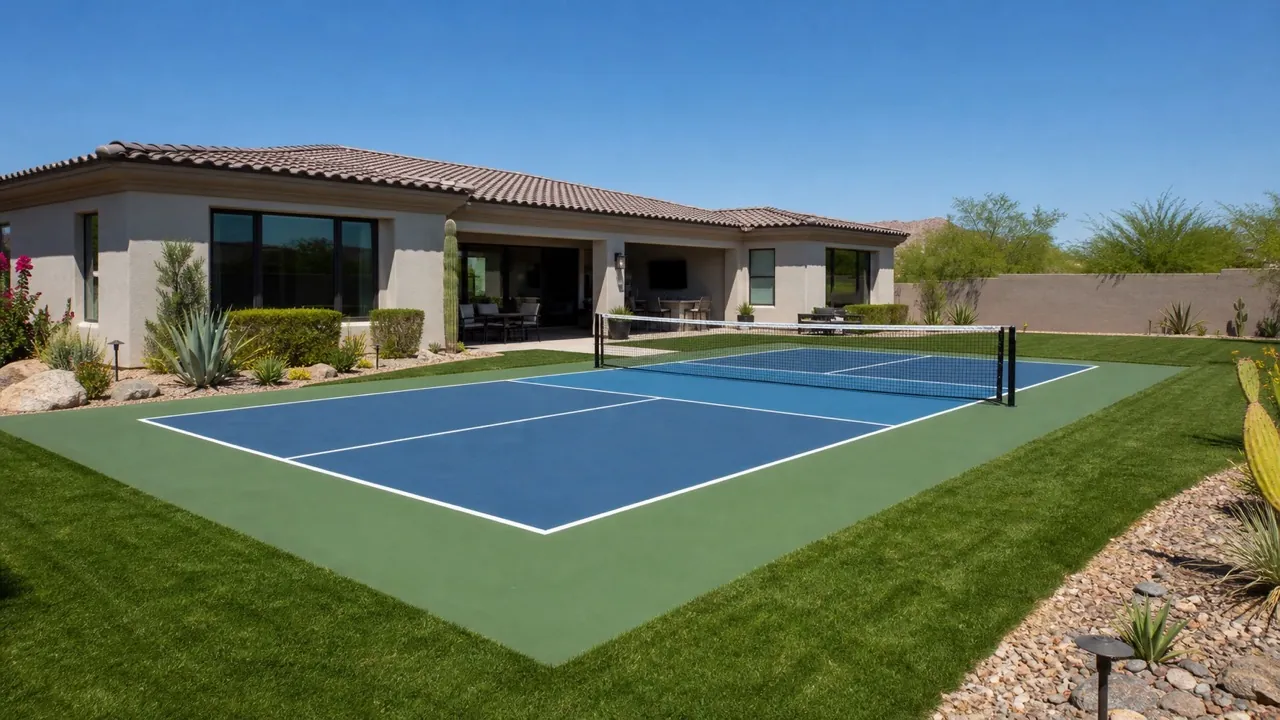
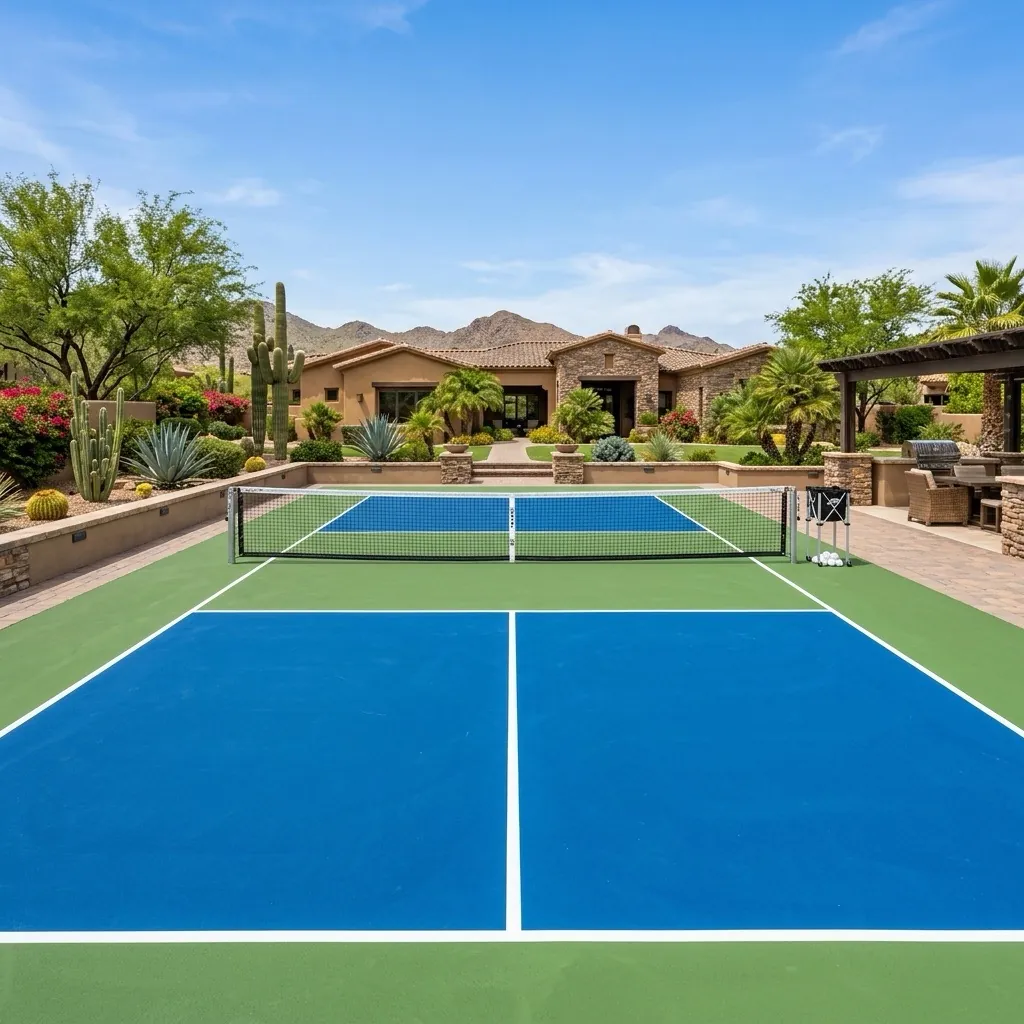
Plan the construction sequence for a pickleball court, pool, hardscape and planting so Arizona backyard trades do not damage or delay one another.
Coordinate the court early, complete heavy access-dependent work before delicate finishes, and protect final acrylic surfacing until nearby dust, masonry, irrigation and planting work are substantially complete. The exact order depends on access, elevation and drainage, but the court footprint and interfaces should be fixed before adjacent improvements are built.
This page is written for pool builders, landscape contractors, project managers and homeowners. It answers the pickleball court construction sequence pool landscape query with a property-specific planning path, practical decision criteria and a clear route to a written scope from Dink Pro Courts in Maricopa County, Arizona.
Begin with one coordinated plan for pool elevation, court elevation, deck transitions, walls and site drainage. Avoid designing each feature independently and trying to connect the grades in the field.
Confirm where runoff travels during construction and after completion. The court should not receive pool backwash, roof discharge, irrigation overspray or concentrated landscape runoff.
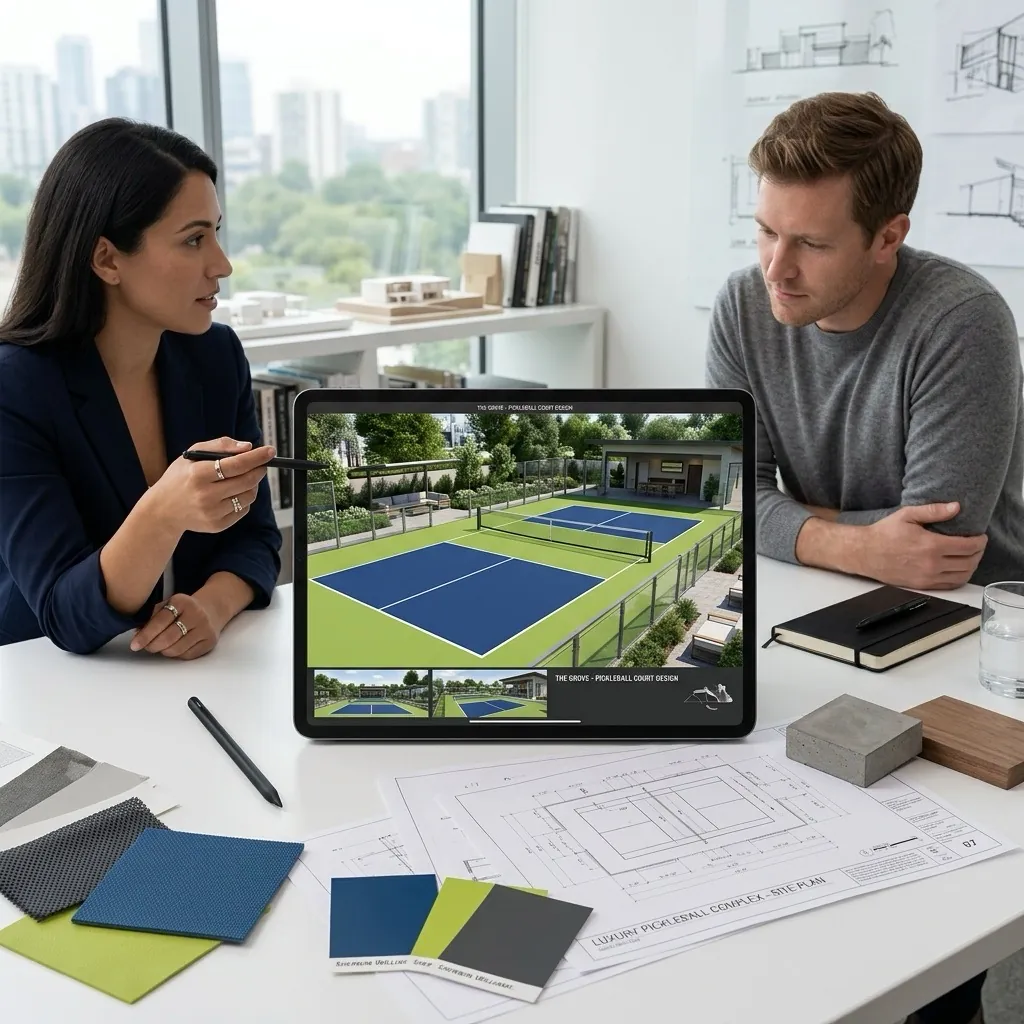
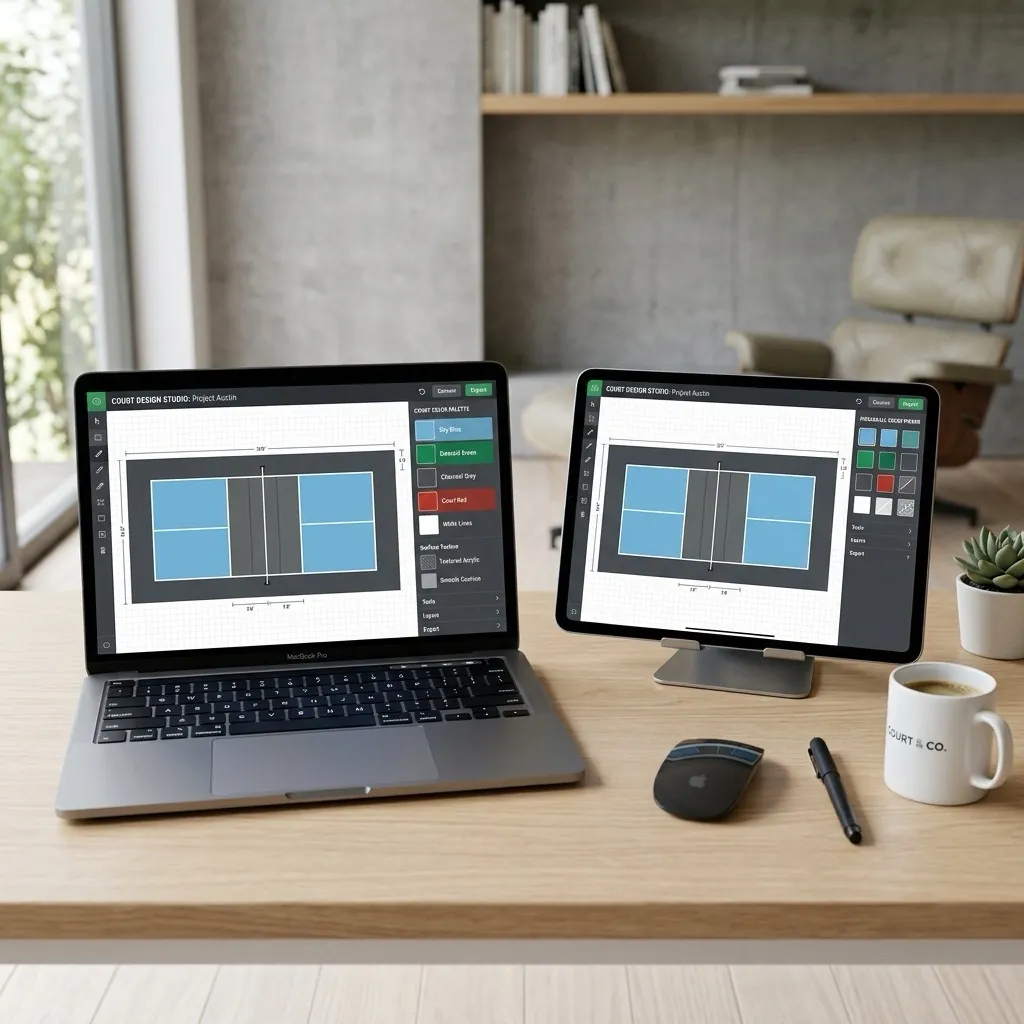
Complete excavation, export, base preparation and major concrete placement while suitable access remains available. If the pool shell or perimeter walls will block the court route, the schedule must reflect that constraint.
Plan temporary protection at existing paving, the pool edge and finished structures. Assign responsibility for repair if one trade damages another trade's work.

Coordinate sleeves, drainage, lighting foundations, conduits, fencing footings, irrigation changes and equipment anchors before final hardscape and court finishes. Photograph concealed work for the close-out record.
Pool deck, retaining and hardscape work can proceed around the established court limits, provided they do not contaminate or overload the sport surface.

Apply acrylic coatings and striping after adjacent cutting, stucco, masonry and bulk soil work are complete. Then install sensitive planting, mulch and decorative elements with protection that keeps equipment and irrigation off the court.
Schedule final cleaning, irrigation testing and a joint walkthrough so overspray, drainage, gate clearance and edge transitions can be corrected before handover.


Dink Pro Courts publishes full design-build court capability across Maricopa County, including site preparation, base construction, acrylic surfacing, striping, equipment, lighting, fencing, resurfacing and multi-sport options. For pickleball court construction sequence pool landscape, the team should confirm the property conditions, contract structure, inclusions, schedule, approvals, warranty and pricing in a project-specific written proposal.

Coordinate the court early, complete heavy access-dependent work before delicate finishes, and protect final acrylic surfacing until nearby dust, masonry, irrigation and planting work are substantially complete. The exact order depends on access, elevation and drainage, but the court footprint and interfaces should be fixed before adjacent improvements are built.
No. Access, grades and the pool method determine the order. The key is to reserve the court route and coordinate heavy work before access disappears.
After the base has met curing and preparation requirements and nearby work is unlikely to contaminate or damage the finish.
Coordinate foundations and sleeves early. Final mesh or panels may be scheduled later if that protects access and finishes.
Major planting and soil movement should usually finish first, while delicate planting near the court may be safer after surfacing with strict protection.
To discuss pickleball court construction sequence pool landscape, share the address, available plans, target footprint, access, grades, surrounding improvements and desired features with Dink Pro Courts. Call or text (480) 493-0031, email build@dinkprocourts.com, or use the project form to request a site-specific conversation.

See every guide in the Trade Partner Resources hub.