Quick Connect

Backyard Court Planning Guide
A practical guide to backyard pickleball court dimensions, surface prep, drainage, fencing and lighting so your home court performs well for years in the Arizona climate.
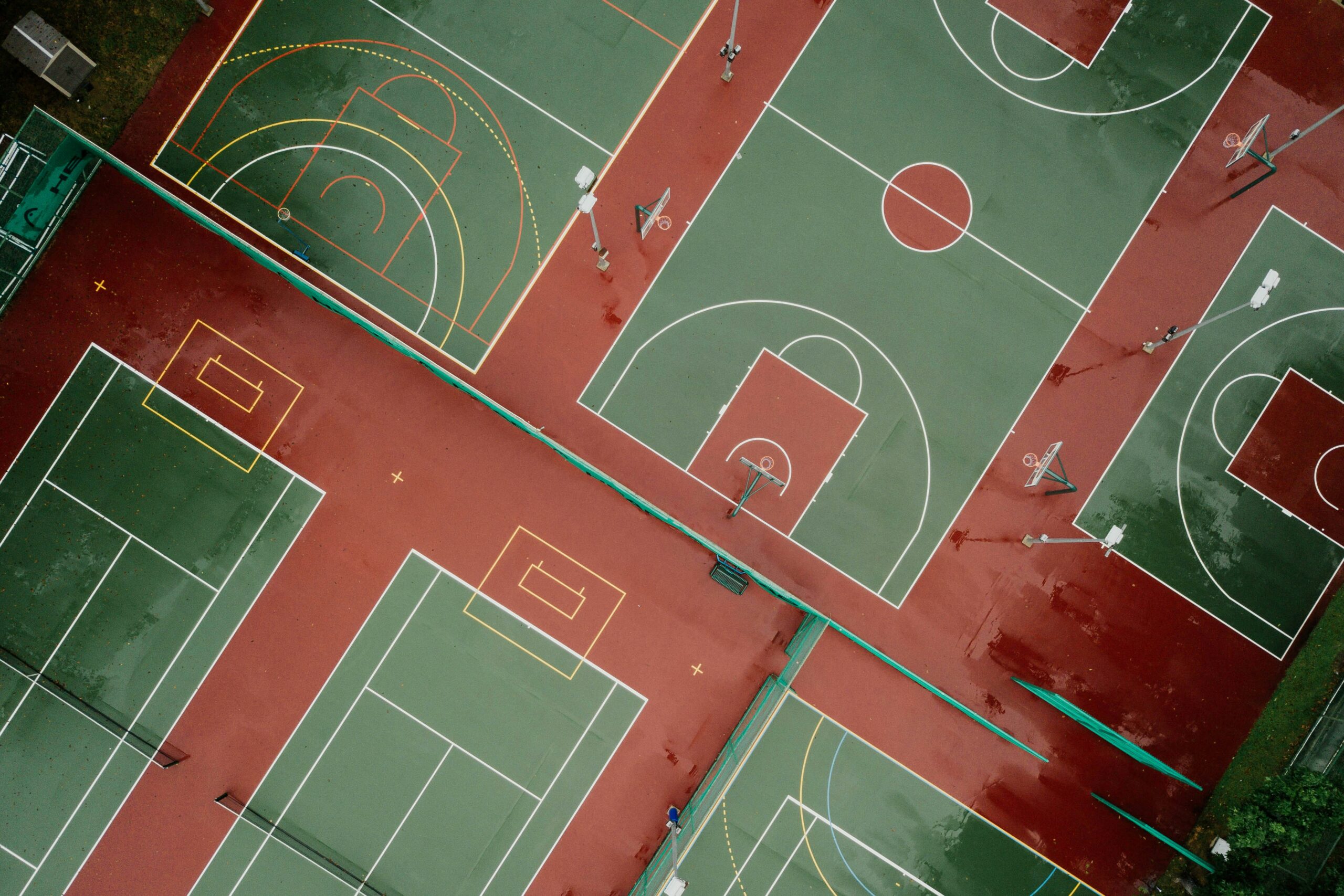
A well-built backyard pickleball court starts with a properly sized footprint (roughly 30 by 60 feet for the 20-by-44-foot playing area plus buffer space), a properly graded and prepared base, sport-specific acrylic surfacing, and planned drainage, fencing and lighting, all confirmed in a written, site-specific proposal from Dink Pro Courts before construction begins.
A private backyard pickleball court gives homeowners a convenient, low-hassle way to play, exercise and entertain without waiting on public court availability. Typical benefits include:

For people who play frequently, having a court at home makes the sport far easier to enjoy on a consistent basis, and the same space can support other recreational activities when designed as a multi-sport layout.
A regulation pickleball playing court measures 20 feet wide by 44 feet long, but that measurement includes only the playing lines; it does not include the space players need around the court. A commonly recommended total footprint is approximately 30 feet wide by 60 feet long, and a larger area may be preferred for more generous movement and competitive play.
During rallies, players frequently move sideways, backward and beyond the baseline, so extra room also supports fencing, seating, lighting posts, pathways, landscaping and equipment storage. A qualified contractor can help make the most of the available space without sacrificing playability. Short on space? A mini pickleball court fits a smaller yard on one concrete slab.


A backyard pickleball court’s quality can be greatly impacted by its placement. Consider a few things before construction starts:
These specifics may affect both the design and the pricing of the project, so a site assessment should come before a final layout is set. Our court design guide walks through layout, colors and clearances.
The quality of the base has a major influence on long-term court performance, and a poorly prepared surface can eventually develop cracks, uneven areas, water pooling and inconsistent ball bounce. Pickleball courts frequently use acrylic sports coatings because they offer a good mix of durability, grip and reliable ball response, and colors can be paired with:

Dink Pro Courts can evaluate the site and help determine the appropriate base and coating system for the project. Dink Pro Courts builds new courts on concrete, and existing slabs can sometimes be inspected and repaired instead of rebuilt.
Planning mistakes can affect both performance and long-term durability.
Installing only the 20-by-44-foot playing area without enough surrounding space can make the court uncomfortable to use.
A flat court without proper grading may develop water pooling after Arizona monsoon storms.
Sports courts require coatings designed specifically for recreational surfaces, not standard exterior paint.
Coatings applied over damaged or contaminated surfaces may fail prematurely.
Poor court orientation can make daytime play uncomfortable during peak sunlight hours.
Every property has different conditions, so a site-specific plan is more valuable than a generic price.
Dink Pro Courts builds custom backyard pickleball courts throughout Maricopa County, with each project planned around the property's dimensions, drainage, sun exposure and the homeowner's intended use. From site assessment through final walkthrough, every court is designed to hold up to Arizona heat, monsoon rainfall and everyday play.
Homeowners considering pickleball court installation Phoenix AZ should be particularly aware of the local climate: for a large part of the year, Phoenix and the surrounding valley see intense sunshine, high heat and sudden monsoon downpours. Expert installation should take into account:
For homeowners looking for long-lasting recreational areas built around Arizona landscapes, Dink Pro Courts offers custom court solutions designed around the local climate.

Building a court can be a significant investment, and the total depends on site conditions, excavation, the concrete base, court dimensions, surface coatings, fencing, lighting, landscaping changes, drainage and any personalized accessories. Building a new court from undeveloped land will typically demand a different budget than a straightforward resurfacing project, so having the site assessed is the most accurate way to calculate cost.
Installation timelines depend on site preparation, base construction, concrete curing, weather, surface coating, fencing and lighting installation and any custom features. Projects involving an existing suitable slab can sometimes move more quickly than complete new construction, and the contractor should provide a realistic project timeline after evaluating the site.

The regulation playing area is 20 feet by 44 feet. However, homeowners should allow additional space around the court. An overall area of approximately 30 by 60 feet can provide more comfortable recreational play.
Possibly. The available space must be evaluated carefully. A smaller total footprint may work for casual play, but reducing surrounding space can limit player movement.
A properly prepared concrete base with sports-specific acrylic coatings is a common choice, and it's the only base Dink Pro Courts builds. The coating system depends on the site and local environmental conditions.
Fencing is not always mandatory, but it is highly useful. It helps keep balls within the court area and can protect nearby landscaping, pools, streets, and neighboring properties.
Lighting is a valuable option for homeowners who want to play in the evening or early morning. It is particularly useful in Arizona during warmer months.
Costs vary based on site preparation, base construction, dimensions, surfacing, fencing, lighting, drainage, and custom features. A site evaluation is the best way to develop an accurate estimate.
Yes. Dink Pro Courts can support court resurfacing and repair projects where the existing surface is suitable for restoration.
Yes. Homeowners considering pickleball court installation Phoenix AZ can work with Dink Pro Courts to plan a custom court based on property conditions, available space, and desired features.
A successful backyard pickleball court begins with the property, not just the playing field. Assess the site, plan drainage, choose the right surface and make early decisions about fencing, lighting and custom features. Start with a site-specific consultation and let Dink Pro Courts tailor the project around your available space, the Arizona climate and your recreational goals.
For Arizona-specific options and project examples, see backyard pickleball courts in Arizona.