Court Size Guide
What Is the Standard Pickleball Court Size for Safe, Comfortable Play?
Regulation court size, singles vs doubles, kitchen area, net height and total space planning for backyard, competitive and community courts.
Court Size Guide
Regulation court size, singles vs doubles, kitchen area, net height and total space planning for backyard, competitive and community courts.
The standard pickleball court size is 20 feet wide by 44 feet long for both singles and doubles play. Since players need room outside those lines, most installations use a total footprint of about 30 by 60 feet, or 34 by 64 feet for more comfortable recreational or competitive play.
A regulation pickleball court measures 20 feet wide by 44 feet long, or 880 square feet of marked playing area, the same for singles and doubles. Every other feature, from the kitchen to the service areas, centerline and net, is positioned relative to these measurements. But building only 20 by 44 feet leaves players almost no room outside the boundaries, which is why most installations use a larger overall footprint: about 30 by 60 feet works well for many residential and recreational courts, while 34 by 64 feet gives competitive players, clubs, schools and larger properties more room to move.
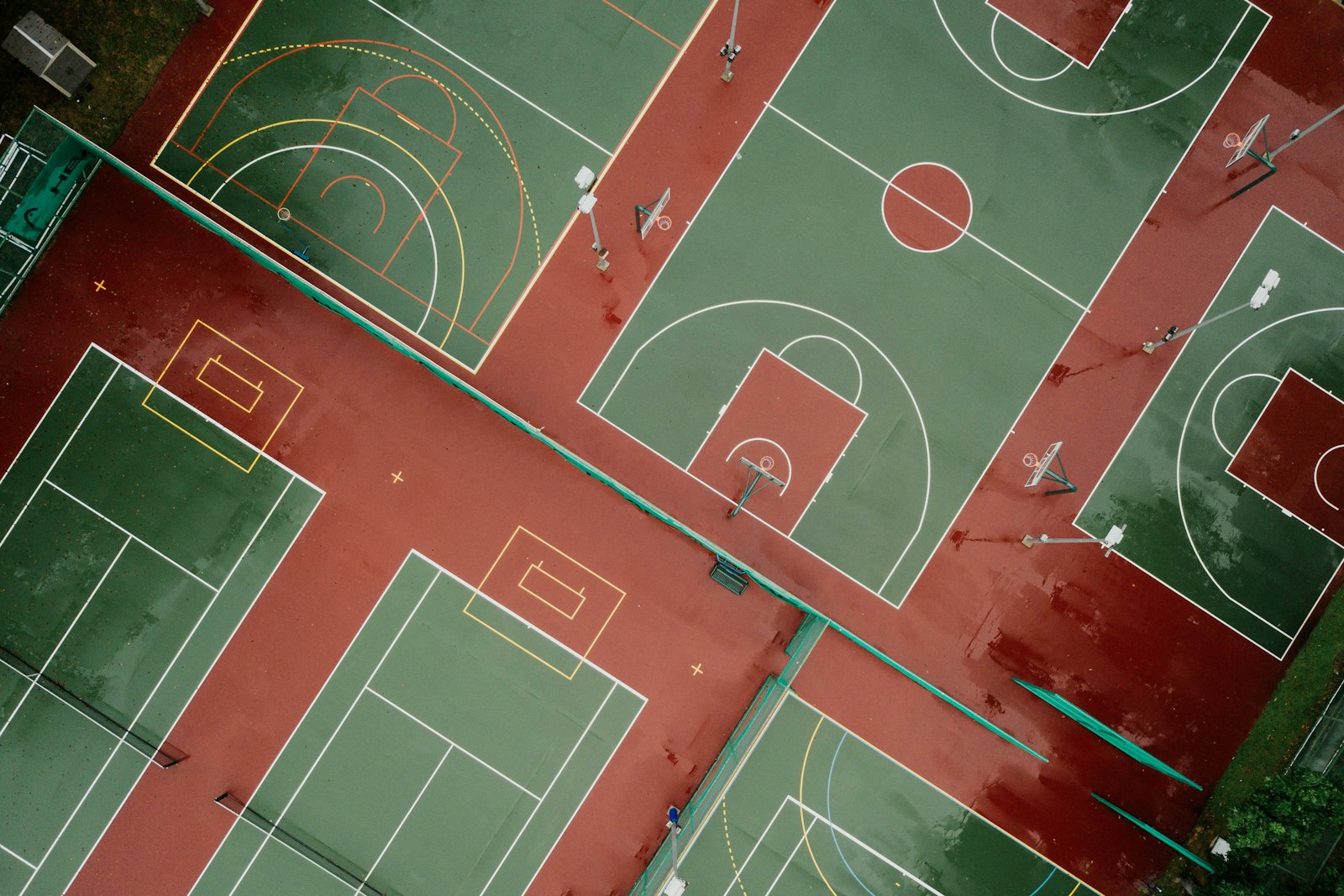
During rallies, players regularly move past the sidelines and baseline to chase angled shots, deep returns and lobs. Extra clearance makes room for that movement plus benches, gates, fencing and lighting structures. Dink Pro Courts plans for the entire usable area, not just the painted lines.
Unlike tennis, where singles and doubles use different court widths, pickleball uses the same 20-by-44-foot boundaries no matter how many players are on court. That means singles and doubles can share the exact same lines without any changes, though doubles play does put extra importance on surrounding clearance since four players are moving near the kitchen at once.
The kitchen (non-volley zone) extends 7 feet from the net on each side, so each zone measures 7 feet deep by 20 feet wide, with both zones together spanning 14 feet across the middle of the court. The net stands 36 inches high at the sidelines and 34 inches at the center, and getting all of these measurements right is essential for regulation-style striping.
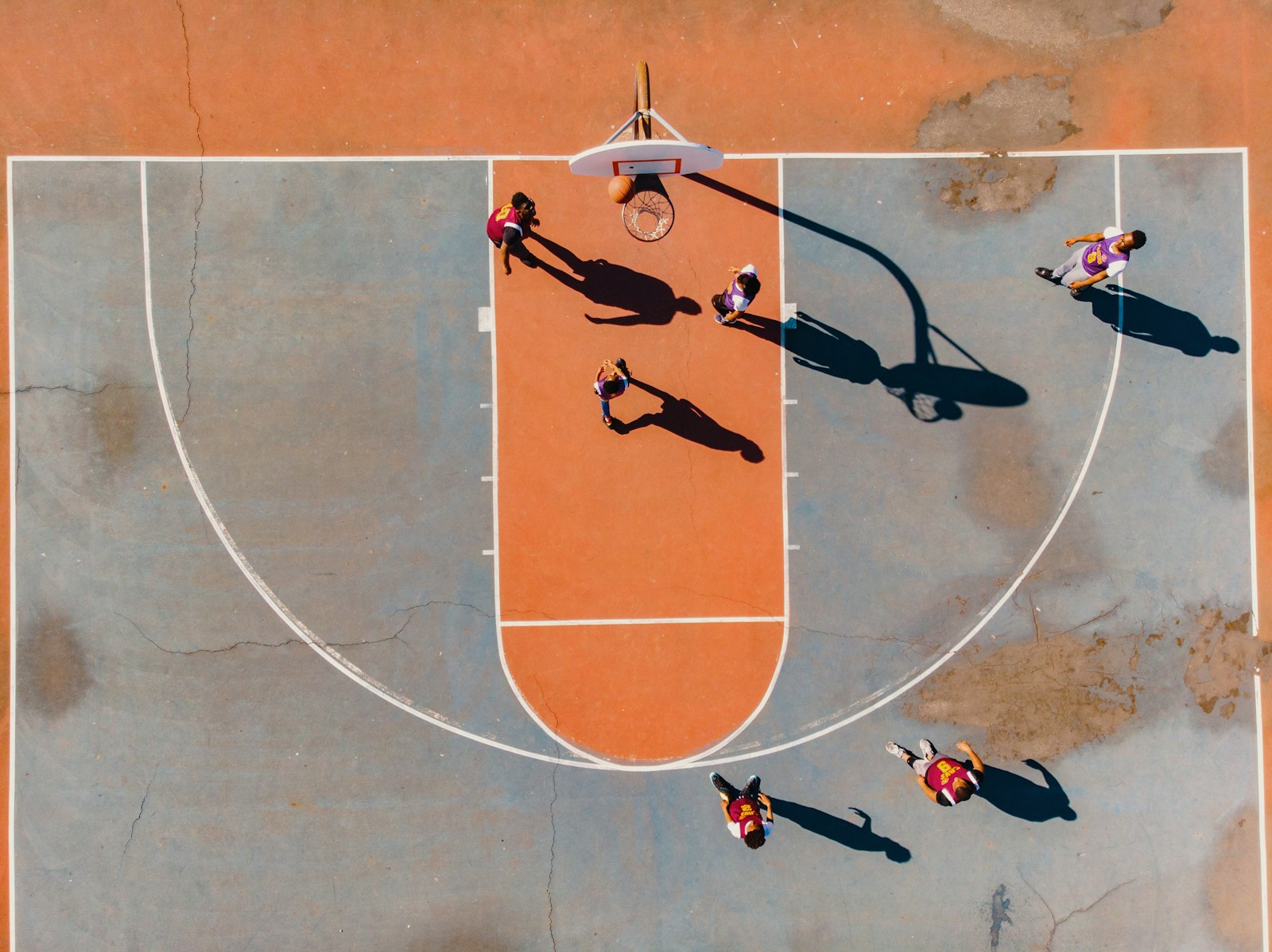
Most homeowners’ final court size comes down to available property space. A regulation court needs at least 20 by 44 feet, but building to that minimum alone leaves little runoff room, so 30 by 60 feet or 34 by 64 feet is preferred whenever the lot allows it. On tighter properties, it’s possible to build a smaller overall footprint by trimming the runoff area around the court rather than shrinking the 20-by-44-foot playing surface itself, though reduced clearance can bring players closer to walls, fences or other obstacles.
Contact Dink Pro Courts to discuss your property, available space, court design, construction requirements and custom installation options.
Clubs, schools and tournament facilities need more than a single court’s footprint.
Tournament and club facilities typically need extra room for spectator seating, waiting areas, and accessible entrances.
A 30×60 ft footprint adds several feet behind each baseline; 34×64 ft adds even more for serving and deep returns.
Space beside the sidelines reduces interference from fences, walls, light poles, benches and landscaping.
Multi-court sites need safe separation between games plus room for fencing, walkways, benches and spectators.
Dink Pro Courts evaluates available space and recommends the right pickleball court size for homes, schools, clubs and commercial facilities throughout Maricopa County.
Court orientation affects visibility throughout the day. A roughly north-south layout is often preferred to reduce players facing directly into low-angle sun, though lot shape, structures, trees, drainage and access can shift the ideal direction. Fencing should factor into court size from the very start too: adding it after the surface is already positioned can eat into player clearance, while planning it early keeps balls contained and supports access gates without cramping the court.
Lighting needs its own space consideration as well. Poles and fixtures should sit outside active play zones while still lighting the surface evenly. Before finalizing a size, it helps to answer: how much land is available, will the court host singles and doubles, is fencing or lighting planned, is seating needed, and how will water drain? Answering these early prevents costly changes once construction is underway.
The regulation pickleball court size is 20 feet wide by 44 feet long for both singles and doubles play.
Although the marked court measures 20 by 44 feet, an overall area of approximately 30 by 60 feet is commonly used. A 34-by-64-foot space can provide additional player clearance.
No. Singles and doubles use the same pickleball court dimensions of 20 feet by 44 feet.
The marked 20-by-44-foot playing area contains 880 square feet. The total installation footprint is larger when surrounding clearance is included.
A backyard must accommodate at least the regulation 20-by-44-foot playing surface. Where possible, approximately 30 by 60 feet or more provides better surrounding clearance.
The kitchen extends 7 feet from the net on each side and spans the entire 20-foot width of the court.
Yes. Dink Pro Courts can evaluate available space, property conditions, intended use, drainage, fencing, lighting, and other site considerations to recommend an appropriate court layout.
Ready to plan your court? Contact Dink Pro Courts today to discuss your property, available space, court design, construction requirements and custom installation options.
Call or text (480) 493-0031, email build@dinkprocourts.com or submit the project form.