Court Lines Guide
How Should Pickleball Court Lines Be Designed for Clear and Accurate Games?
Standard line layout, width, color contrast, and application tips for a pickleball court that plays fair and looks professional.
Court Lines Guide
Standard line layout, width, color contrast, and application tips for a pickleball court that plays fair and looks professional.
Well-designed pickleball court lines help players quickly read boundaries, service areas, and the non-volley zone. Accurate measurements, consistent line widths, durable coatings, and strong contrast with the court color all matter. Line planning should be part of the full court design, not an afterthought.
Each marking on the court has a specific purpose, so accurate measurement is essential.
Cross each end of the court and mark where serves are made and shots go out.
Define the court’s width and help players judge whether angled shots stay in play.
Splits the service area into left and right boxes for accurate serve positioning.
The \u201ckitchen\u201d lines mark where volley restrictions apply, so they must stay clearly visible during play.
Line width should stay consistent all around the court. Uneven markings look unfinished and can cause confusion during play. Expert installation keeps every line aligned to the correct dimensions, with straight edges and square corners.
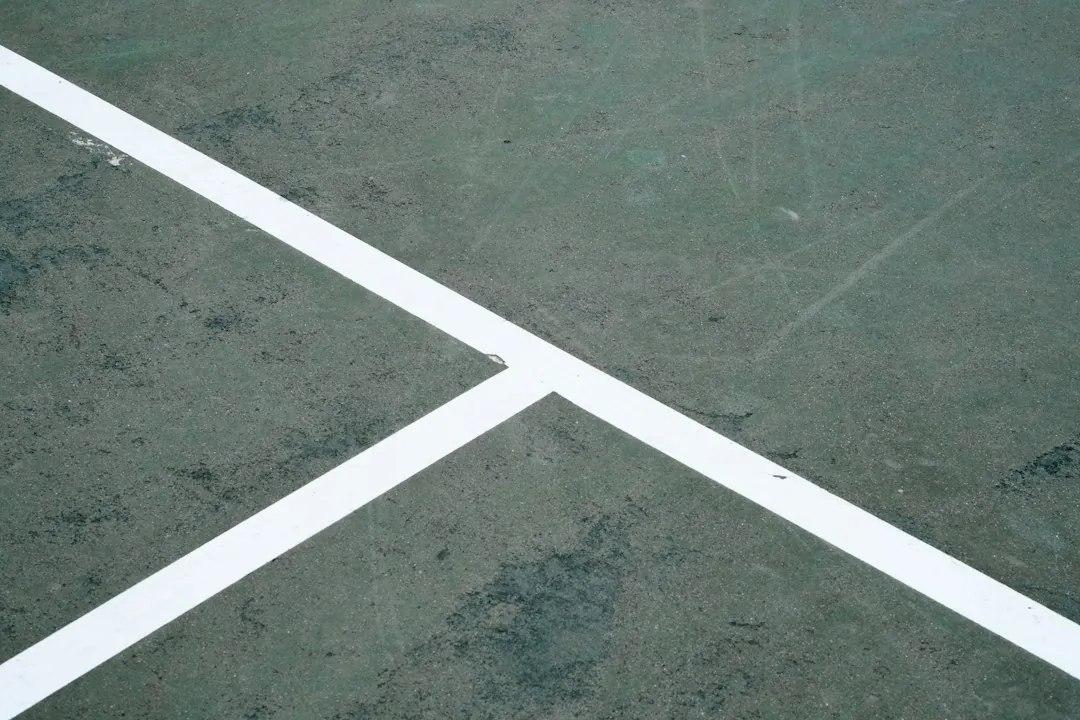
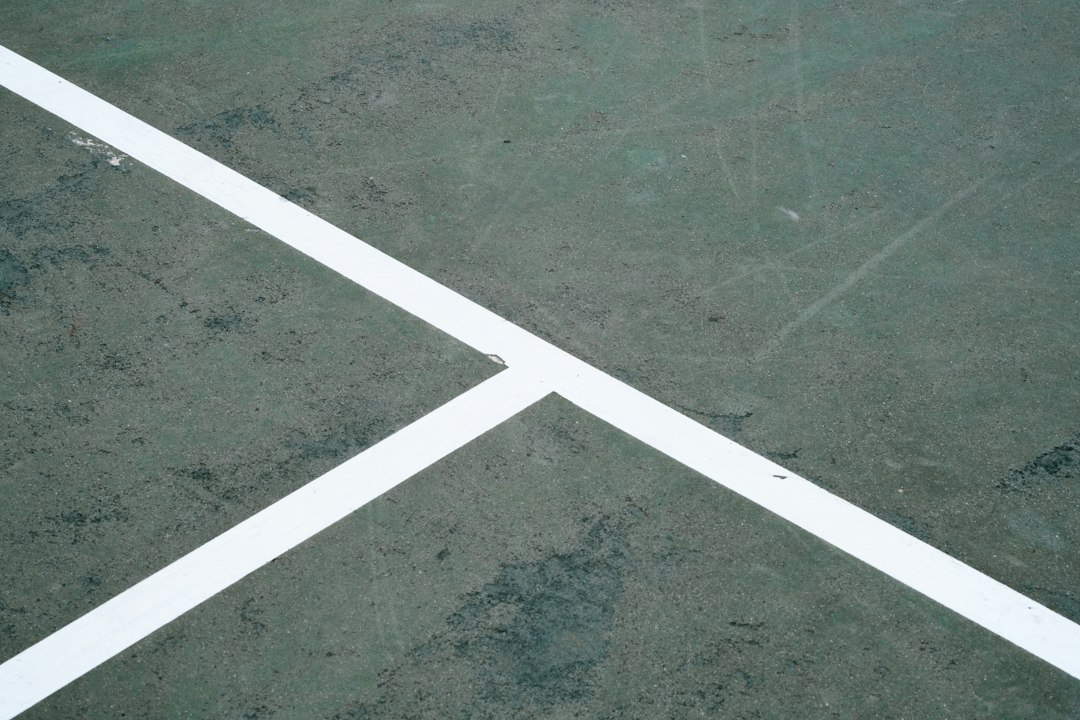
Line color and court color are closely linked. White is popular because it contrasts well with blue, green, grey, and other darker surfaces, but lighter playing surfaces may need extra attention to keep lines visible. The kitchen lines don’t need a separate color from the rest of the court. A single line color throughout keeps the look clean, while a contrasting kitchen surface can add visual definition if that’s the preferred style.
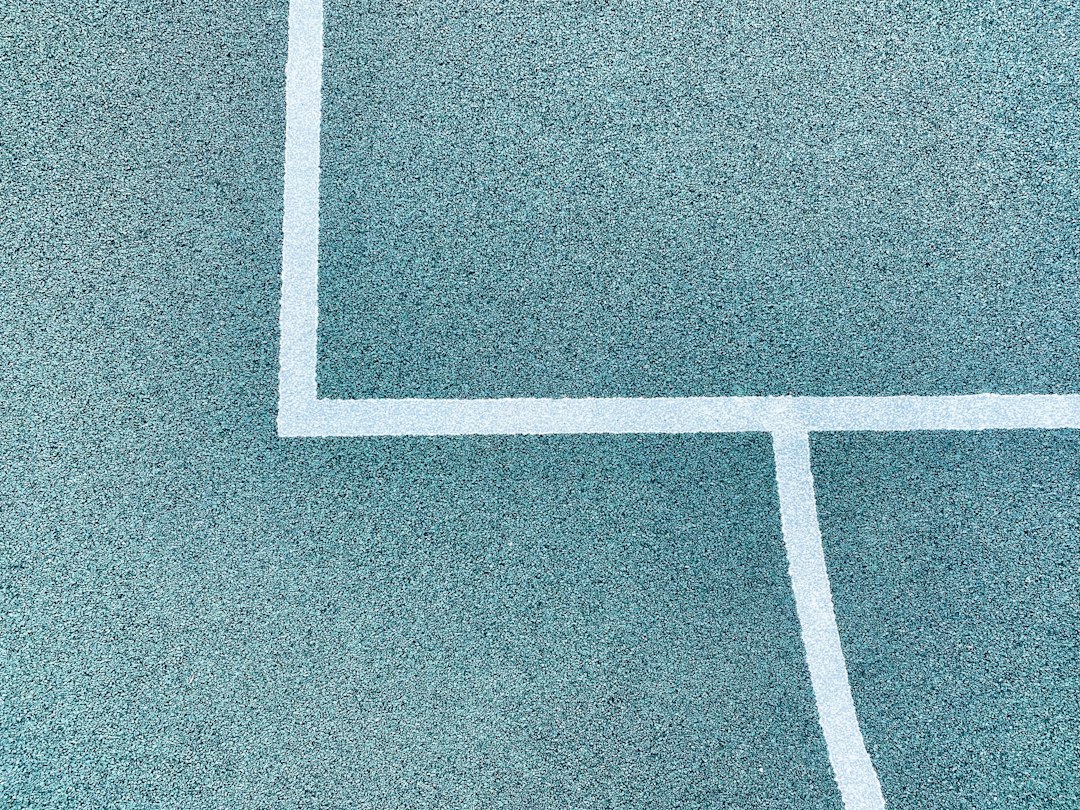
Surface preparation comes first. The court needs to be clean, dry, and stable before measurements are verified and masking is applied for uniform widths and straight edges. Accurate measurement matters throughout: even a small error in one baseline can throw off service areas and the kitchen, which is especially important when adding pickleball lines to an existing tennis or multi-sport court.
Contact Dink Pro Courts to discuss pickleball court lines, surface preparation, court colors, resurfacing, and a complete court design tailored to your property.
Outdoor lines are constantly exposed to sun, rain, temperature swings, dust, and foot traffic, which can cause fading over time. Faded or worn lines can usually be refreshed, but the surface should be inspected first for cracks, peeling, or drainage issues so repainting fixes the underlying problem rather than covering it up. Permanent markings suit dedicated or frequently used courts, while temporary markers can work for spaces shared with other activities.
Dink Pro Courts plans and applies pickleball court lines throughout Maricopa County as part of new construction, resurfacing, or multi-sport conversions.
A standard layout includes baselines, sidelines, a centerline, service areas, and non-volley zone lines. Each marking defines an important part of gameplay.
The best color is one that provides strong contrast with the playing surface. White is commonly used, but the final choice should complement the surrounding court colors.
Yes. Existing tennis courts can often be marked for pickleball, especially when the space is being converted into a multi-sport recreational area.
Yes. Lines can usually be refreshed, but the surface should first be inspected for cracks, peeling, wear, or other issues that could affect the new coating.
Using different colors can make multi-sport courts easier to understand. Each set of markings should remain clearly distinguishable without making the surface overly busy.
They can fade over time due to weather exposure, sunlight, foot traffic, and surface wear. Periodic maintenance and resurfacing can help restore visibility.
Professional installation helps ensure accurate measurements, straight edges, consistent line widths, proper surface preparation, and appropriate contrast with the overall court design.
Dink Pro Courts can help plan and apply court markings as part of new construction, resurfacing, or multi-sport court projects while coordinating them with your chosen court colors and overall layout.
Yes. Pickleball and basketball lines can share one surface when each sport uses its own line color, and the net system and hoop placement are planned together so both games fit.
Contact Dink Pro Courts to discuss pickleball court lines, surface preparation, court colors, resurfacing, and a complete court design tailored to your property. Adding pickleball lines to an existing tennis court? See our tennis to pickleball court conversion service.
Call or text (480) 493-0031, email build@dinkprocourts.com or submit the project form.