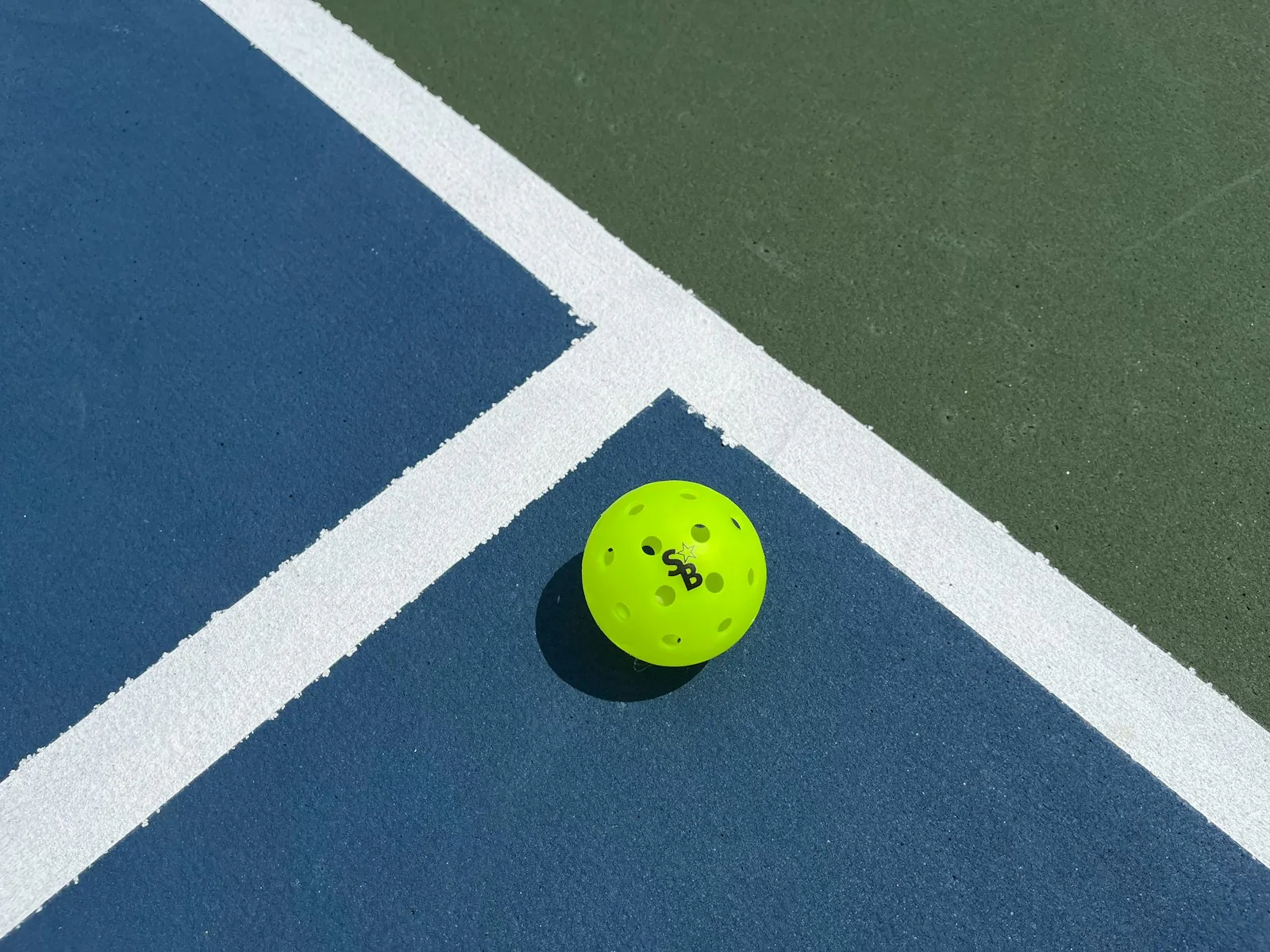
Court Striping Guide
How Should Pickleball Court Striping Be Designed for Clear, Accurate Play?
Measurement, prep, and application tips for pickleball court striping that stays sharp, accurate, and easy to read.
Court Striping Guide
Measurement, prep, and application tips for pickleball court striping that stays sharp, accurate, and easy to read.
Pickleball court striping is the process of measuring and applying the lines that define boundaries, service areas, and the non-volley zone. Precise measurements, strong contrast, consistent line widths, careful surface prep, and durable court paint all come together to create a clean, accurate, professional-looking court.
A standard pickleball court contains several essential markings, each with its own purpose.
Cross both ends of the court to define the back boundary and serving position.
Form the outer boundaries and establish the correct playing width.
Separates the left and right service courts for accurate serving.
The kitchen boundary is central to pickleball strategy, so it needs to stay especially clear.
Good striping starts before the first line goes down. The surface needs to be clean of dust, dirt, and debris, and any cracks, chips, or low spots should be inspected and repaired first. It’s generally better to finish resurfacing work before adding lines. If new pickleball court paint was recently applied, it needs to cure fully before striping begins, since starting too early can affect both the base coating and the finished lines.
Line width should stay consistent everywhere on the court, with clean, straight edges. Precise measurements, proper masking, and controlled application are what produce that result.
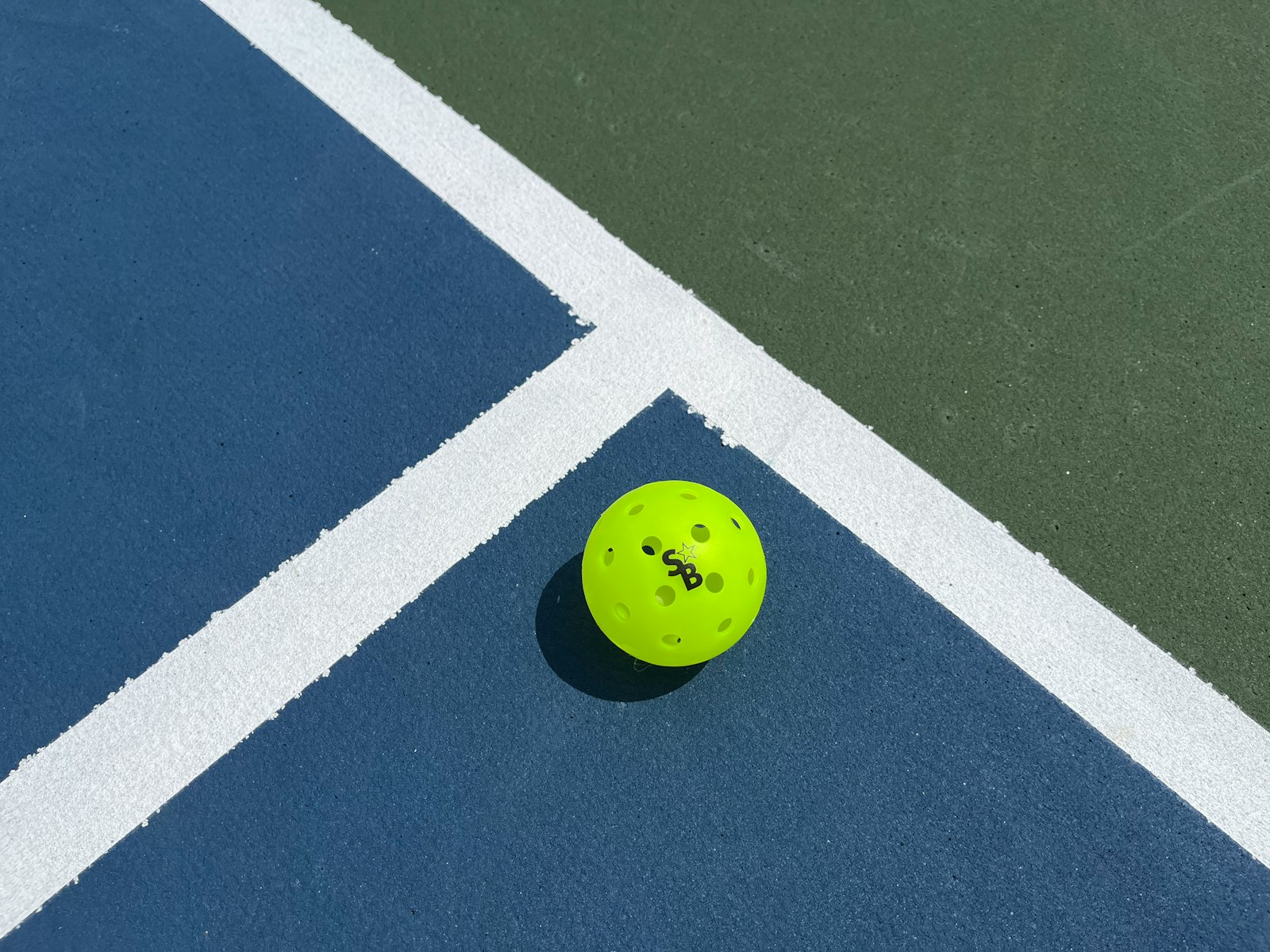
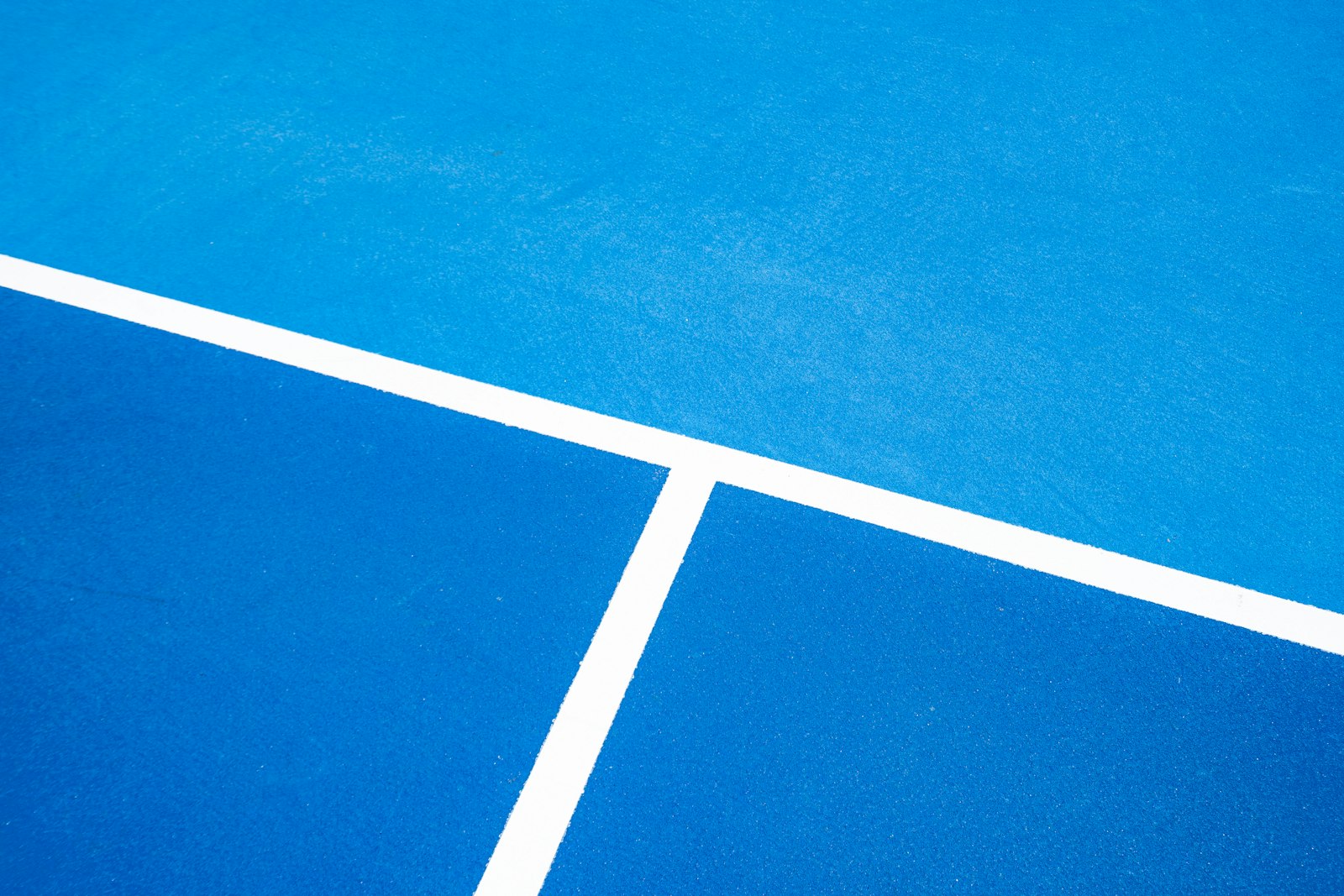
A typical striping job measures the full court layout first, sets reference points for alignment, masks for clean edges, applies the coating evenly, then removes the masking carefully once measurements are double-checked. Measurement accuracy matters throughout, since one misplaced baseline can throw off service areas and the kitchen, which is especially important when adding pickleball lines to an existing tennis or multi-sport court.
Contact Dink Pro Courts to discuss pickleball court striping, court paint, resurfacing, color planning, and complete court installation options.
Sunlight, rain, temperature swings, and foot traffic all cause outdoor striping to fade over time, and a poorly prepared surface tends to wear faster. Permanent striping suits dedicated or frequently used courts, while temporary markers can work for spaces occasionally used for pickleball. For courts with evening lighting, surface and stripe colors should be checked together, since shadows and artificial light can change how easy lines are to read.
Dink Pro Courts plans and applies pickleball court striping throughout Maricopa County as part of new construction, resurfacing, or court conversion projects.
Pickleball court striping is the process of measuring and applying the lines that define court boundaries, service boxes, the centerline, and the non-volley zone.
The lines should strongly contrast with the playing surface. White is commonly used, particularly on blue, green, or grey pickleball court paint.
Yes. Pickleball markings can often be added to existing tennis courts to create a multi-sport playing area.
Yes. Existing lines can usually be refreshed after the surface has been cleaned and inspected for damage or coating problems.
Permanent lines are usually preferable for dedicated or frequently used courts. Temporary markings may be appropriate for occasional pickleball use.
A clean, stable, and properly prepared surface helps the line coating adhere more consistently and creates sharper, more durable markings.
Yes. Different line colors can help distinguish pickleball from tennis, basketball, or other sports sharing the same surface.
Dink Pro Courts can assist with court measurement, surface preparation, resurfacing, court paint, line layout, color planning, and professional pickleball court striping.
Contact Dink Pro Courts to discuss pickleball court striping, court paint, resurfacing, color planning, and complete court installation options.
Call or text (480) 493-0031, email build@dinkprocourts.com or submit the project form.