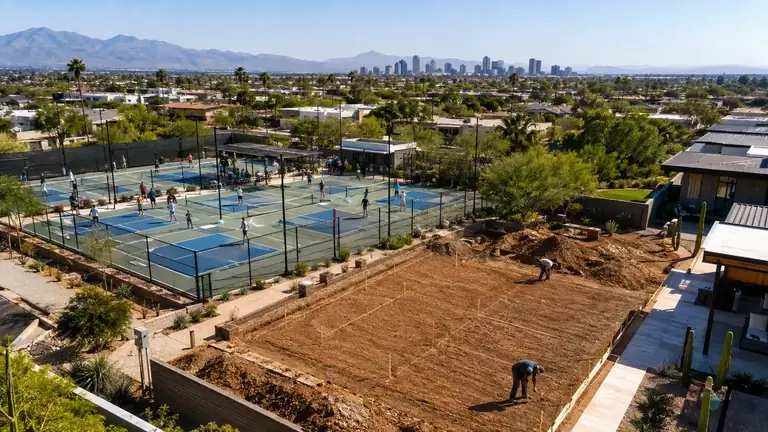
Phoenix Pickleball Court Contractor and Installer
Pickleball Court Installation in Phoenix, AZ
How a Phoenix pickleball court contractor plans the site, pours the concrete base, sets drainage, surfaces, stripes and installs the net, step by step.
Phoenix Pickleball Court Contractor and Installer
How a Phoenix pickleball court contractor plans the site, pours the concrete base, sets drainage, surfaces, stripes and installs the net, step by step.
Looking for pickleball court installation in Phoenix, AZ? Dink Pro Courts is a Phoenix pickleball court builder and installer. We design, pour and finish custom courts for homes in Arcadia, North Central, Ahwatukee, North Phoenix and across the city. Every installation covers site evaluation, grading and drainage, a concrete base (usually post-tensioned), an acrylic sport surface, regulation striping and a net system. Courts start at $29,000 for a 54 ft x 28 ft court, with a basic net and 4 paddles included. $598/mo for 60 months with excellent credit. Our team brings 20+ Years Experience.
Estimated rates and terms are not binding and are subject to change. Your actual APR depends on credit score, amount financed and credit history; only borrowers with excellent credit qualify for the lowest rates. All financing is subject to credit review and approval by lending partners.
Phoenix courts have to survive conditions most of the country never sees. Summer air temperatures pass 110°F, and an unprotected court surface gets far hotter, so we specify acrylic systems and colors that hold up to constant UV exposure without chalking or fading early. Monsoon season brings short, heavy downpours, so every court is graded with a planned slope that moves water off the playing surface and away from your home instead of letting it pond on the lines.
What’s under the court matters just as much. Much of the Valley sits on caliche and expansive clay soils that move as they wet and dry. We evaluate the soil, compact the subgrade and build a base sized for those conditions, because cracks in a finished court almost always start below the surface. If you want evening play when the heat breaks, we plan shielded LED lighting that puts light on the court rather than into your neighbors’ yards. Before construction starts, we also confirm any HOA approvals and City of Phoenix permits that fencing or electrical work requires.
| Included in every installation | Optional upgrades |
|---|---|
| On-site evaluation, measurements and layout | Perimeter fencing and windscreens |
| Grading and drainage planning | LED court lighting |
| Concrete court base | Multi-sport lines and an in-ground basketball hoop |
| Acrylic sport surface in your chosen colors | Cushioned surface layers for comfort |
| Regulation pickleball striping | Shade structures and seating areas |
| Net system, with paddles available | Custom logos or specialty color designs |
Your written proposal lists exactly which of these are in your project, so you know what you’re paying for before any work begins.
1. Site visit. We walk your property, measure the available space (a full court needs about 30 by 60 feet around the 20 by 44 foot playing area), check access for equipment and look at drainage paths.
2. Design. We settle orientation, usually north to south to cut sun glare, along with colors and upgrades. You can explore layouts and color combinations ahead of time in our Court Designer.
3. Site preparation. The area is cleared, graded and compacted, and drainage is set so water leaves the court quickly.
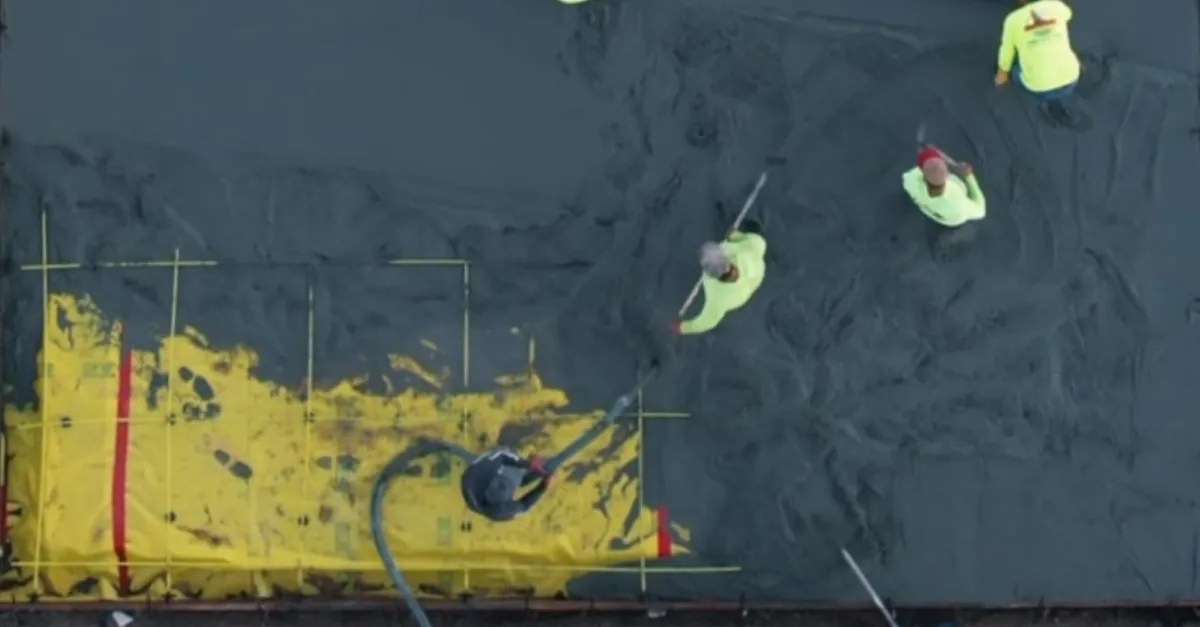
4. Base construction. We pour the concrete base and let it cure before any coating goes on, typically 21 to 28 days depending on weather.
5. Surfacing and striping. Acrylic layers are applied in your colors, then regulation lines are striped with precision.
6. Equipment and walkthrough. We install the net system and any fencing or lighting, then walk the finished court with you and go over care and maintenance.
Residential courts are built around how your family plays: the space you have, the look you want and the upgrades that make the court part of your outdoor living area.
Commercial courts for clubs, hospitality properties and businesses are planned for heavier, more frequent play. That means extra attention to surface durability, lighting coverage and the spacing between courts.
HOA and community courts come with extra steps. We prepare the specifications, drawings and material details boards typically ask for, and we coordinate scheduling around residents so the project runs smoothly from approval to opening day.
We install courts throughout Phoenix, including Arcadia, Ahwatukee, North Phoenix, Desert Ridge and the Biltmore area. We also build across the Valley: see our pages for Scottsdale pickleball court construction, Paradise Valley backyard courts, Mesa pickleball court installation and Gilbert pickleball courts. For the statewide build process, see our pickleball court installation guide.
Courts start at $29,000 for a 54 ft x 28 ft court, with a basic net and 4 paddles included. Your final price depends on site preparation, the base, the surface system and the upgrades you choose. Our Arizona pickleball court cost guide explains each factor, and financing options lets you spread the investment out.
Courts start at $29,000 for a 54 ft x 28 ft court, with a basic net and 4 paddles included. The final price depends on your site, base, surface and upgrades, and we give you a written, site-specific quote.
Plan for about 30 by 60 feet. That gives you the 20 by 44 foot playing area plus safe run-out space around it.
Yes. Our tennis court to pickleball conversion page covers how many courts fit on a tennis court and the ways to convert one in Phoenix.
Our team brings 20+ Years Experience.
Request a site-specific Phoenix court quote and we’ll schedule your property review.
A pickleball court is expected to provide consistent ball bounce, safe traction, clear boundaries and a comfortable playing environment. Poor installation can lead to uneven surfaces, standing water, premature cracking and faded coatings. Already have a court? We also handle court resurfacing in Phoenix and across Arizona and crack and surface repair.
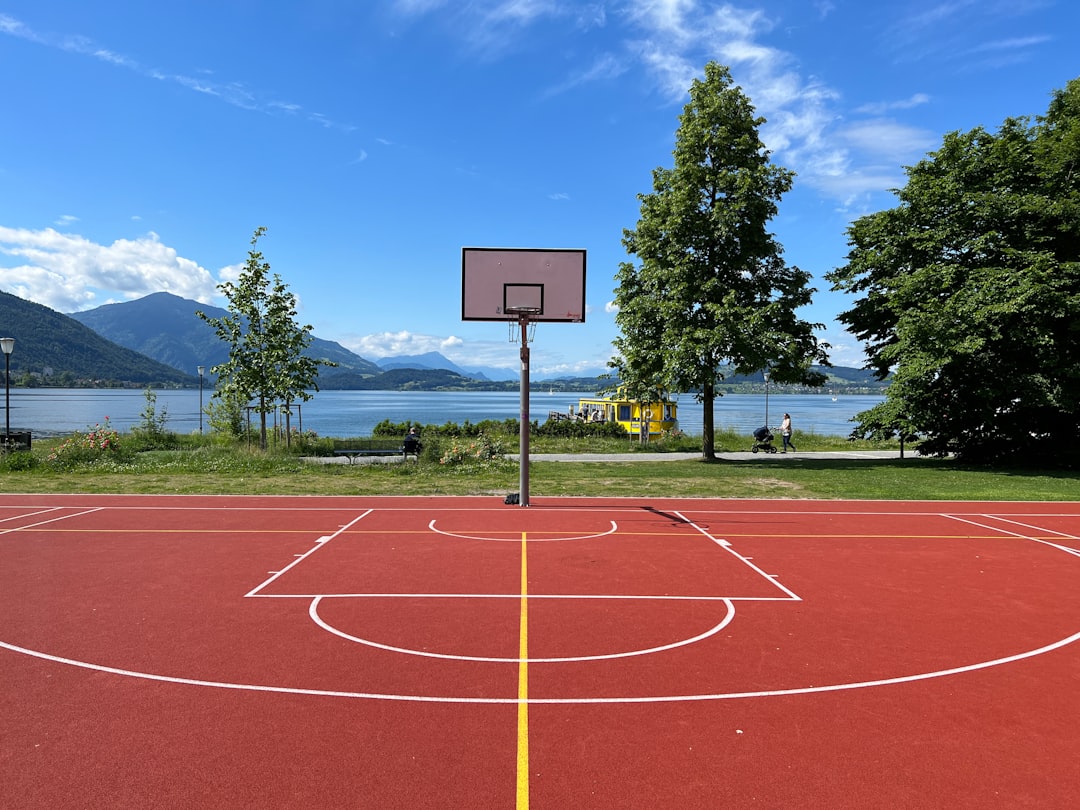
The quality of the base is especially important, because even premium coatings cannot compensate for major structural problems beneath the court.
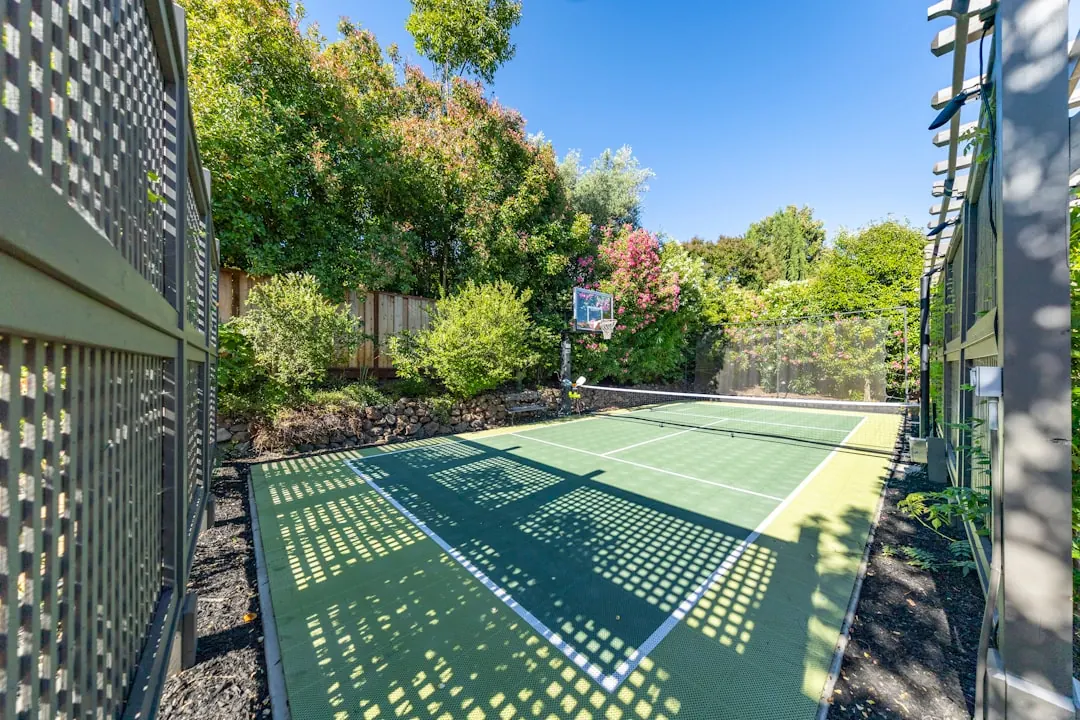
A professional contractor should review available space, ground conditions, existing concrete or asphalt, site slope, drainage, nearby structures, access for equipment and sun exposure before recommending a design.
The official playing surface is 20 feet wide by 44 feet long, but the total installation area needs to be larger so players have room outside the lines for movement and safety, with orientation planned to reduce glare.
A stable concrete base, new or existing, supports consistent play and reduces the likelihood of premature surface deterioration.
Phoenix’s seasonal storms can bring significant rainfall quickly, so the surface should be designed so water drains without interfering with play.
Specialized court coatings support consistent ball bounce, traction, comfortable movement and outdoor durability under intense Arizona sunlight.
Contrasting colors between the in-play area and surrounding surface can improve visibility and match a home’s or facility’s aesthetic.
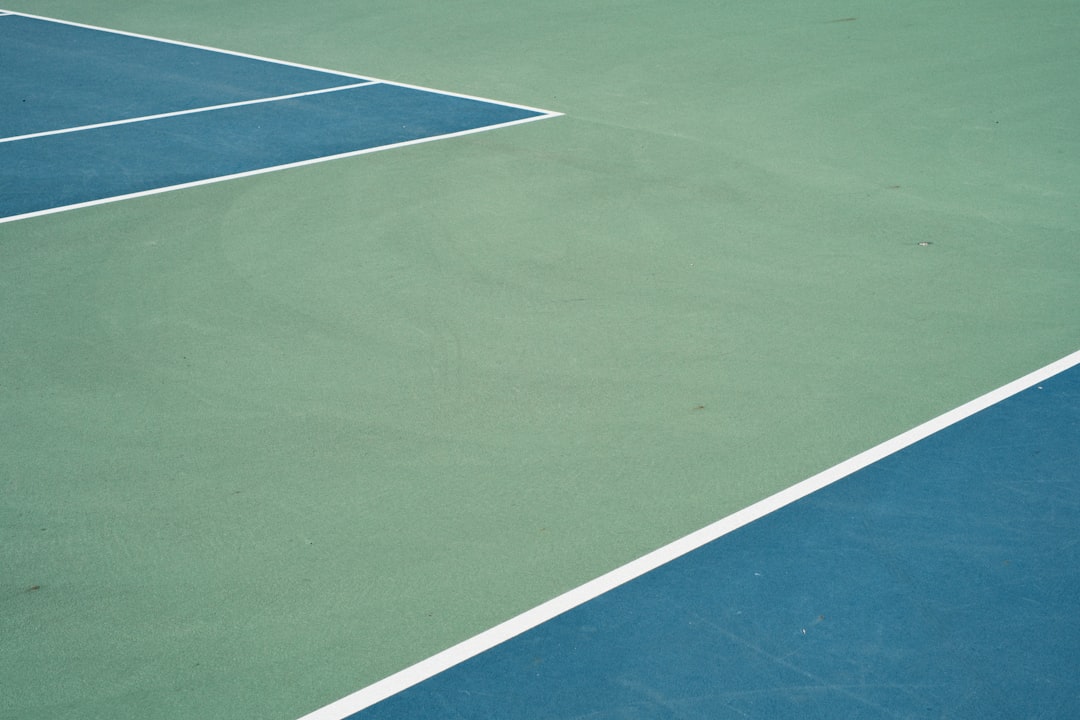
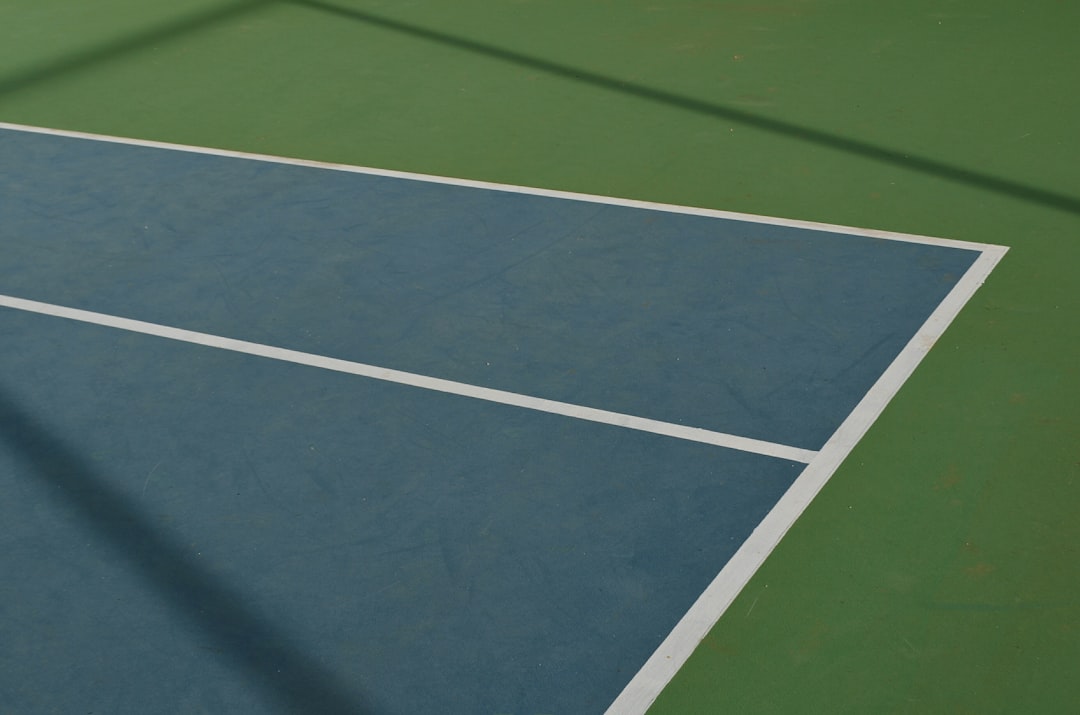
Backyard pickleball courts are increasingly popular throughout Phoenix, while commercial projects for HOAs, resorts, schools and clubs often require additional planning for heavier use.
Family activities, exercise, social gatherings and friendly competition, designed around available backyard space.
Coordinated fencing, lighting, walking areas and spectator zones planned for heavier daily use.
Two of the most visible parts of the finished court deserve just as much attention as the base beneath them:
Poorly measured lines or an afterthought net system can make an otherwise professional installation look unfinished.
Phoenix’s climate is one of the biggest considerations in court planning, and a professionally installed court should be designed with local conditions in mind.
Summer temperatures affect coatings, concrete and expansion joints over time.
Strong sunlight can fade low-quality finishes more quickly than shaded surfaces.
Seasonal storms require a surface designed to drain effectively.
Materials should be chosen specifically for outdoor sports environments.
Dink Pro Courts plans site work, base construction, drainage, surfacing, fencing and lighting together, with residential and commercial projects built for Phoenix's climate throughout Maricopa County.
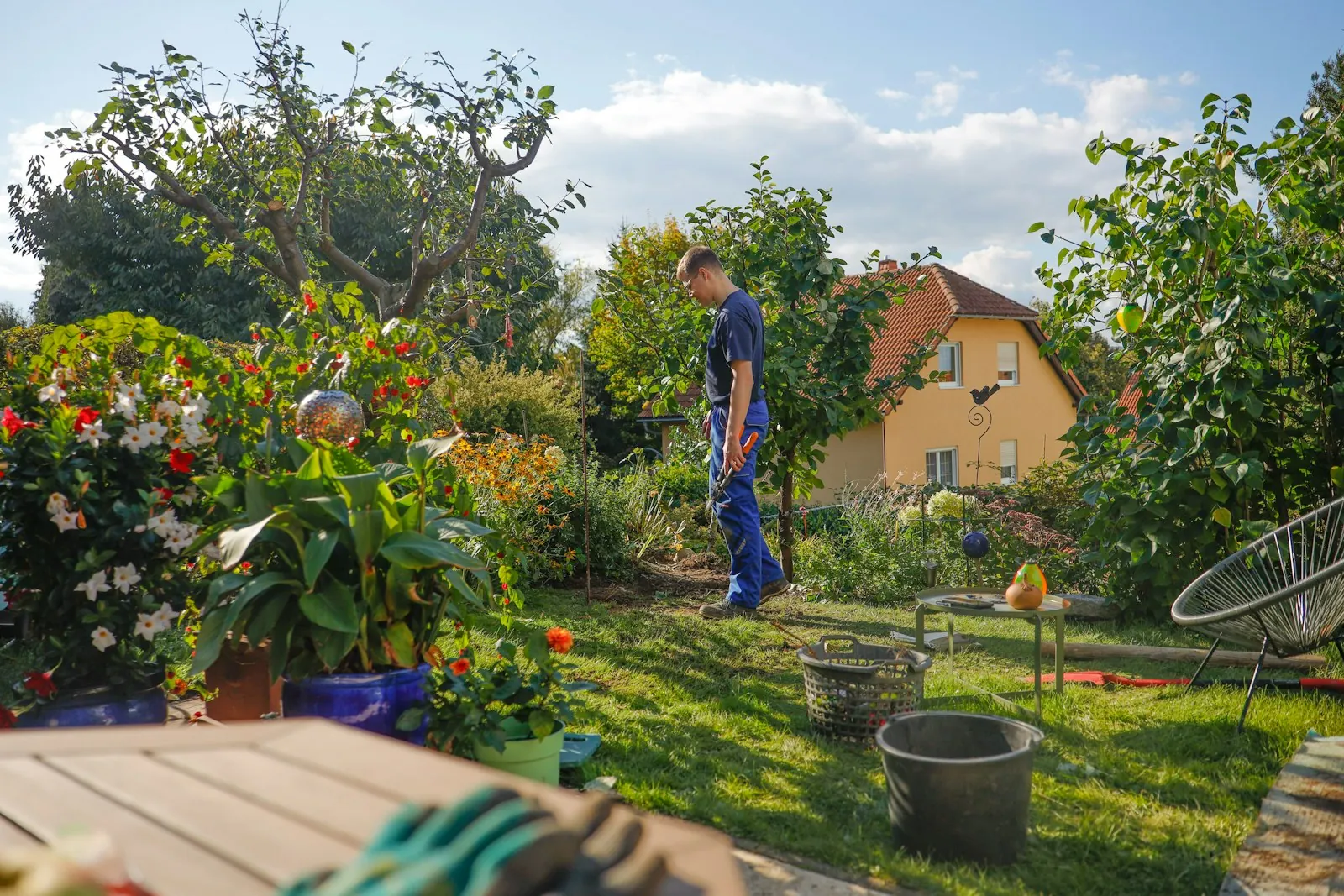
Even though Phoenix has a dry climate, monsoon storms can create heavy rainfall in a short period, so drainage and fencing should both be planned during the early stages of the project.
A poorly planned court can become expensive to correct later. The most frequent issues Dink Pro Courts sees include:
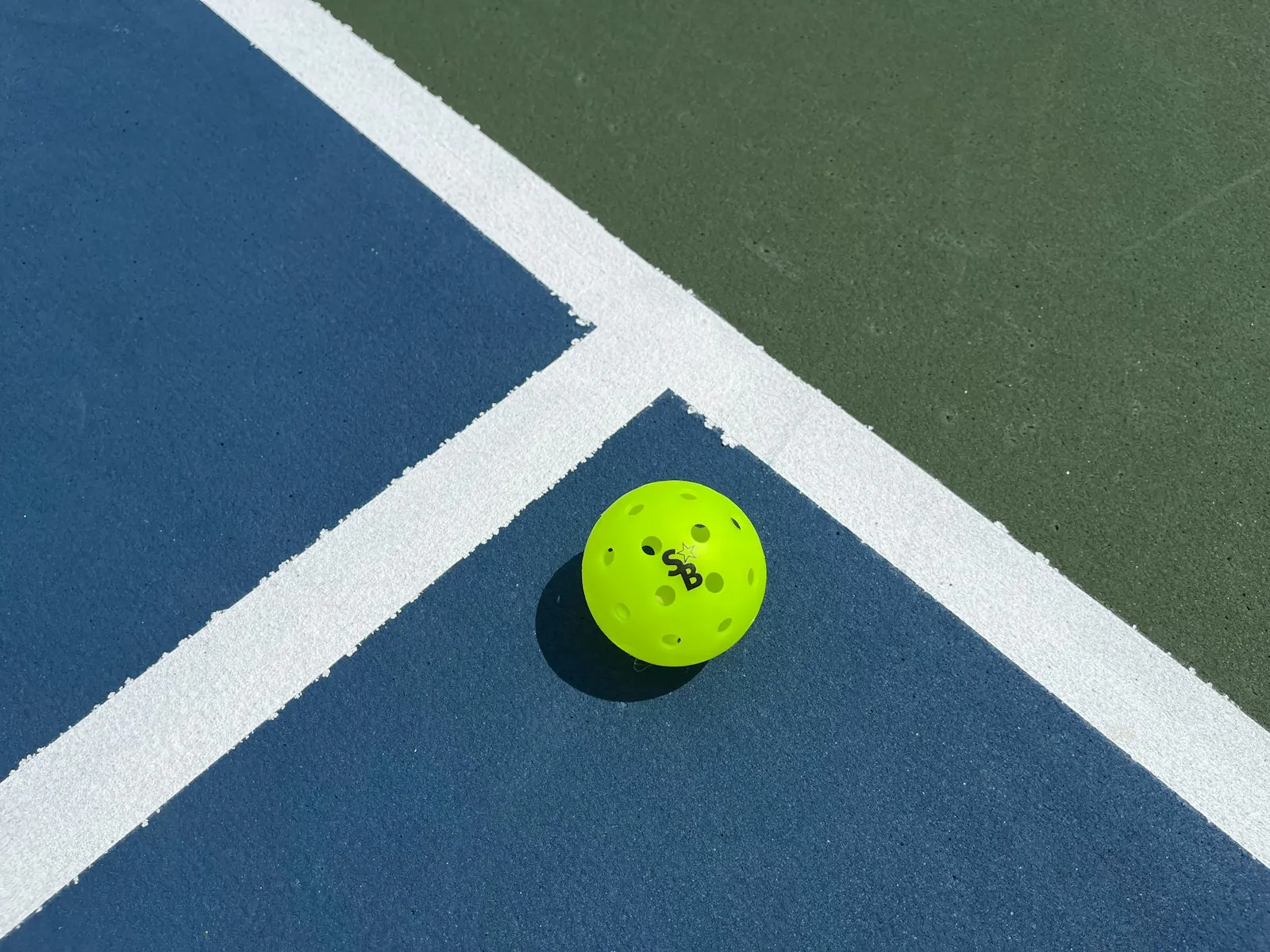
Beyond the court itself, Phoenix homeowners often add LED court lighting for cooler evening play, an in-ground basketball hoop for a multi-sport court, perimeter fencing or windscreen, and shade near the sidelines.
We build on concrete only. Post-tensioned concrete resists cracking and holds up well under an acrylic surface in Phoenix heat. We design the slab after we review your soil and site.
Requirements depend on fencing height, lighting, retaining walls and electrical work, plus any HOA rules. We help you confirm what the City of Phoenix and your HOA require before building.
Courts start at $29,000 for a 54 ft x 28 ft court, with a basic net and 4 paddles included. $598/mo for 60 months with excellent credit. Book your build.
Estimated rates and terms are not binding and are subject to change. Your actual APR depends on credit score, amount financed and credit history; only borrowers with excellent credit qualify for the lowest rates. All financing is subject to credit review and approval by lending partners.
Phoenix is big, and a court in Arcadia is a different job from a court in Ahwatukee. As a Phoenix pickleball court builder, we plan for the area you live in:
Permits and rules come from the City of Phoenix and, where it applies, your HOA. We confirm setbacks, fence height and lighting before construction.
Central Phoenix infill yards are often too tight for the roughly 30 by 60 feet a full court needs, so a mini pickleball court in Phoenix can go on a 20x36 or 26x45 slab instead. That one post-tension concrete slab carries the painted court plus a portable hoop, a backyard-size shuffleboard lane and a badminton set, which suits a tight central lot as well as a newer North Phoenix HOA yard. We plan equipment access for infill streets and confirm City of Phoenix and HOA rules before we pour. Build your game center: call (480) 493-0031.
The playing court is 20 feet by 44 feet, but additional surrounding space is recommended for safe player movement. The total footprint should be determined based on available space and intended use.
Yes. Dink Pro Courts can provide customized residential court solutions based on property size, layout, surface requirements and desired features.
Concrete and asphalt bases are commonly used with specialized acrylic sports coatings. Dink Pro Courts builds on concrete only. We design the slab for your site conditions, budget and maintenance expectations.
Yes. Proper grading and drainage are important even in a dry climate because seasonal storms can produce significant rainfall and standing water.
Lighting is particularly useful in Phoenix because it allows players to use the court during cooler evening hours. We install Dominator lighting products, laid out for your court size and sport to give consistent visibility while minimizing glare.
Yes. Dink Pro Courts can support residential and commercial projects, including courts for communities, HOAs, schools, recreation facilities and hospitality properties.
Professional construction helps ensure proper dimensions, drainage, surface preparation, coatings, court orientation and accessories. These factors directly influence performance, appearance and long-term durability.
Courts start at $29,000 for a 54 ft x 28 ft court, with a basic net and 4 paddles included. Your site, base, surface and add-ons set the final price.
It depends on the scope. Fencing, lighting, electrical and walls can trigger permits, and HOAs often need to approve. We help you check before building.
Concrete. Dink Pro Courts builds concrete courts only, usually post-tensioned concrete because it resists cracking.
Yes. We build backyard pickleball courts across Phoenix, including Arcadia, North Central, Ahwatukee and North Phoenix.
Yes. We plan the cut, fill or retaining edge needed for a level court pad, and include it in the quote.
A Phoenix build usually runs in this order: a site visit to measure the yard and check access and drainage, design and court orientation, clearing and grading, the concrete base and its curing time, acrylic color coats and striping, then the net, any fencing or lighting, and a final walkthrough. Permits, HOA review, base curing and monsoon weather all affect the schedule, so we give you a schedule with your quote instead of a fixed promise. As a typical range, we can usually be pouring concrete within a week, then the slab cures 21 to 28 days depending on weather before we paint.
If you are in Phoenix or nearby, yes. We plan and build custom courts in Arcadia, North Central, Ahwatukee and North Phoenix, and across Maricopa County in cities such as Scottsdale, Paradise Valley, Tempe, Mesa, Chandler, Gilbert and Glendale. Call or text (480) 493-0031 to check your yard and book your build; we start with a site visit.
Ask for a site visit before a price, then a written proposal that lists the base, drainage, surface system, striping and net, plus how curing time and monsoon weather fit the schedule. Dink Pro Courts builds concrete courts only, usually post-tensioned, and our team brings 20+ Years Experience.
Your property address, photos or rough measurements of the area, where you want the court and any HOA design rules. At the visit we check equipment access, drainage paths and sun orientation, then send a written proposal.
If you are planning a new pickleball court installation Phoenix AZ project, upgrading an existing court, or considering a custom recreational area, Dink Pro Courts can help you evaluate the site and develop the right solution.
Landscape or pool contractor in the Valley? See pickleball court builders for Phoenix landscapers.
Building at home rather than a club? Read about backyard pickleball court construction across Arizona.