Court Surface Guide
How Do Pickleball Court Tiles Improve Grip, Comfort, and Court Performance?
What modular pickleball court tiles offer for traction, drainage, comfort, and maintenance compared to a painted surface.
Court Surface Guide
What modular pickleball court tiles offer for traction, drainage, comfort, and maintenance compared to a painted surface.
Pickleball court tiles are modular interlocking panels installed over a prepared base instead of a painted coating. Many systems improve traction and allow water to drain through the surface, and damaged tiles can often be replaced individually rather than resurfacing the whole court. Dink Pro Courts doesn’t install tiles; we build concrete pickleball courts with an acrylic surface.
Court tiles are joined together across a prepared base to form a complete playing field, typically made from sturdy synthetic materials built for outdoor use and frequent sports activity. They can suit properties where drainage, upkeep, or surface flexibility matter most. Texture helps with grip during pickleball’s quick lateral movement and direction changes, while perforated or open-grid designs let water pass through the surface instead of pooling. The base below still needs proper grading, though, since tiles don’t replace good site drainage.
Tiles should never be used to hide serious structural problems. The base underneath still needs to be sound.
A level, well-drained concrete slab provides a stable foundation once cracks and movement are checked.
Suitable asphalt can also support tiles, provided it’s assessed for deterioration and drainage issues.
Older tennis or basketball courts can sometimes be converted if the base is structurally sound.
Minor flaws may be tolerable, but major cracks or settlement should be repaired before tiles go down.
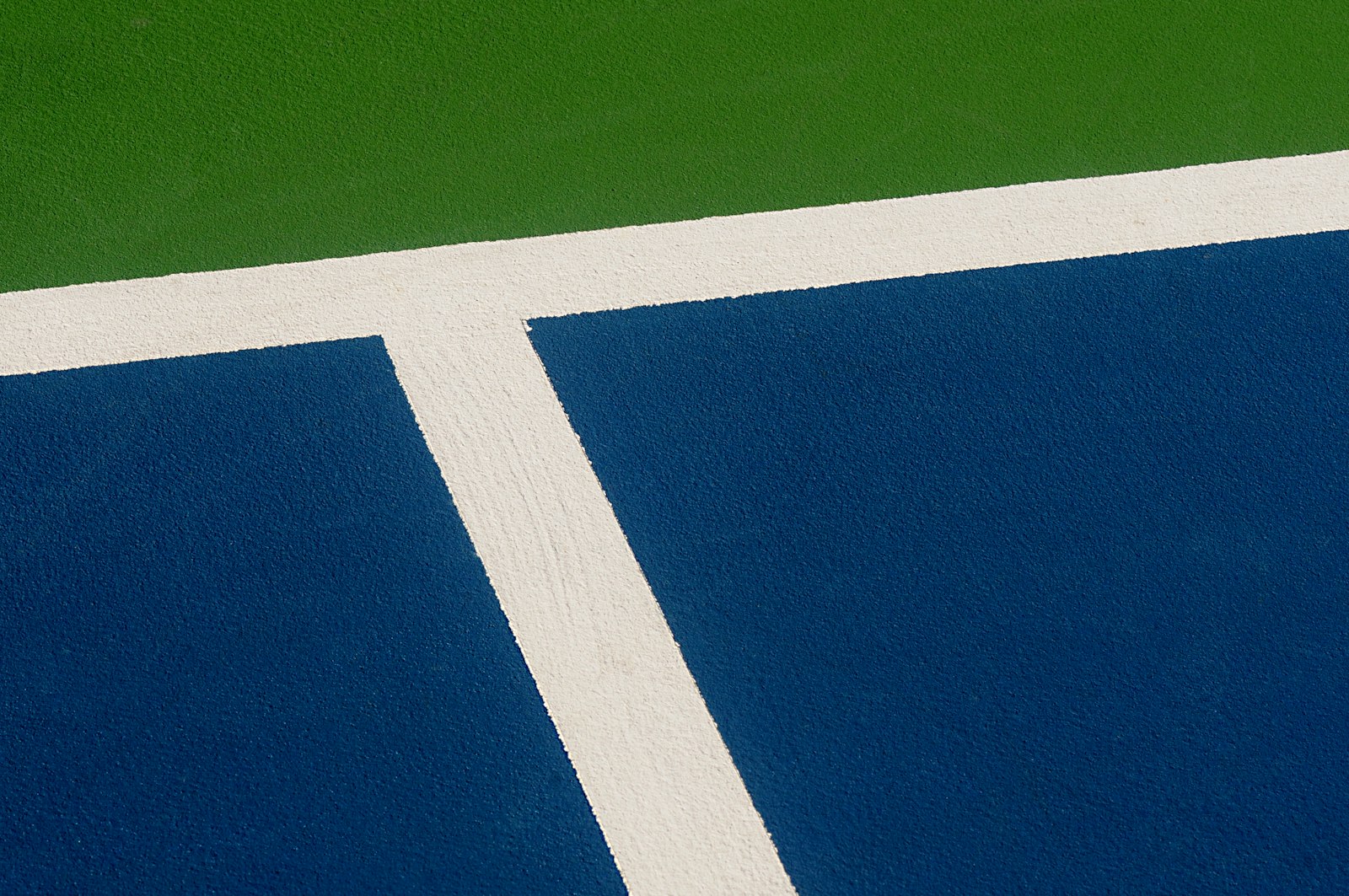
Ball response varies between tile designs, so pickleball or multi-sport-specific tiles are preferable to generic outdoor flooring, and an even base helps keep bounce consistent across the court. Texture should provide enough grip without feeling overly rough. Court markings can come from contrasting tile colors or compatible line coatings applied on top. Either way, pickleball court striping still needs accurate dimensions and strong contrast so baselines, sidelines, service areas, and the kitchen stay easy to read.
Contact Dink Pro Courts about a concrete pickleball court with an acrylic surface, drainage, court colors, striping and complete court design. We don't install modular tiles.
Most modular sports tiles are built for outdoor exposure, but the specific product should suit sunlight, rain, temperature swings, and frequent foot traffic. Darker colors can also run warmer in direct sun, which is worth considering for hot climates. For residential backyard courts, tiles offer color choice, drainage, and easier maintenance, and should still fit into the wider plan for access, lighting, fencing, and landscaping. Multi-sport tile layouts need careful planning too: too many colors or markings can get confusing, so a clear primary sport with distinguishable secondary striping keeps the surface easy to read.
Installation starts with a thorough base inspection, then interlocking tiles are positioned and joined according to the planned layout, with attention paid to edges, transitions, and net-post positions. Ongoing maintenance is straightforward: clear debris regularly, keep drainage openings clear, and replace individual damaged tiles rather than resurfacing the whole court.
Both tiles and traditional court paint can perform well when installed correctly. A painted hard court offers a continuous surface with fully custom colors and markings, while tiles offer modular construction, improved drainage, and simpler spot repairs. The right choice depends on your property, budget, existing base, climate, and maintenance preferences.
Dink Pro Courts builds concrete pickleball courts for homeowners and commercial property owners throughout Maricopa County. We don't install modular court tiles.
Many modular sports tiles are manufactured for outdoor courts. The specific system should be suitable for UV exposure, rain, temperature changes, drainage, and the expected level of use.
Yes, a suitable concrete base can often support modular tiles. It should first be inspected for cracks, movement, drainage problems, and uneven areas.
Sports-specific tiles can provide consistent ball response when installed correctly over a stable base. Performance varies between tile systems, so the product should be appropriate for pickleball.
Traction depends on the tile design, texture, drainage, maintenance, and weather conditions. Outdoor sports tiles should be selected specifically for suitable grip and drainage.
Some systems use contrasting tile colors for markings, while others use compatible coatings. In either case, accurate pickleball court striping dimensions and clear contrast are essential.
Yes. Modular tiles can be a good option for residential courts because they offer design flexibility, drainage, color choices, and relatively easy maintenance.
One benefit of modular systems is that damaged sections can often be replaced individually rather than resurfacing the entire playing area.
Dink Pro Courts doesn't install modular court tiles. We build concrete courts only, with a poured concrete slab, an acrylic surface and professional striping. If you're weighing tiles, we can explain how a concrete court compares for your yard.
Contact Dink Pro Courts about a concrete pickleball court with an acrylic surface, drainage, court colors, striping and complete court design. We don’t install modular tiles.
Call or text (480) 493-0031, email build@dinkprocourts.com or submit the project form.