Court Comparison Guide
Pickleball Court vs Tennis Court: Which Is Better for Your Backyard?
Compare size, cost, net height, lines and maintenance to decide which court fits your space, budget and playing goals.
Court Comparison Guide
Compare size, cost, net height, lines and maintenance to decide which court fits your space, budget and playing goals.
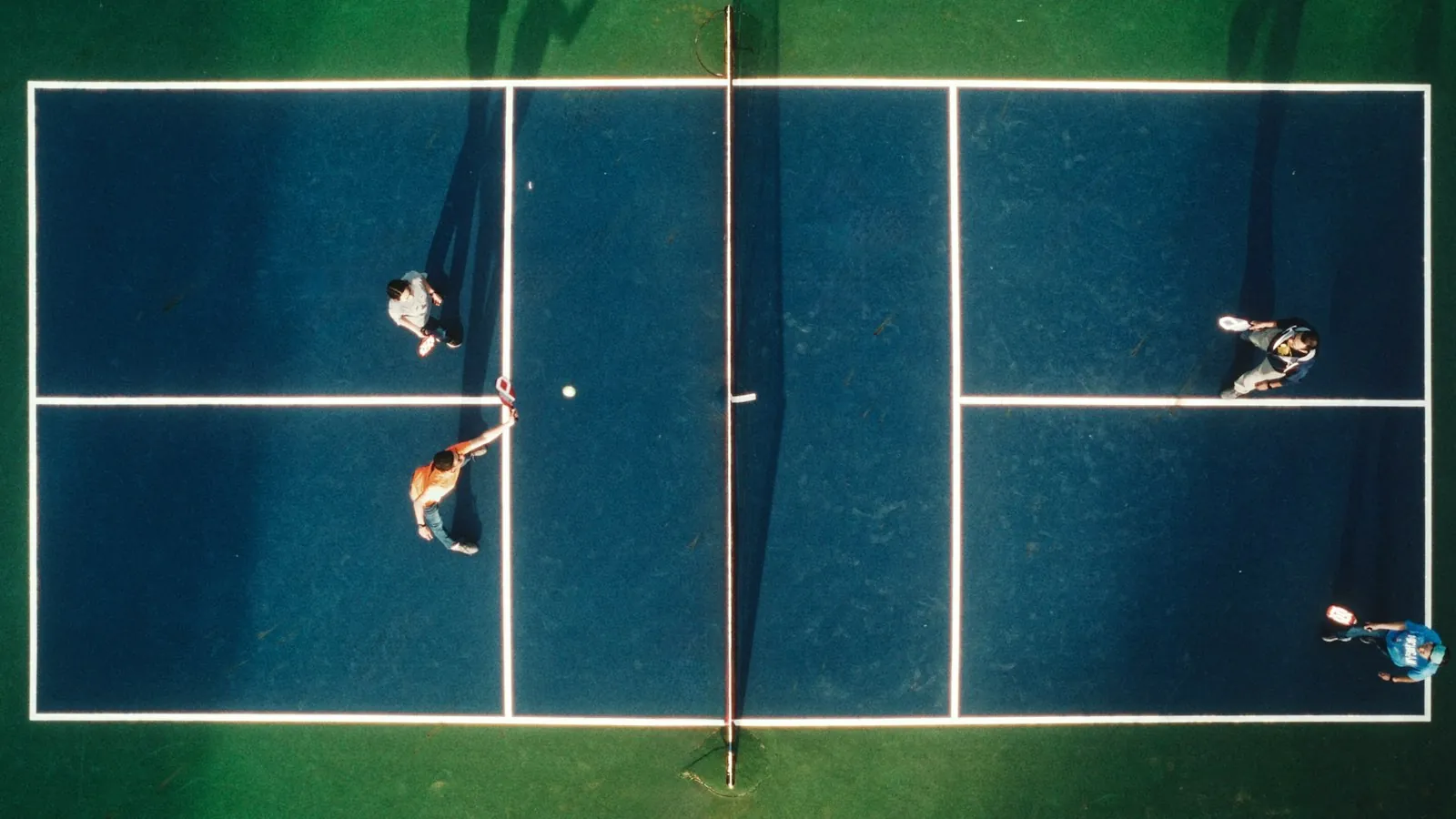
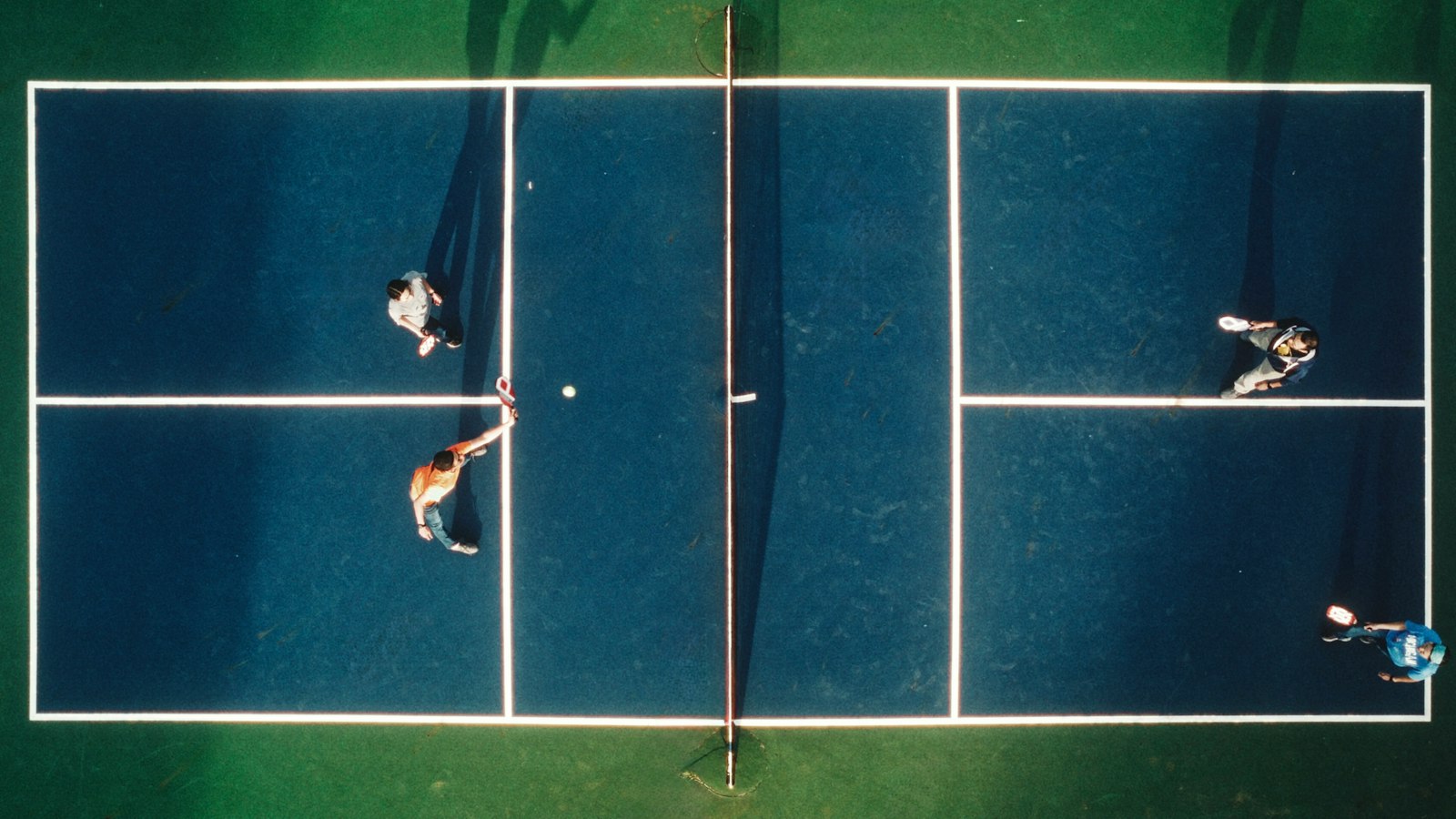
Pickleball and tennis courts differ mainly in size: a doubles tennis court is 36 by 78 feet, much larger than a 20-by-44-foot pickleball court. Pickleball’s smaller footprint, lower net and simpler lines make it easier and typically less expensive to fit into a backyard, while tennis needs considerably more property.
A tennis court needs significantly more property than a pickleball court, and multiple pickleball courts can often fit inside the footprint of a single tennis court, which is part of why pickleball has become so popular with homeowners, clubs, schools and community facilities.
| Feature | Pickleball Court | Tennis Court |
|---|---|---|
| Length | 44 feet | 78 feet |
| Width | 20 feet | 27 ft singles / 36 ft doubles |
| Playing Area | 880 sq. ft. | Much larger |
| Net Height (Center) | 34 inches | 36 inches |
| Non-Volley Zone | Yes (the “kitchen”) | No |
A practical backyard pickleball installation typically uses about 30 by 60 feet of total space, or 34 by 64 feet for extra movement room, which is still far less than a full tennis court once player runoff area is included. For the build itself, see our pickleball court installation guide.
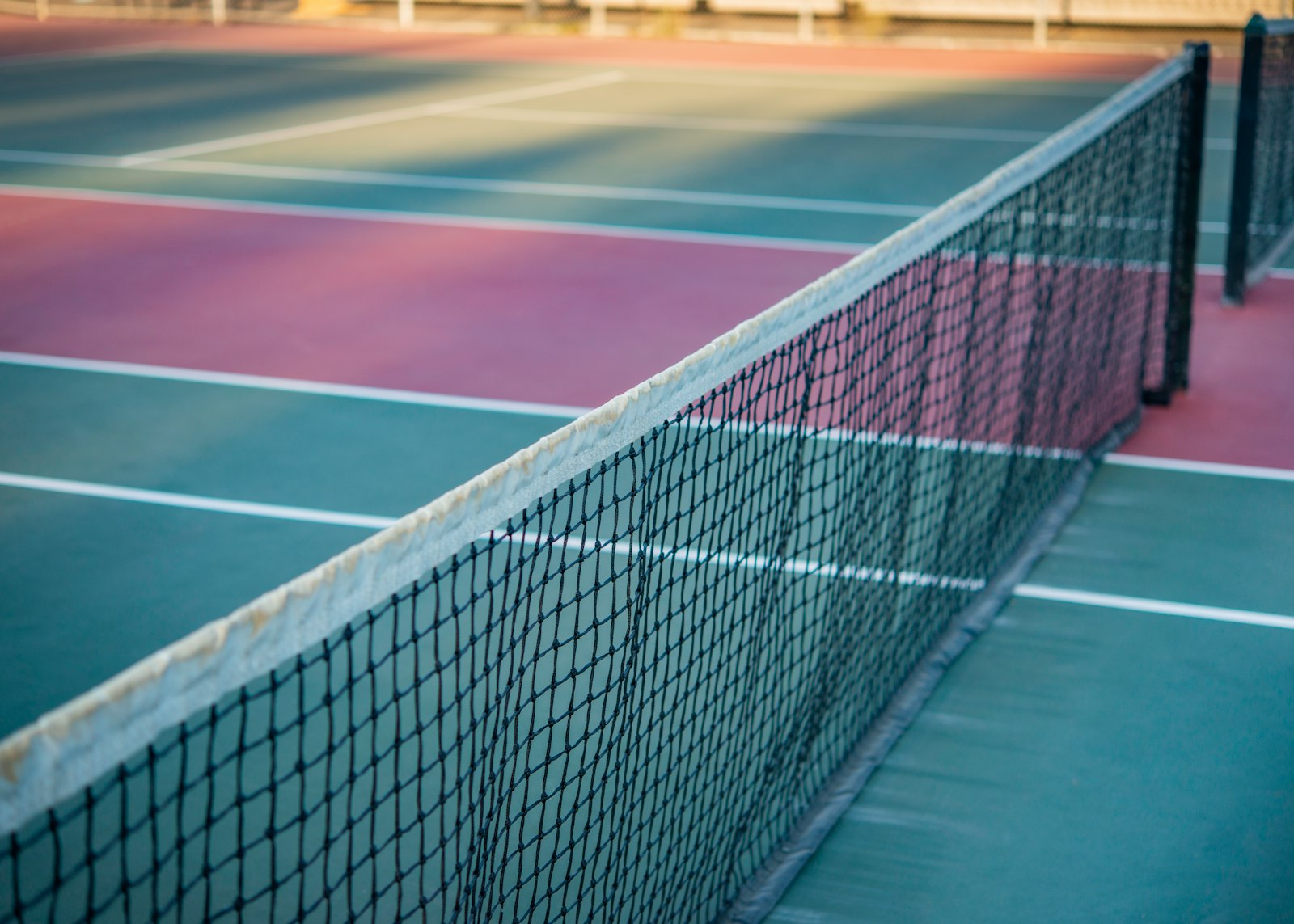
A pickleball net measures 36 inches at the sidelines and 34 inches at the center, while a tennis net runs about 42 inches at the posts and 36 inches at the center. Pickleball’s lower net suits its smaller court, slower perforated ball and paddle-based play.
Pickleball courts add baselines, sidelines, centerlines, service courts and a non-volley zone (the kitchen) extending 7 feet from the net on each side. Tennis has no kitchen, using baselines, singles and doubles sidelines, service lines and a center service line instead. These different markings reflect how each sport is actually played.
Because a pickleball court uses a much smaller footprint, it generally costs less to build and maintain, though site conditions and chosen features still shape the final price.
Pickleball’s smaller area fits alongside patios, pools and landscaping far more easily than a full tennis court.
A larger tennis court typically needs more excavation, base material, coating, fencing and lighting.
Less surface area makes routine cleaning and upkeep simpler, though climate and build quality matter more than size alone.
UV exposure, heat and monsoon rain affect both court types, so proper materials and prep matter either way.
Dink Pro Courts can evaluate your property and recommend a practical pickleball court, tennis court, conversion or multi-sport solution.
Yes. Because a tennis court is so much larger, it can often support multiple pickleball layouts once new lines, net systems, surface fixes and any needed fencing or lighting changes are in place. The opposite doesn’t work well: a pickleball court is too small for a regulation tennis match, though modified recreational play is possible. If you already have a suitable slab, a DIY pickleball court may be practical for straightforward conversions, while grading, drainage or fencing work is usually better handled professionally.
Have a tennis court you rarely use? See our tennis to pickleball conversion service.
Dink Pro Courts helps property owners throughout Maricopa County choose between pickleball, tennis, conversions and multi-sport layouts, then coordinates the site evaluation, surfacing, drainage, fencing and lighting to build it.
The main difference is size. A pickleball court measures 20 by 44 feet, while a tennis court is 78 feet long and up to 36 feet wide for doubles.
It can be because pickleball requires less playing surface. However, actual cost depends on grading, drainage, base construction, coatings, fencing, lighting, and site conditions.
Yes. Tennis courts can often be converted or restriped for pickleball, depending on their size, condition, and intended use.
Depending on the overall tennis facility footprint and required clearances, multiple pickleball courts may fit within an existing tennis court area. A professional site layout can determine the safest configuration.
For many properties, yes. Pickleball requires significantly less space, making it more practical for residential backyards.
Yes. A DIY pickleball court may be practical if you already have a suitable concrete or asphalt surface with adequate dimensions and drainage.
Both can use concrete or asphalt bases with acrylic sport coatings, but the dimensions, net heights, and court markings are different.
A pickleball court has less surface area, which can make routine cleaning and maintenance easier. Long-term maintenance still depends heavily on construction quality, weather, and usage.
Yes. Dink Pro Courts can evaluate existing recreational surfaces and help plan resurfacing, striping, pickleball conversion, fencing, lighting, or other court improvements.
Contact Dink Pro Courts today to discuss court construction, resurfacing, conversions, fencing, lighting, and custom recreational court options.
Call or text (480) 493-0031, email build@dinkprocourts.com or submit the project form.