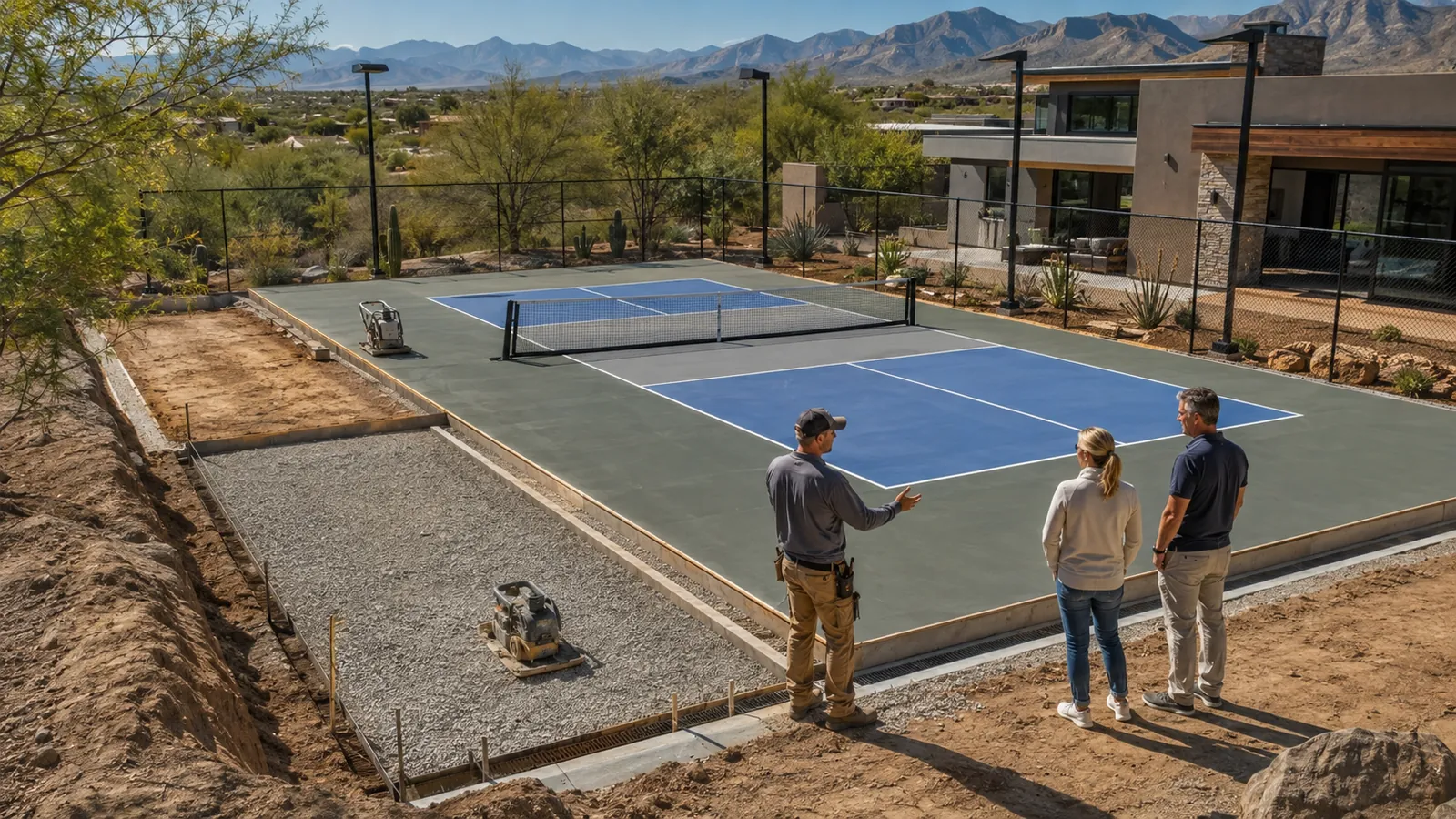
Pickleball Court Construction Cost in Arizona: What Homeowners Should Know Before Building is an important topic for Arizona homeowners who want a better way to use their outdoor space. This guide is for homeowners who are researching court planning, comparing contractors, understanding cost, or deciding whether a backyard court is the right investment.
For homeowners across Phoenix, Scottsdale, Paradise Valley, Cave Creek, Carefree, Fountain Hills, Gilbert, Chandler, Mesa, Queen Creek, Glendale, Peoria, Surprise, North Scottsdale, Arcadia, Biltmore, Tempe, and surrounding Maricopa County communities, a properly planned court can support family play, private practice, fitness, guest entertainment, and long-term outdoor living. The key is choosing a plan that fits the site, the players, and the future use of the property.
Short Answer: What Affects Pickleball Court Construction Cost?
Pickleball court construction cost depends on court size, site conditions, grading, drainage, base construction, acrylic surface system, fencing, lighting, net equipment, custom colors, and whether the court includes other sports such as basketball. For the full build process this pricing is based on, see our guide to pickleball court construction in Arizona.
A simple court on a flat, accessible lot will cost less than a luxury backyard game court that needs grading, drainage work, fencing, lighting, premium colors, and landscape integration.
Why Online Prices Are Only a Starting Point
Homeowners often search for a quick number, but generic prices rarely show the full scope. Two courts with the same playing dimensions can have very different costs because the properties are different.
A court in a flat backyard may require less preparation than a court on a sloped desert property. A court with a basic surface will not cost the same as a court with lighting, fencing, seating, and basketball integration.
Court Size and Layout
The playing lines for pickleball are 20 by 44 feet, but the finished court area should include additional space for movement around the lines. The larger the total court footprint, the more base material, surfacing, striping, and fencing may be needed.
A dedicated pickleball court, compact recreation court, and basketball-pickleball combo court all carry different cost profiles because each layout requires different planning. If your project includes basketball or tennis alongside pickleball, see our guide to game court construction in Arizona for multi-sport budgeting.
Site Preparation, Grading, and Drainage
Site preparation can be one of the largest variables in cost. The area may need clearing, excavation, grading, compaction, and base preparation before the court can be built.
Drainage is especially important. Even in dry climates, water needs a planned path away from the court. Poor drainage can lead to puddling, staining, erosion, and premature surface wear.
Base and Acrylic Surface
The court base affects stability, ball response, and long-term durability. A properly prepared concrete or asphalt base is an important investment because the finished surface can only perform as well as the structure below it.
Acrylic surfacing gives the court its playing texture, traction, color, and line visibility. Custom colors or cushioned surface options can increase the cost but may improve appearance and comfort. If your existing court just needs a refresh rather than new construction, see our acrylic court coating in Arizona guide for resurfacing pricing.
Fencing, Lighting, and Equipment
Fencing helps contain balls and protect pools, patios, windows, and landscaping. Lighting makes the court more usable in the evening, which is especially valuable in Arizona. Both features should be planned early so they fit the court and property.
Net systems, gates, seating, storage, and basketball hoops can also affect the final price. A complete budget should include the full court environment, not only the playing surface.
HOA, Permits, and Landscape Integration
Some projects may require HOA or local review, especially when they involve lighting, fencing, electrical work, retaining walls, grading, or setback considerations.
For luxury homes, landscape integration may also be part of the budget. A court that connects properly with pool areas, patios, turf, and desert landscaping will usually look and function better.
How to Control Cost Without Cutting Quality
Homeowners can control cost by choosing a practical court location, selecting the right court size, planning features early, avoiding last-minute design changes, and prioritizing the most important upgrades first.
However, it is not wise to cut corners on drainage, base preparation, or surface quality. Those elements affect the court for years. Choosing the right team matters as much as the budget – see how to evaluate pickleball court builders in Arizona before you sign a contract.
Why Choose Dink Pro Courts?
Dink Pro Courts helps Arizona homeowners understand the true cost drivers behind pickleball court construction. The goal is to create a plan that fits the property, budget, and long-term use of the court.
A site-specific consultation is the best way to understand realistic pricing.
FAQs About Pickleball Court Construction Cost in Arizona
The cost depends on site preparation, base construction, surface system, fencing, lighting, net equipment, and custom features.
Site preparation, grading, base construction, and drainage often have the biggest effect because they vary from property to property.
Yes. Fencing adds cost but improves ball containment and protects surrounding areas.
Yes. A combo court can add cost but increases the usefulness of the backyard surface.
Contact Dink Pro Courts for a site-specific consultation so the court can be priced around the actual property and scope.
